
If sewage has backed up into your home, the short answer is: don’t try to clean it yourself beyond basic safety steps like shutting off water and keeping people and pets away. Raw sewage carries bacteria, viruses, and parasites that can cause serious illness through skin contact, inhalation, or contaminated surfaces, and household cleaning products aren’t designed to neutralize them. The water itself is classified as Category 3 (“black water”) under the IICRC S500 standard, the same guideline restoration professionals use to determine how a loss must be handled. What looks like a cleanup job you can knock out with a mop and bleach is actually a biological hazard that behaves differently than a typical spill, and treating it like one is where most DIY attempts go wrong.
What’s Actually in Sewage Backup Water
Sewage backups happen for a few common reasons in Houston: tree roots infiltrating older clay sewer lines, heavy rain overwhelming the city’s combined and sanitary systems, or a clog deep in the main line that pushes wastewater back up through floor drains and low fixtures like basement tubs or laundry connections. Whatever the cause, the water that comes back isn’t just dirty, it’s carrying whatever was in the sewer line: human waste, bacteria like E. coli and salmonella, viruses, and in some cases chemical residue from cleaning products or industrial runoff depending on your neighborhood’s plumbing. It also tends to carry a strong, distinct odor that lingers in porous materials like drywall, carpet padding, and baseboards long after the standing water is gone.
The risk isn’t limited to the visible puddle. Sewage water wicks into flooring, soaks through drywall from the bottom up, and can travel further than it looks like it has, especially if it sat for more than a few hours before anyone noticed.
The Health Risks You’re Not Being Told About
Most articles on sewage backups mention “bacteria” in passing and move on. Here’s what that actually means in practice:
- Skin and eye contact with contaminated water can cause infections, rashes, or irritation, especially through small cuts you might not notice you have.
- Inhalation risk comes from aerosolized particles, which happen any time you walk through standing water, use a wet vac, or run a fan across the affected area without the right containment.
- Cross-contamination is easy to miss: shoes, mop heads, and even pet paws can track contaminated material to unaffected rooms of the house.
- Children and anyone with a compromised immune system face a higher risk from exposure, which is part of why restoration guidelines treat Category 3 water as a hazard requiring specific PPE, not just rubber gloves.
None of this is meant to cause panic, but it’s the reason sewage cleanup is treated differently from a typical water leak. The exposure risk doesn’t go away once the visible water is gone; it’s absorbed into materials that need to be assessed, not just wiped down.
What NOT to Do When Sewage Backs Up
- Don’t use a household wet/dry vac on sewage water unless it’s specifically rated for biohazard use and you’re wearing proper protection. Standard shop vacs aerosolize contaminated water and spread it through the exhaust.
- Don’t run central HVAC while the area is still wet. Airflow across contaminated surfaces can pull particles into the duct system and distribute them throughout the house.
- Don’t try to save porous materials that sat in black water for more than a short window, things like carpet, carpet pad, and in some cases drywall below the waterline, without having them professionally evaluated first. Surface cleaning doesn’t address what’s been absorbed.
- Don’t flush or run water anywhere in the house until you know whether the backup is from a clog in your own line or a problem further down the municipal system. Running more water into a blocked line pushes the backup further into your home.
- Don’t assume bleach solves it. Bleach is effective on some surfaces but doesn’t penetrate porous materials the way the contamination already has, and it reacts poorly with certain cleaning agents.
When to Call a Professional
A sewage backup is one of the few restoration situations where calling early genuinely changes the outcome, both for your health and for what can be saved in the home. If the backup covers more than a small, isolated area, has been sitting for more than a couple of hours, or involves a floor drain connected to the main sewer line rather than a single fixture, it’s past the point of a DIY fix.
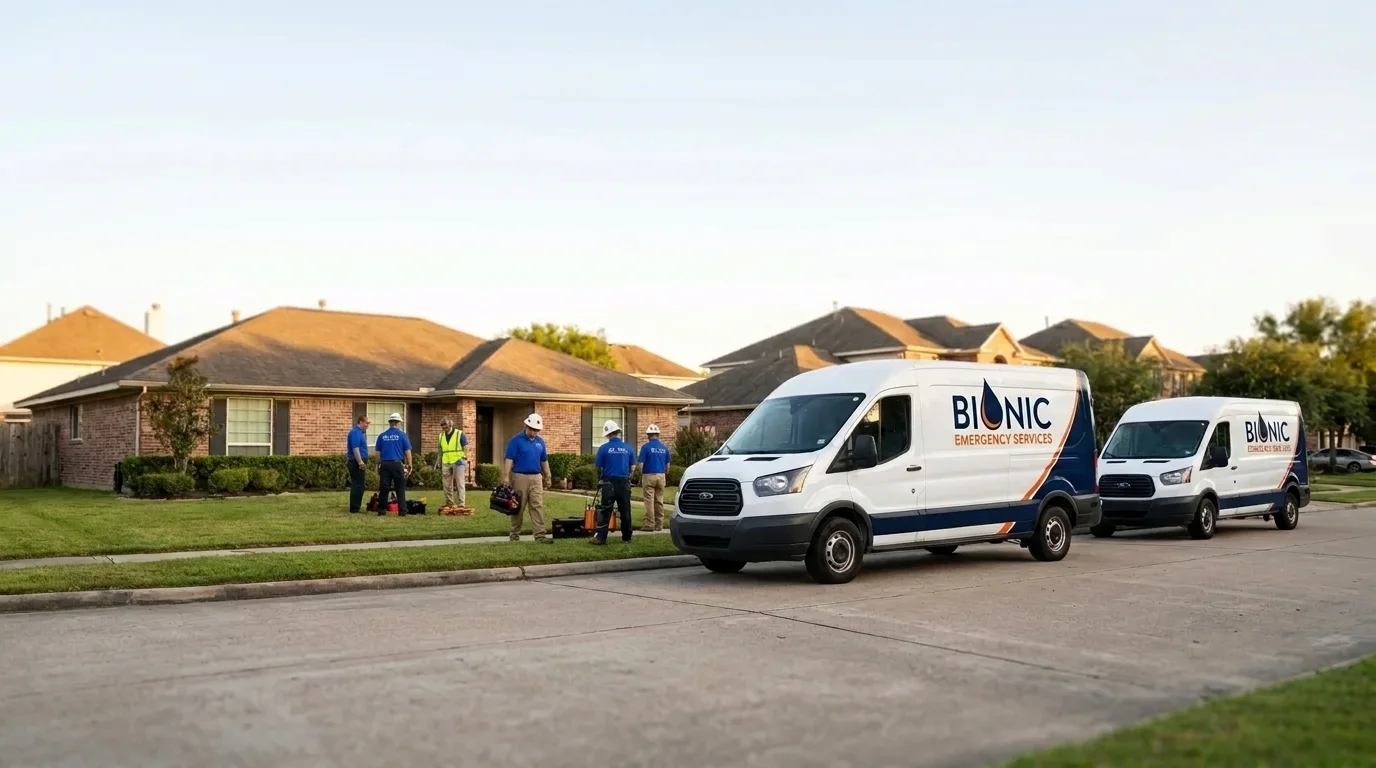
BIONIC Emergency Services’s technicians hold IICRC WRT and ASD certifications and handle sewage cleanup and sanitization using containment, extraction, and disposal methods built for Category 3 water, not general household cleaning. That includes safely removing contaminated materials that can’t be salvaged, treating the structure itself, and documenting the loss for your insurance carrier. If your situation involves standing sewage water in a basement, kitchen, or any living space, call (713) 338-2424 before you start trying to clean it up yourself.
The Longer Recovery Process
Once the visible sewage is removed, the work isn’t finished. Materials that absorbed contaminated water, baseboards, subfloor, lower sections of drywall, often need to be removed rather than dried in place, because drying doesn’t neutralize what’s inside them. The remaining structure gets cleaned and sanitized, then monitored with moisture readings to confirm it’s actually dry, not just dry to the touch. Depending on what was affected, this process can take several days, and any affected contents, furniture, boxes, electronics, may need separate assessment to determine what’s salvageable versus what should be discarded.
This is also the stage where insurance documentation matters most. Photos, moisture readings, and a clear record of what was removed and why all support your claim, which is harder to put together after the fact if materials have already been thrown out or cleaned over.
If you’re dealing with a sewage backup right now, the safest move is to keep people and pets out of the affected area, shut off water use in the house if the backup seems connected to the main line, and get a professional assessment before doing any cleanup yourself. Call BIONIC Emergency Services at (713) 338-2424 to talk through what you’re seeing and get the right next step for your home.