
Reconstruction Services in Houston
24/7 reconstruction services in Houston and surrounding areas. IICRC-trained technicians, insurance billing accepted. Call (713) 338-2424.
Water extraction crews and fire suppression teams stop the damage. Reconstruction brings the structure back to a livable, insurable condition, framing replaced where studs were cut out, subfloor reset after Category 3 water intrusion, drywall and trim rebuilt after a kitchen fire burned through to the stud bays. If the mitigation crew already left and you’re staring at open walls, missing flooring, or a tarped roof wondering what happens next, that’s the gap reconstruction services fill.
What reconstruction services actually involve
Post-damage reconstruction covers everything required to put a structure back together after mitigation work is finished, structural framing, drywall and insulation, flooring, trim and cabinetry, painting, and in larger losses, roof decking or exterior siding. The scope depends entirely on how much had to come out during mitigation. A single bathroom pipe burst might mean replacing baseboards and a section of subfloor. A fire that burned through a wall cavity or a flood that soaked wall studs past salvage usually means full demolition back to the framing, then a rebuild from the studs out. Timelines run anywhere from a few days for cosmetic repairs to several weeks for a multi-room rebuild, and most jobs require at least one inspection tied to local permitting before drywall can be closed up.
Our process
- Scope of work and documentation. Before any rebuild starts, we document what was removed during mitigation, what’s salvageable, and what needs replacement, with photos and measurements that match the adjuster’s file.
- Permits and code review. Structural work, electrical, and plumbing tie-ins typically require permits through the local building department. We identify what’s needed before framing starts so the job doesn’t stall mid-project.
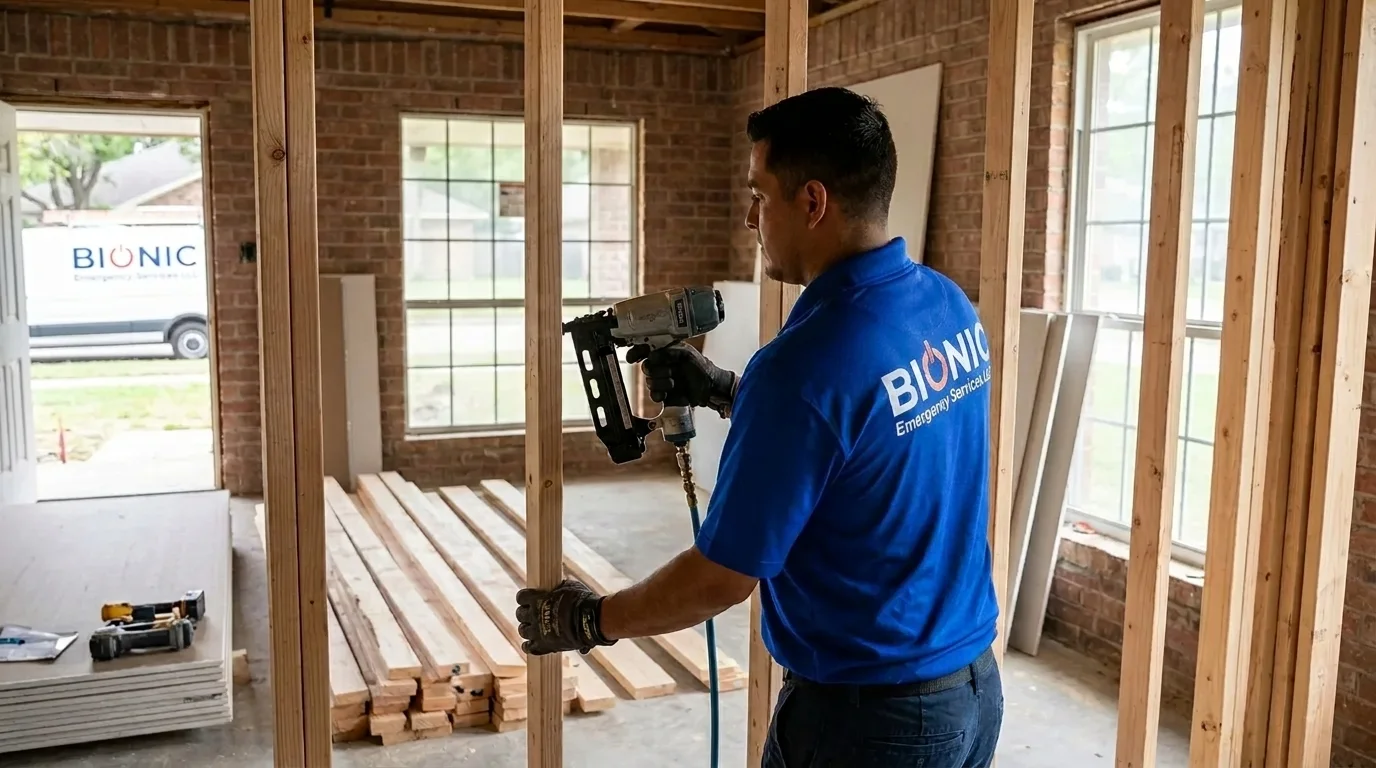
- Framing and rough-in. Studs, subfloor, and any structural members that were cut out or compromised get replaced first, followed by rough electrical, plumbing, or HVAC work behind the walls.
- Insulation, drywall, and finishing. Once rough-in passes inspection, insulation goes back in, drywall is hung and finished, and trim, flooring, and cabinetry are installed to match or complement the original.
- Final walkthrough. We compare the finished space against the original scope of work and the insurance estimate so nothing gets missed before the job is called complete.
What separates a good reconstruction response from a bad one
The most common failure point is a rebuild that starts before the structure is actually dry or before the mitigation company signed off on moisture readings. Closing up drywall over a stud bay that’s still reading wet invites the exact moisture problem the mitigation was supposed to prevent. A second common issue is scope creep that an adjuster won’t approve after the fact, work started without a written estimate, change orders that never got documented, or materials upgraded without sign-off. Adjusters are also looking for matching documentation between the mitigation invoice and the reconstruction scope, so the paper trail has to line up, not just the physical work. A careful reconstruction team pulls moisture logs from the drying phase, confirms permits before framing, and keeps a written scope that both the homeowner and the carrier have seen before demo or rebuild begins.
What does reconstruction cost?
Reconstruction costs vary more than almost any other restoration service because the scope ranges from a patched drywall section to a full structural rebuild. Every loss is different, which is why we provide a written scope of work with itemized pricing before any work begins, rather than a flat estimate. Most homeowners insurance policies cover reconstruction tied to a covered peril, such as a burst pipe or fire, but typically exclude upgrades beyond like-for-like replacement unless the policy includes specific endorsements.
| Scenario | Typical range |
|---|---|
| Drywall and trim repair, single room | $1,500 - $4,000 |
| Flooring replacement, single room | $2,000 - $6,000 |
| Bathroom rebuild after water damage | $5,000 - $15,000 |
| Kitchen rebuild after fire damage | $15,000 - $40,000 |
| Full room framing and structural rebuild | $20,000 - $60,000+ |
| Whole-floor rebuild, major structural loss | $50,000 - $150,000+ |
Seasonal & regional considerations
Houston’s clay-heavy soil shifts with wet and dry cycles, which can affect slab foundations and the way drywall and trim settle after a rebuild, something worth flagging to your contractor if cracking shows up months after a repair. Hurricane season brings a spike in reconstruction demand tied to roof and window failures, so permitting offices and material suppliers both run slower from late summer into fall. Homes built before the 1980s in neighborhoods like the Heights or Garden Oaks often have plumbing and electrical that doesn’t meet current code, which can add scope once walls are opened for a rebuild.
Service area
BIONIC Emergency Services handles post-damage reconstruction across Houston and the surrounding area, including Katy, Sugar Land, Pearland, and The Woodlands. Local permitting requirements and housing stock vary by municipality, and we account for that in the scope of work before framing starts.
If mitigation already pulled out the damaged materials and you’re left with an open wall cavity or a gutted room, get a written reconstruction scope before anyone starts framing. Call BIONIC Emergency Services at (713) 338-2424 to get a reconstruction scope of work started.
Services We Handle
- Complete Reconstruction
- Damage Reconstruction
- Home Reconstruction
Frequently Asked Questions
Does homeowners insurance cover reconstruction after water or fire damage?
How do you know when a structure is dry enough to start reconstruction?
Do I need a permit to rebuild after fire or water damage?
What's the difference between reconstruction and the mitigation work that happens first?
Can reconstruction match my home's existing trim, flooring, and finishes?
Looking for the best reconstruction company in Houston?
BIONIC Emergency Services provides reconstruction in Houston, TX and the surrounding area, and has served local property owners since 2011. Customers rate us 4.9 out of 5 stars across 154 Google reviews. We answer calls 24/7 — call (713) 338-2424 for immediate help.
Need Reconstruction now?
We respond 24/7 across Houston and surrounding TX cities.