
Contents Restoration & Storage in Houston
24/7 contents restoration & storage in Houston and surrounding areas. IICRC-trained technicians, insurance billing accepted. Call (713) 338-2424.
What Contents Restoration & Storage actually involves
When a pipe bursts behind a wall or smoke settles into every fabric surface in a home, the structure usually isn’t the only casualty. Furniture, electronics, clothing, documents, and family photos absorb moisture, soot, or sewage long before anyone notices the ceiling stain. In Houston’s climate, wet upholstery or boxed linens left untouched for even a day or two can start to sour and stain, and soot residue left on fabric sets permanently the longer it sits. Contents restoration separates what can be saved from what can’t, cleans and treats the salvageable items, and holds them somewhere stable while the structure itself gets dried or rebuilt.
The work covers a wide range of materials, each requiring a different method. Textiles go through wet or dry cleaning depending on contamination type. Electronics get inspected and sometimes treated for corrosion before they’re powered back on. Hard contents like furniture and cabinetry are wiped down, HEPA vacuumed, or run through ultrasonic cleaning for detail work. Documents and photos may need freeze-drying or specialized restoration if water has warped the pages. Once cleaned, items that can’t go back into the home immediately are boxed, inventoried, and moved into climate-controlled storage until the space is ready. A full contents job on a single affected room might wrap in a week or two; a whole-house loss with extensive pack-out can run several weeks to a few months, tied directly to the structural repair timeline.
Our process
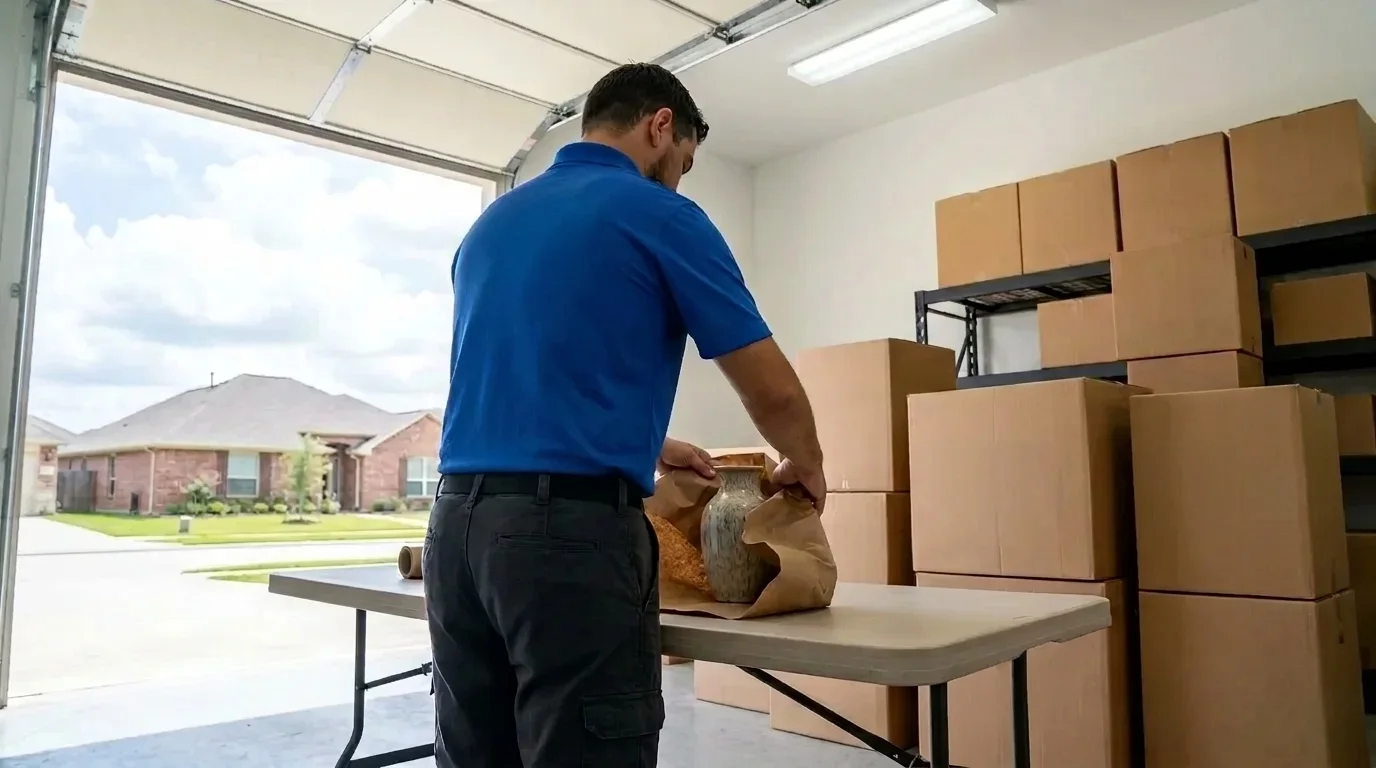
- On-site inventory and documentation. Every item is photographed, logged, and assigned a condition category before anything leaves the house. This record becomes the basis for both the cleaning plan and the insurance claim.
- Pack-out and sorting. Contents are separated into salvageable, questionable, and total-loss categories. Sorting happens by material and contamination type so a smoke-damaged rug isn’t boxed next to clean linens.
- Cleaning and treatment. Depending on the loss, this means wet or dry cleaning for fabrics, ozone or thermal fogging for odor in soft goods, ultrasonic cleaning for small hard-surface items, and corrosion treatment for electronics.
- Climate-controlled storage. Cleaned and treated items are stored in a controlled environment so humidity swings don’t undo the cleaning or trigger new moisture damage while repairs are underway.
- Pack-back and placement. Once the structure passes final inspection, items are returned, unboxed, and placed back in their original rooms, matched against the original inventory.
What separates a good contents response from a bad one
The biggest technical mistake is skipping the inventory step or doing it loosely, a few photos instead of an itemized list tied to condition notes. Insurance adjusters rely on that documentation to approve claims, and gaps in it slow payouts or get items denied outright. Another common failure is mixing contamination categories during cleaning: running Category 3 water-contaminated textiles through the same equipment as clean-water items without proper disinfection between batches. Electronics are frequently powered on too soon after water exposure, which can cause irreversible internal corrosion that wasn’t there at pack-out. And contents sometimes get boxed and stored before they’re actually dry, which just moves the moisture problem into storage instead of solving it. A careful operator tests moisture content before boxing, keeps chain-of-custody records for everything that leaves the property, and treats odor and contamination as separate problems rather than assuming one cleaning pass handles both.
What does Contents Restoration & Storage cost?
Costs vary by volume of affected contents, contamination type, and how long items need to stay in storage. Every loss gets a written scope before work begins, since a single-room water loss and a whole-house fire loss involve very different labor and storage time. Homeowners insurance typically covers contents restoration under the same policy that covers structural repairs, though coverage often depends on the cause of loss and whether contents were damaged by a covered peril.
| Scenario | Typical range |
|---|---|
| Single room, clean water, minimal contents | $800 - $2,500 |
| Multi-room water loss with furniture and electronics | $3,000 - $8,000 |
| Smoke/soot damage to textiles and hard goods | $2,500 - $7,500 |
| Whole-house pack-out with storage (per month) | $500 - $1,500/month |
| Document and photo restoration | $200 - $1,200 |
| Sewage-contaminated contents requiring disposal and replacement estimates | $1,500 - $5,000 |
Seasonal & regional considerations
Houston’s humidity means wet contents start deteriorating faster here than in drier climates, often within 24 to 48 hours if they’re not pulled out and dried promptly. During hurricane season, storm surge and heavy rain events can affect contents across entire neighborhoods at once, which stretches storage capacity and cleaning timelines regionwide. Homes that lose power during a storm also lose air conditioning, and contents left inside a hot, humid house for days without climate control degrade faster even if they weren’t directly wet.
Service area
BIONIC Emergency Services handles contents restoration and storage for homeowners and property managers across Houston and the surrounding communities, coordinating pack-out and storage logistics alongside whatever structural repair work a property needs.
If water, fire, or smoke has gotten into your belongings, don’t wait on sorting it out yourself. Call (713) 338-2424 to schedule a contents inventory and pack-out before odor and moisture damage set in any further.
Frequently Asked Questions
Does homeowners insurance cover contents restoration and storage?
How do you decide what's salvageable versus a total loss?
How long will my belongings be in storage?
Will my electronics still work after water or smoke exposure?
Do you provide an inventory list for my insurance claim?
Looking for the best contents restoration & storage company in Houston?
BIONIC Emergency Services provides contents restoration & storage in Houston, TX and the surrounding area, and has served local property owners since 2011. Customers rate us 4.9 out of 5 stars across 154 Google reviews. We answer calls 24/7 — call (713) 338-2424 for immediate help.
Need Contents Restoration & Storage now?
We respond 24/7 across Houston and surrounding TX cities.