
Water Leak Detection in Houston
24/7 water leak detection in Houston and surrounding areas. IICRC-trained technicians, insurance billing accepted. Call (713) 338-2424.
What water leak detection actually involves
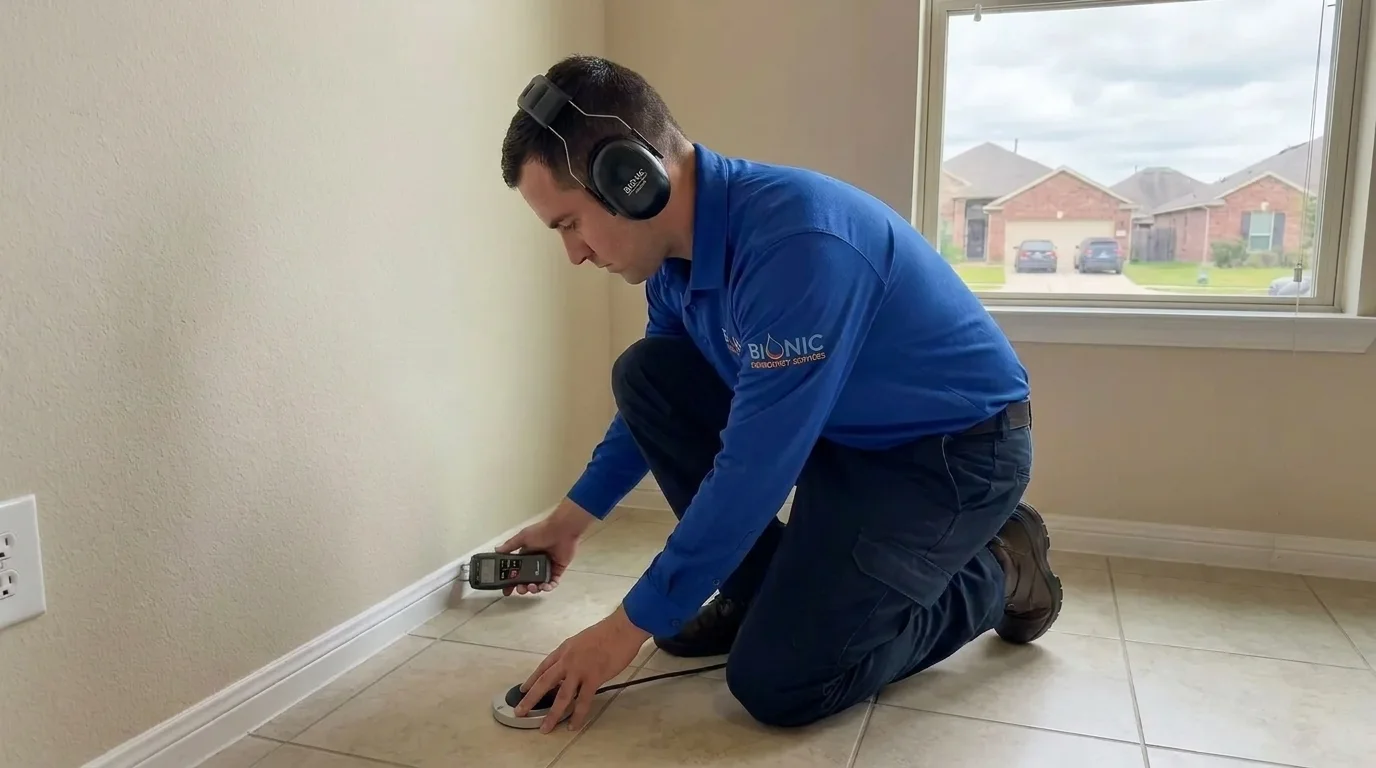
A leak that’s been running behind drywall or under a slab for weeks rarely announces itself with a puddle. More often it shows up as a water bill that’s crept up for no obvious reason, a warm spot on the slab, a musty smell near the baseboards, or a hairline crack creeping across the tile. By the time any of that is visible, the water has usually been moving through the wall cavity or under the foundation for a while, and finding the actual source without tearing out walls or concrete takes equipment most homeowners don’t own: acoustic listening discs, thermal imaging cameras, moisture meters, and for slab leaks, tracer gas or pipe locators that follow the plumbing line itself. The goal is always the same: pinpoint the leak’s exact location before anyone picks up a hammer.
Most non-invasive leak detection jobs take between one and three hours on site, depending on the size of the house and whether the leak is in a wall, under a slab, or in a yard line. Slab leaks in Houston’s clay-heavy soil can take longer to trace because shifting foundations sometimes displace the pipe from its original run, so the leak point on the slab surface doesn’t always sit directly above the pipe break.
Our process
- Interview and visual walkthrough. We start by asking what prompted the call, a water bill spike, a wet spot on carpet, a hot patch on the floor, and walk the property looking for staining, buckled flooring, or baseboard separation that points toward a source.
- Moisture mapping. A moisture meter establishes which materials are wet and how far the water has traveled, which narrows the search area before any specialized equipment comes out.
- Acoustic and thermal detection. Acoustic discs pick up the sound of pressurized water moving through pipe, and thermal imaging reads temperature differences in the slab or wall cavity, often the fastest way to find a leak in a wall or confirm a suspected slab leak without cutting anything open.
- Line isolation and pinpointing. For plumbing under pressure, isolating sections of the system helps confirm which line is leaking before we mark the exact point for access.
- Written findings and referral. We document the leak location, cause where it’s determinable, and provide a written report. Since we don’t do plumbing repair or slab tunneling ourselves, we point you to a licensed plumber for the fix, and provide the documentation they’ll need to access the right spot the first time.
What separates a good leak detection response from a bad one
The most common mistake is guessing instead of confirming. A contractor who opens drywall or jackhammers slab based on where the stain looks worst, rather than where the equipment actually points, can miss the leak by several feet, which means more demolition, more repair cost, and a homeowner paying twice. Good leak detection confirms the source before any destructive access happens, which is the entire point of the non-invasive equipment.
Another problem area is slab leaks specifically. Hydrostatic pressure, soil movement, and the age of the copper or polybutylene piping common in homes built before the 1990s all affect where and how a slab leak manifests. A detection process that doesn’t account for pipe routing (not just where the hot spot shows up) can send a plumber to the wrong access point. Insurance adjusters reviewing a slab leak claim typically want documentation showing the leak was independently located and dated as sudden and accidental, not a long-term gradual seep, since that distinction affects what’s covered.
What does water leak detection cost?
Typical costs vary based on how accessible the suspected leak is and whether specialized equipment like tracer gas is needed. These are industry-typical ranges, not a quote: every property is different, and BIONIC Emergency Services provides a written scope before any work begins. Homeowners insurance often covers the cost of locating a sudden, accidental leak when it’s tied to a covered water damage claim, though gradual leaks and pure maintenance issues are frequently excluded, so it’s worth checking your policy language.
| Scenario | Typical range |
|---|---|
| Visual inspection, no specialized equipment | $150 - $300 |
| Wall leak detection, acoustic/thermal | $300 - $600 |
| Slab leak detection, standard access | $400 - $800 |
| Slab leak detection with tracer gas | $600 - $1,200 |
| Yard/underground line detection | $350 - $900 |
| Whole-house pressure test and line isolation | $250 - $500 |
Seasonal & regional considerations
Houston’s clay soil expands and contracts significantly with seasonal moisture swings, and that movement is one of the more common contributors to slab leaks in the area, particularly in homes with copper supply lines run under the foundation. Hot, humid summers also mean a hidden water leak inside a wall cavity can turn into a rot and odor concern faster than it would in a drier climate, so catching it early matters more here than it does in some other parts of the country.
Service area
BIONIC Emergency Services provides water leak detection throughout Houston and the surrounding area. If you’re searching from a nearby suburb, we serve those communities as well.
If your water bill has spiked, a floor feels warm in one spot, or you suspect a water leak in a wall but can’t find it, schedule a leak detection visit before guessing turns into unnecessary demolition. Call BIONIC Emergency Services at (713) 338-2424 to get the leak pinpointed and documented.
Frequently Asked Questions
How do you find a leak inside a wall without cutting it open?
What's the difference between slab leak detection and regular leak detection?
Does homeowners insurance cover leak detection?
My water bill went up but I don't see any water. Could it still be a leak?
Do you repair the leak once it's found?
How long does a leak detection visit usually take?
Looking for the best water leak detection company in Houston?
BIONIC Emergency Services provides water leak detection in Houston, TX and the surrounding area, and has served local property owners since 2011. Customers rate us 4.9 out of 5 stars across 154 Google reviews. We answer calls 24/7 — call (713) 338-2424 for immediate help.
Need Water Leak Detection now?
We respond 24/7 across Houston and surrounding TX cities.