TL;DR: The best restoration company in Houston carries current insurance, employs technicians with IICRC water damage training, and can handle water, fire, and storm losses under one contract instead of farming pieces out. Look for 24/7 live dispatch, a written scope of work before repairs start, and direct experience coordinating with Texas insurers. A company that only does one type of job often can’t manage a loss that hits multiple systems at once, like a storm that tears the roof and lets water into the attic on the same night.
Maybe a slab leak flooded two rooms in your Meyerland home, or a kitchen fire left smoke damage running from the cabinets into the hallway, or a storm tore shingles loose near Buffalo Bayou Park and rain got into the ceiling before you could get a tarp up. Whatever the cause, you’re now scrolling search results trying to figure out which company actually knows what they’re doing versus which one just has a good ad budget. The honest answer: it comes down to a short list of concrete things you can verify before you ever sign a work order.
What makes a restoration company the right fit for a Houston home?
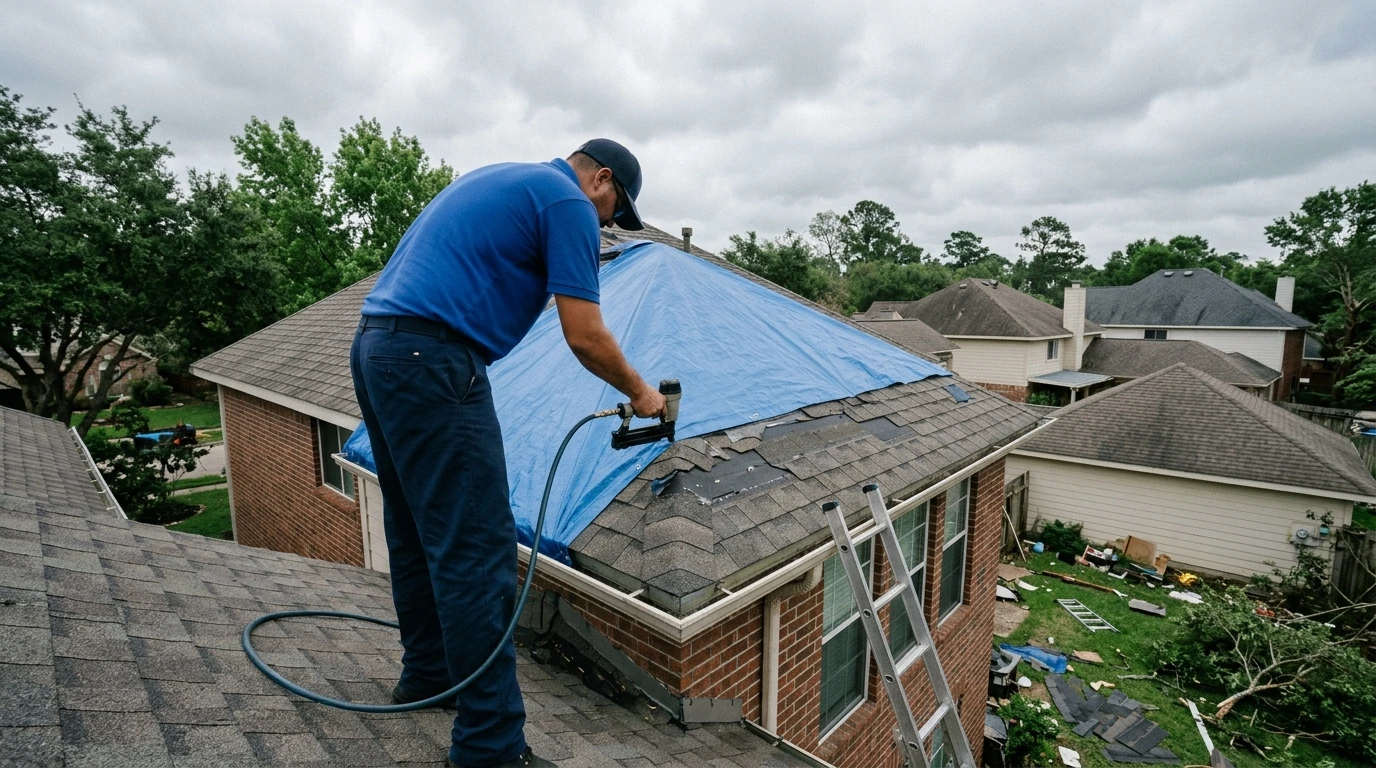
The right company carries current general liability insurance, employs technicians trained to the ANSI/IICRC S500 water damage standard, and can mobilize water extraction, fire mitigation, and storm tarping crews without waiting on a subcontractor three days out. That combination matters more in Houston than almost anywhere else, because a single storm season event (hurricane rain, a downed tree, a slab shift from clay soil) can produce two or three kinds of damage in the same house.
Specific things worth confirming before you hire anyone:
- Insured, with proof available on request
- Technicians holding IICRC Water Damage Restoration Technician (WRT) and Applied Structural Drying (ASD) credentials, not just general cleaning experience
- 24/7 live phone dispatch, not a voicemail queue
- Experience with Houston-specific risk, from bayou-adjacent flooding in neighborhoods like the Heights and Meyerland to slab leaks tied to the region’s shifting clay soil
- A written scope of work, not a verbal estimate
Restoration company vs. general contractor: what’s the difference?
A restoration company specializes in emergency mitigation, meaning water extraction, structural drying, smoke and soot removal, and content pack-out, while a general contractor specializes in the rebuild once mitigation is finished. The two overlap at the handoff point: drywall, flooring, and paint.
Hiring the wrong one first costs time. A general contractor called to a fresh water loss may not own commercial dehumidifiers or know how to document moisture readings the way an insurer expects. A restoration company called in for a bathroom remodel with no active damage is the wrong tool for that job too. Some full-service restoration companies cross-train technicians across water, fire, and storm response so the same crew that stops the damage can also coordinate the drying equipment and insurance paperwork, start to finish, without a second vendor relationship.
What should a restoration estimate actually include?
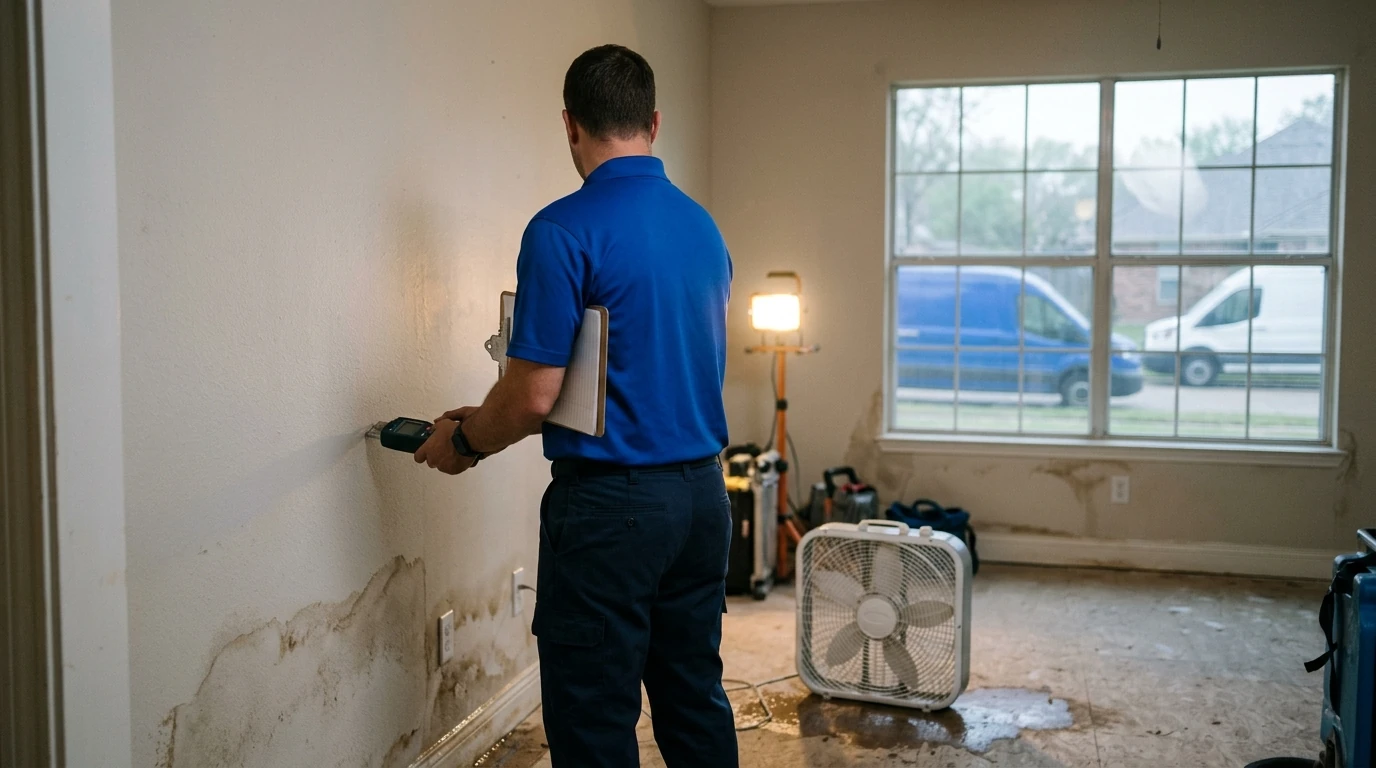
A real restoration estimate names the category and class of water involved, lists the specific drying equipment deployed and how many days it will run, and prices line items the way your insurer’s own adjuster will, rather than quoting a flat lump sum. Vague estimates are the single biggest red flag in this industry.
At minimum, ask for:
- The water category (clean, gray, or black) and what that means for which materials get removed versus dried in place
- A day-by-day drying plan with equipment counts, not just “we’ll monitor it”
- Line-item pricing that matches standard restoration estimating software, since that’s what most adjusters compare against
- Clear language on who submits documentation to your insurer and when
If a company can’t produce something like this in writing before work starts, that’s worth pausing on. Our comparison of the five best water damage restoration companies in Houston covers which certifications and documentation to ask about.
How do you compare restoration companies across Houston?
Compare on response commitment, the certifications technicians actually hold, and whether the company covers every peril that commonly hits Texas homes under one contract rather than three. Google reviews matter, but read a handful of the detailed ones, not just the star average.
A few questions that separate serious companies from the rest: Do they bill insurance directly, or leave that paperwork to you? Do their techs hold IICRC WRT or ASD credentials, and will they show you? Can one phone call cover a water, fire, or storm emergency, or do you need to find a second company if the damage isn’t their specialty? For a step-by-step version of this vetting process, see the five best water damage restoration companies in Houston.
Who should you call first after water, fire, or storm damage hits your Houston home?
Call a restoration company with 24/7 live dispatch before you call a general contractor or try to handle it yourself, because stopping active damage in the first hours protects both your home and your insurance claim. BIONIC Emergency Services answers that call around the clock across Houston and the surrounding area, from Sugar Land to the Woodlands, with IICRC WRT and ASD certified technicians for water losses, plus response for water, fire, and storm damage.
The documentation from that first call, photos, moisture readings, a written scope, becomes the backbone of your insurance claim later, so it’s worth getting it right from the first phone call rather than the third.
If you’re dealing with active damage right now, request an assessment before you make any other calls. A written scope takes the guesswork out of what happens next, and what it will cost.
About BIONIC Emergency Services
BIONIC Emergency Services was founded in 2011. Its technicians hold IICRC Water Damage Restoration Technician (WRT) and Applied Structural Drying (ASD) certifications and respond across the Houston area, from the Heights to Meyerland to Sugar Land, with 24/7 live dispatch. The insured team handles water damage, fire and smoke damage, storm damage, sewage cleanup, and contents restoration and storage under one roof, with a 4.9 average Google rating across 156 reviews.
Need help now? Call BIONIC Emergency Services at (713) 338-2424.
Video Transcript
A slab leak floods your floors. A kitchen fire fills the hallway with smoke. A storm rips shingles loose near Buffalo Bayou. Houston storms often cause water, fire, and structural damage in the same night, so you need a contractor who handles it all. Start by checking for current general liability insurance, and always ask to see proof before any work ever begins. Make sure technicians hold verified IICRC Water Damage Restoration Technician and Applied Structural Drying certifications, not just general cleaning experience. Look for twenty-four seven live dispatch, Houston-specific storm experience, and a written scope of work before repairs start. A restoration contractor handles emergency mitigation: water extraction, drying, smoke removal. A general contractor rebuilds afterward, once mitigation is complete. Calling the wrong one first wastes time. The best contractors cross-train crews to manage water, fire, and storm jobs together. A real estimate names the water category, lists drying equipment day by day, and prices every line item like your insurer expects. Ask who submits documentation to your insurer upfront, and whether one phone call covers water, fire, and storm damage, or three. Don’t wait for damage to spread. Call BIONIC Emergency Services at (713) 338-2424 to schedule an assessment.