
If a storm just rolled through and you’re staring at a damaged roof, a flooded garage, or water stains spreading across your ceiling, the single most important thing to do before you pick up the phone is document everything. Insurers process claims based on evidence, not just your description of what happened. Photograph the damage from multiple angles, write down the date and time the storm hit, and hold off on major cleanup until you’ve captured what the loss actually looks like. The steps below walk through what to gather, what to avoid saying or doing, and when the damage is serious enough to bring in a restoration crew before the adjuster even arrives.
Why This Matters More in Houston
Gulf Coast storms don’t behave like a single bad afternoon. Houston’s hurricane season runs roughly June through November, and even outside a named storm, the region sees fast-moving thunderstorms that bring straight-line wind, hail, and flash flooding from street drainage that can’t keep up with the rain rate. A lot of Houston’s housing stock, especially homes built before the 1990s, has roofing and flashing details that weren’t designed for today’s storm intensity, and slab foundations common across the area mean storm water often finds its way in through doors, low grading, or cracks rather than a basement. That combination means storm claims here frequently involve more than one type of damage, wind on the roof, wind-driven rain through a window seal, and standing water from street or yard flooding, all from the same event. Your documentation needs to separate those out clearly, because adjusters evaluate wind damage and flood damage differently depending on your policy.
The Checklist: What to Do Before You Call
- Photograph and video everything first. Walk the exterior and interior with your phone, wide shots and close-ups, before you move or remove anything. Include a shot that shows the date on your phone or a nearby clock/calendar if possible.
- Note the timeline. Write down roughly when the storm hit, when you first noticed damage, and when water or debris started affecting the inside of the home. Adjusters ask for this early.
- Check your policy for storm-specific language. Look for your wind/hail deductible (often a separate percentage-based deductible from your standard deductible) and confirm whether flood is covered separately, most homeowners policies exclude rising or standing floodwater unless you carry a separate flood policy.
- Make temporary repairs only, and keep receipts. Covering a broken window or a hole in the roof with a tarp to stop further damage is expected and often required by your policy. Save every receipt for materials.
- List damaged belongings with estimated value and age. For furniture, electronics, or flooring that got wet, note the approximate purchase date if you can. This speeds up contents claims.
- Get a copy of the storm’s local weather data if you can. National Weather Service storm reports for your date and ZIP code can support your claim if the insurer questions the cause.
- Call your insurer with facts, not conclusions. Report what you observed (water entered through the roof, a tree limb struck the fence) rather than guessing at cause or severity. Let the adjuster’s inspection confirm cause.
What NOT to Do
- Don’t throw away damaged items before they’re photographed and, ideally, inventoried. Once it’s in a dumpster, it’s harder to prove it existed.
- Don’t start full demolition or remove wet drywall and flooring before the adjuster inspects or at minimum before you’ve documented it thoroughly, unless secondary damage or safety makes waiting unreasonable.
- Don’t guess at a dollar estimate when you call the insurer. Describe the damage, let them send an adjuster, and let a contractor or restoration company provide the actual repair estimate.
- Don’t assume your homeowners policy covers flood damage. Wind-driven rain through a damaged roof is typically treated differently than street or yard water that entered through a door, and conflating the two in your claim description can cause delays or denial.
- Don’t sign anything from a door-to-door contractor promising to “handle your insurance claim” before you’ve confirmed their license and read the contract closely. Storm season brings transient crews to Houston every year.
When to Call a Restoration Professional
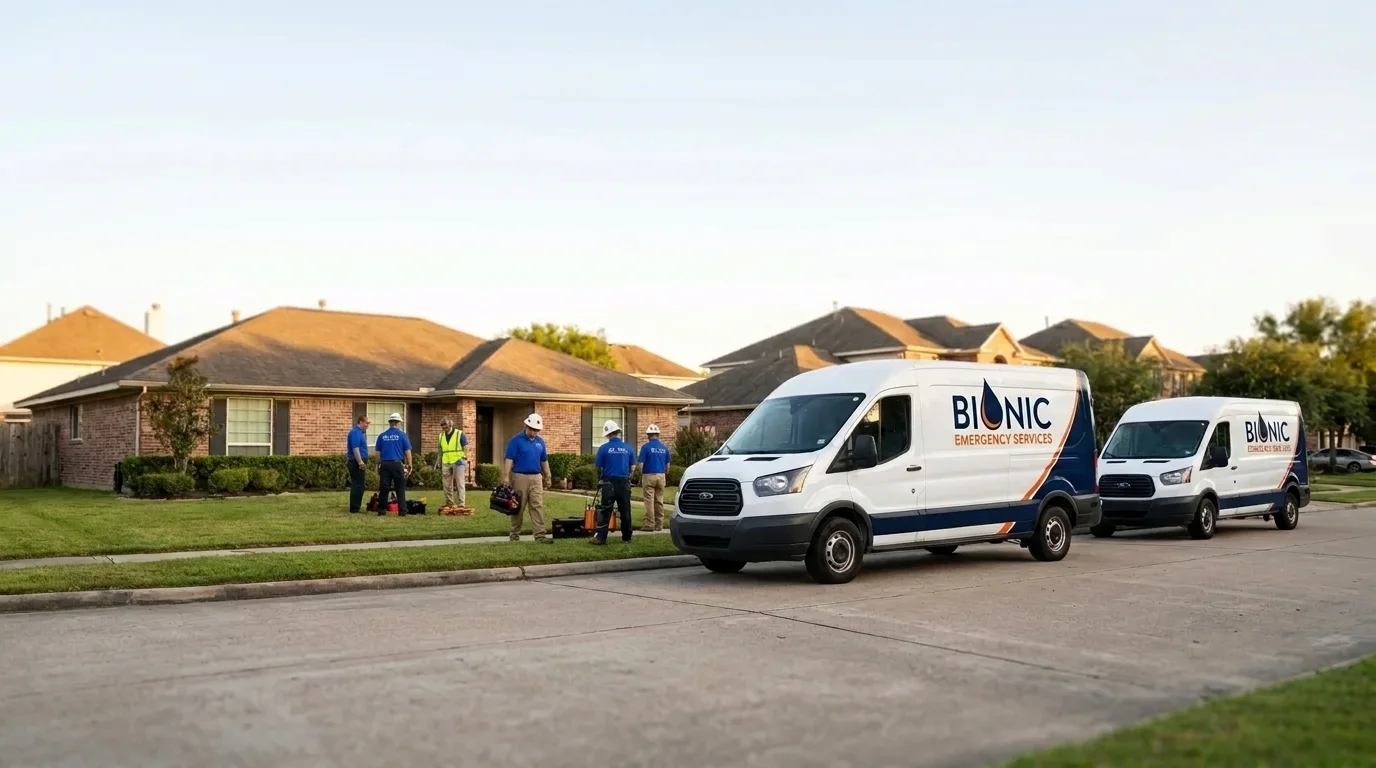
If the storm brought standing water into the home, left a roof opening exposed to weather, or soaked insulation and drywall, waiting even a day or two increases the risk of secondary damage like warped flooring or swelling drywall. A storm damage restoration crew can board up openings, extract standing water, and begin structural drying while your claim is still being processed, and most restoration companies, BIONIC Emergency Services included, document the loss with photos and moisture readings that can support your insurance file rather than complicate it. This isn’t about rushing a repair before the adjuster sees it; it’s about stopping damage from compounding while the paperwork moves. If you’re based in the Houston area and the damage involves water intrusion, wind damage, or debris impact to the structure, call (713) 338-2424 to talk through what you’re seeing and whether same-day mitigation makes sense before your adjuster appointment.
The Claims Process After the Initial Report
Once you’ve filed, expect an adjuster to schedule an inspection, often within a week or two depending on storm volume in the region, storms that hit a wide swath of the Gulf Coast at once can mean longer wait times simply due to claim volume. Bring your photo documentation, receipts for temporary repairs, and any contractor estimates to that inspection. If the adjuster’s estimate seems low compared to a contractor’s written scope, you can request a re-inspection or, in some cases, invoke the appraisal clause in your policy, a formal process where each side brings an estimator and a neutral umpire resolves disputes. Keep every piece of correspondence in one folder, physical or digital, because storm claims sometimes stretch across months, particularly if structural repairs uncover additional damage once walls or roofing are opened up.
If you’re in the middle of storm cleanup right now and the damage looks like more than a patch job, it’s worth getting a second set of eyes on it before you finalize anything with your insurer. A documented, professionally assessed loss tends to move through the claims process more smoothly than one built on phone descriptions alone.