
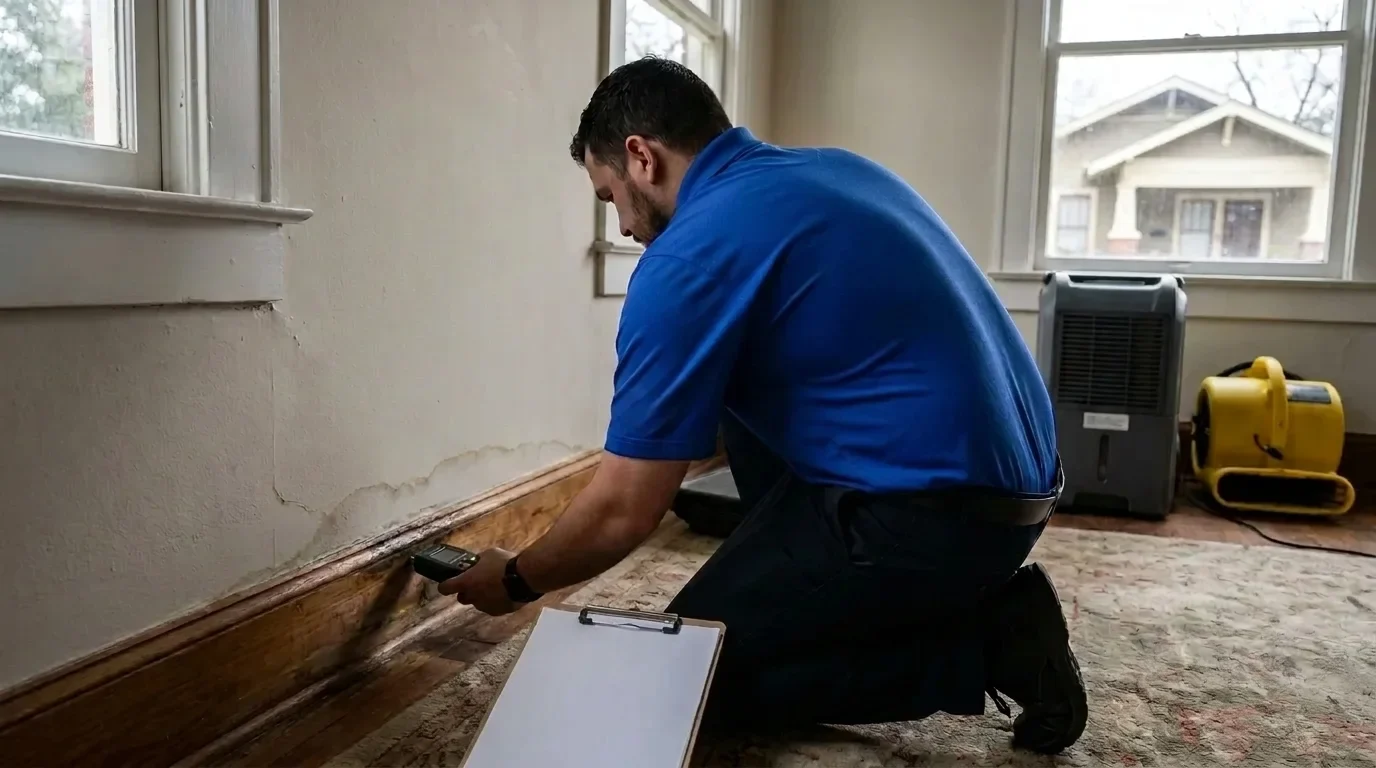
In Houston, TX, water damage restoration typically costs between $1,200 and $15,000 or more, depending on the water category, how many square feet are affected, and how much demolition the drying process requires. A single bedroom hit by a clean supply-line leak might run $1,200 to $3,000. A whole first floor soaked by a sewage backup or storm surge, with drywall and flooring pulled out, can run $8,000 to $15,000 or higher.
If you’re standing in a Heights bungalow looking at a burst pipe, or you’ve just found out a slab leak has been running under a Meyerland kitchen for days, here’s what actually moves that number before anyone writes a scope.
What Does Water Damage Restoration Cost in Houston, TX?
Costs scale with three things: how much water, how dirty the water, and how long it sat. Here’s what that looks like across common Houston scenarios.
| Scenario | Typical Cost Range |
|---|---|
| Small-area water extraction only, Category 1 (clean water) | $250 - $500 |
| Single room, Category 1, dry-out with no demolition | $1,200 - $3,000 |
| Multi-room, Category 2 (gray water), drywall and flooring removed | $3,500 - $7,500 |
| Whole floor, Category 3 (black water or sewage backup), structural drying plus demo | $8,000 - $15,000+ |
| Per square foot, extraction and drying only | $3.75 - $7.00 |
| Per square foot, with materials removed and reconstruction prep | $7.00 - $10.00+ |
These are typical ranges seen across the Houston market, not a quote. Every loss is different, and BIONIC Emergency Services provides a written scope of work before any work begins, so you know what you’re signing up for.
What Drives the Price Up or Down?
The single biggest driver is water category. Category 1 is clean water from a supply line. Category 2 is gray water (washing machines, dishwashers, toilets without solids). Category 3 is black water, sewage backups, floodwater, or anything that’s been standing more than 48 hours. Category 3 jobs cost more because more material has to come out and go to the landfill rather than being dried in place.
Square footage and the number of drying days matter almost as much. Air movers, LGR dehumidifiers, and air scrubbers are billed daily, and a structure that takes five days to hit the drying target costs more than one that hits it in two. Houston’s humidity doesn’t help; a slab home in Pearland or a bayou-adjacent property near Buffalo Bayou Park can take longer to dry than the same square footage in a drier climate.
Materials removed add up fast: wet drywall, insulation, carpet pad, baseboards, and cabinetry that’s swollen or delaminated. Most restoration crews, including ours, dry structures to the IICRC S500 standard, the industry benchmark that determines when a material can be dried in place versus when it has to be removed. Standing water under 24 to 48 hours often dries in place; longer than that, and porous materials usually come out to prevent secondary damage.
What Will My Insurance Actually Cover, and What Comes Out of Pocket?
Most homeowners policies cover sudden, accidental water damage (a burst pipe, a failed water heater) up to your policy limits, minus your deductible. Gradual leaks, like a slow slab leak that ran for weeks before anyone noticed, are frequently excluded or capped, since insurers treat them as a maintenance issue rather than a sudden loss.
The deductible is your floor, not your ceiling. If the job comes in above what insurance pays, you’re responsible for the difference, whether that’s the deductible itself or a gap between the insurer’s estimate and the actual scope. One place this surprises people: once demolition exposes hidden damage, such as rotted subfloor, the scope often grows. That’s a legitimate supplement, not padding, but it has to be documented with photos and moisture logs for the adjuster to approve it. This is where it matters that whoever is drying your home is also keeping the paper trail your claim depends on.
If you want the fuller picture on what a typical policy does and doesn’t pay, our plain-English guide to insurance coverage for water damage walks through it.
What Happens During a Water Damage Restoration Job?
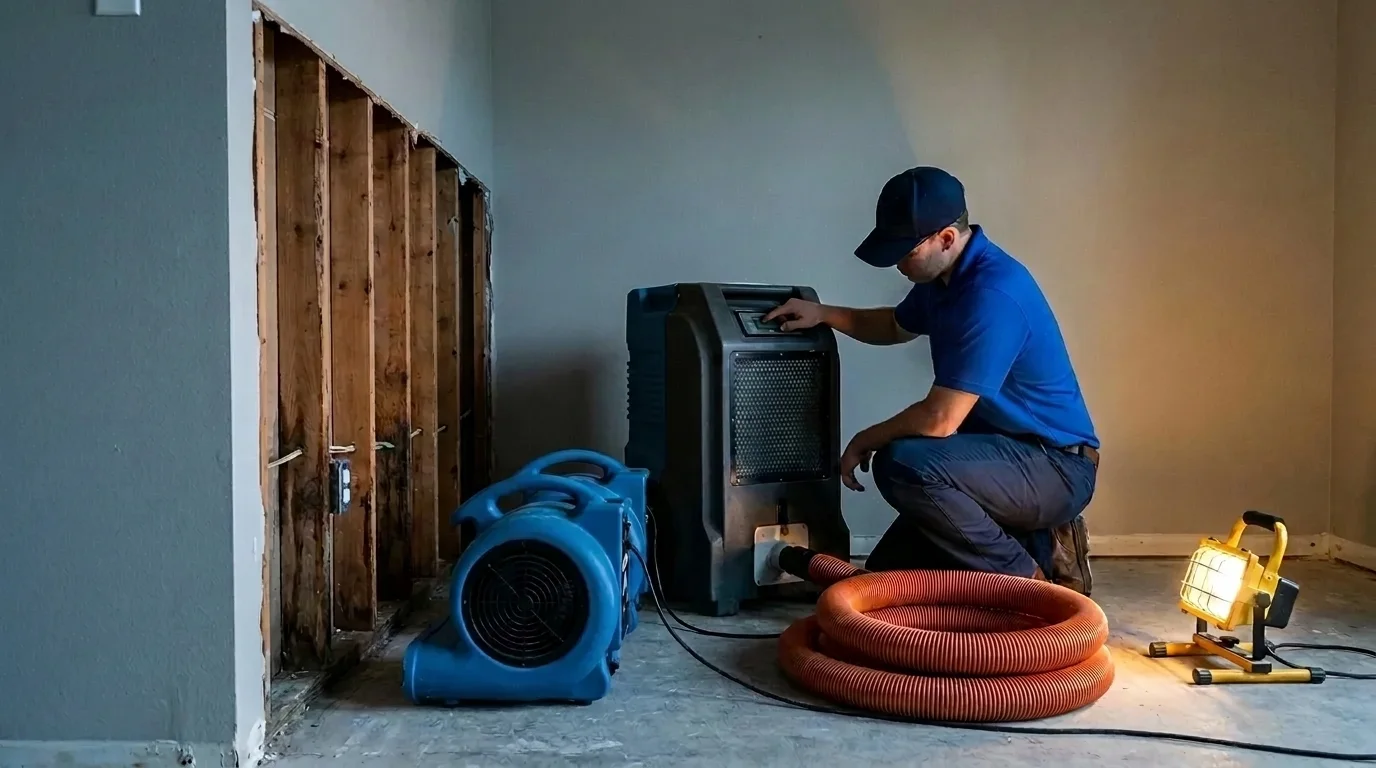
- Assessment and extraction. A technician takes moisture readings, classifies the water category, and begins pulling standing water with truck-mounted or portable extractors.
- Equipment setup. Air movers and dehumidifiers go in on day one to start pulling moisture out of framing, subfloor, and remaining drywall.
- Demolition, if needed. Materials that won’t dry in place (soaked insulation, swollen baseboards, Category 3-affected drywall) come out once the scope is confirmed.
- Daily monitoring. A technician checks moisture levels daily and adjusts equipment until the structure hits the drying standard, typically 3 to 5 days for a contained loss.
- Reconstruction prep. Once dry, the space is ready for drywall, flooring, and paint, either through your own contractor or a reconstruction crew.
For losses that only need equipment and monitoring without heavy demolition, our water cleanup service covers the extraction and drying phase on its own.
If you’re dealing with standing water right now in Houston, Pasadena, Sugar Land, or anywhere along the bayou corridor, getting a technician out to classify the water and start extraction within the first day matters more to the final cost than almost anything else. Request a water damage assessment from BIONIC Emergency Services before the water sits long enough to change the category.
About BIONIC Emergency Services
BIONIC Emergency Services has served Houston, TX since 2011, with technicians holding IICRC WRT (Water) and IICRC ASD (Structural Drying) certifications. The company is insured, answers calls 24/7, and holds a 4.9-star Google rating across 154 reviews. Founder Shane Dodson and the BIONIC crew handle water damage restoration, water cleanup, fire damage restoration, storm damage restoration, sewage cleanup, and contents restoration across Houston and surrounding Harris, Fort Bend, and Montgomery County communities.
Need help now? Call BIONIC Emergency Services at (713) 338-2424.