
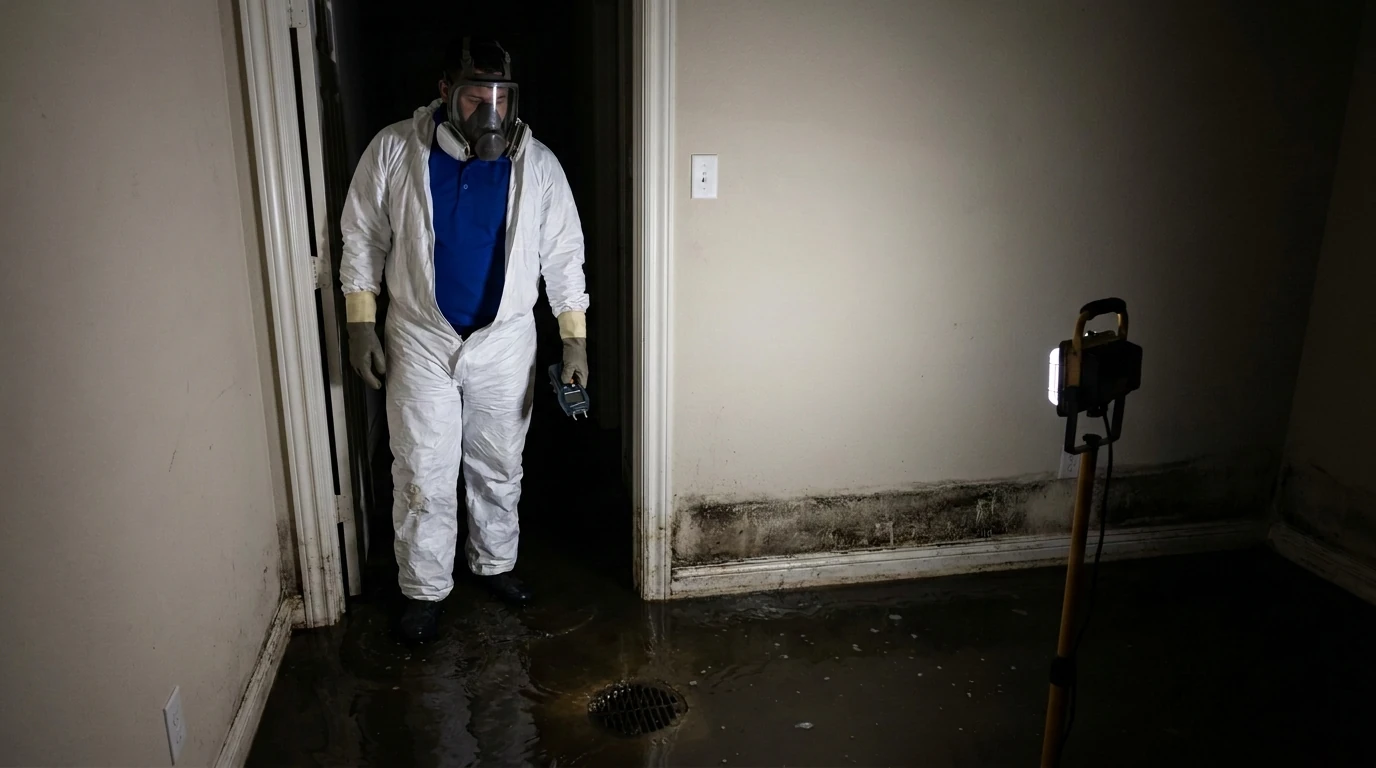
If sewage is coming up through a drain, a toilet, or a floor drain in your Houston home right now, call BIONIC Emergency Services at (713) 338-2424. The line runs 24/7, and the technicians who respond hold IICRC Water Damage Restoration Technician (WRT) and Applied Structural Drying (ASD) certifications for exactly this kind of loss. Before you call anyone else, stop running water in the house, keep kids and pets away from the affected room, and do not touch the water without gloves. Sewage is classified as Category 3, or black water, under the ANSI/IICRC S500 standard, which means it carries bacteria and pathogens that make bare-hand contact a real health risk.
Is the backup coming from the city sewer or your own plumbing?
The right call depends on where the blockage actually sits. A clog in the City of Houston’s sewer main is the city’s responsibility to clear; a clog in your own lateral line, the pipe running from your house to the city connection, is yours to fix with a plumber.
There’s a simple way to tell the difference. If sewage is backing up out of more than one drain at once, especially the lowest drain in the house (a basement floor drain, a downstairs shower, or a laundry standpipe), the blockage is likely downstream in the main line or in your lateral near the street. If only one fixture is backing up, like a single toilet or one bathroom sink, the clog is probably isolated to the plumbing feeding that fixture, which is squarely a plumber’s job.
For a suspected city main issue, Houstonians report it through the City of Houston’s 311 service, which dispatches public works to inspect and clear municipal lines. The city generally won’t send anyone into your house, so if sewage has already backed up indoors, you still need a plumber to confirm the line is clear and a restoration company to handle the cleanup once it is.
Who actually stops the problem: a plumber, the city, or a restoration company?
A plumber clears the blockage; a restoration company cleans up what the backup left behind. They’re two different jobs, and most sewage-backup situations in Houston need both, in that order.
- Call a plumber first if sewage is actively backing up and you can see or suspect a clog in your own line, a tree-root intrusion, or a collapsed section of pipe. Nothing should be cleaned up while the source is still flowing.
- Call the City of Houston (311) if multiple neighbors on your street are reporting backups at the same time, which points to a problem in the public main rather than your private line.
- Call BIONIC once the flow has stopped for the cleanup itself: extracting contaminated water, removing wet drywall and flooring that can’t be sanitized, disinfecting the structure, and drying it to IICRC S500 standards so mold doesn’t follow.
A backup in a Meyerland or Third Ward home with a slab foundation can trap Category 3 water under flooring fast, which is part of why the plumber-then-restoration order matters: cleaning before the source is fixed just means doing it twice.
When is it a 911 or utility-company emergency instead?
Call 911 or your electric utility, not a plumber or restoration company, if sewage water is pooling near an electrical panel, outlets, or any powered appliance, or if you smell gas anywhere in the house. Those are life-safety hazards that override everything else on this list.
If standing water has reached outlets or a breaker panel, shut off power at the main breaker only if you can do so without stepping into the water, and leave the house until the utility or fire department clears it. Never try to kill power from inside a flooded room.
What happens when you call BIONIC for a sewage cleanup
When you call, a technician will ask for your address, which rooms are affected, whether the water is still flowing, and whether anyone has been in contact with it. Have that information ready; it determines how the crew stages equipment before they walk in.
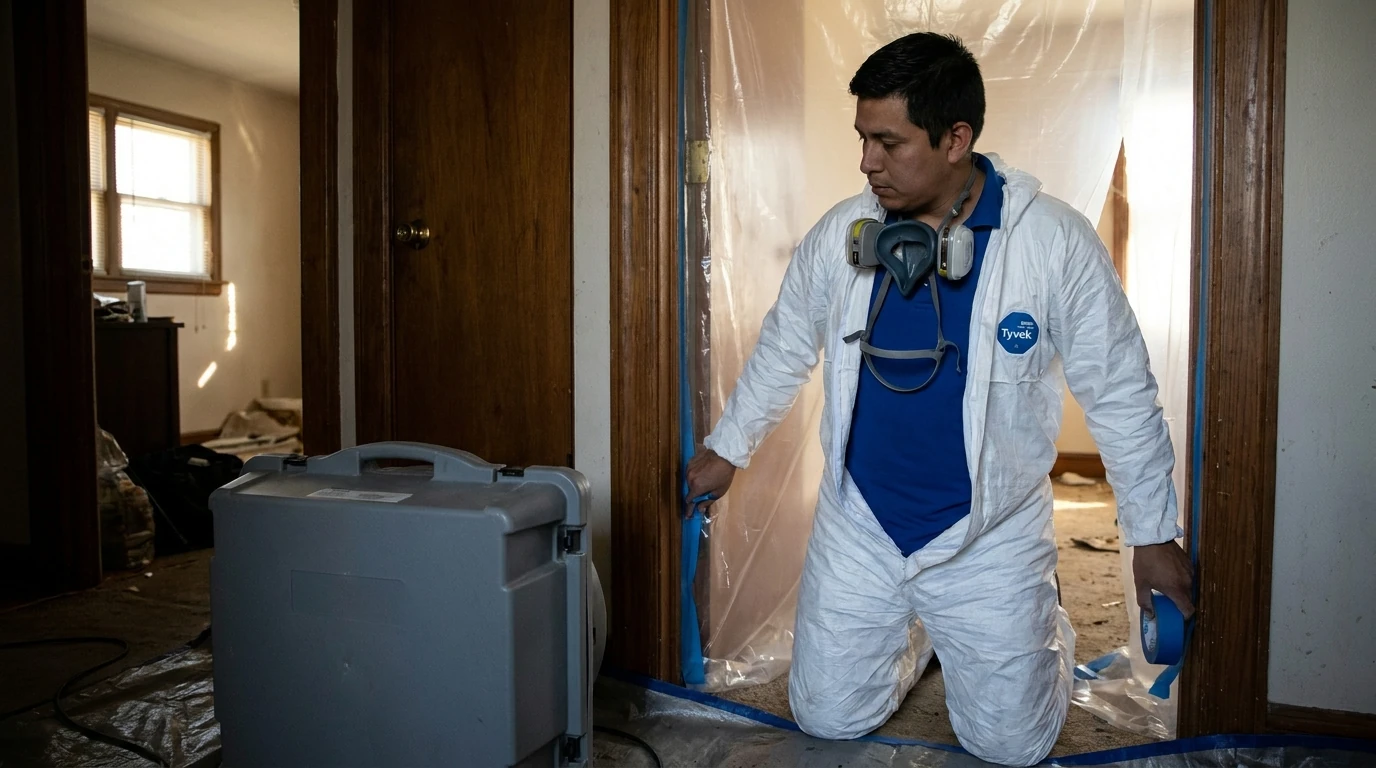
On arrival, the crew suits up in sealed protective gear before entering, because Category 3 water calls for full containment, not just gloves. They’ll set up containment barriers to keep contamination from spreading to unaffected rooms, extract standing water, and document the affected materials with photos and moisture readings before anything is removed. Porous materials that soaked up sewage, like carpet pad, drywall below the water line, and baseboards, typically can’t be sanitized and get removed rather than dried in place. The rest of the structure gets disinfected and dried under the ANSI/IICRC S500 standard for water damage restoration, with drying progress tracked on daily moisture logs. If you want the fuller health-risk picture before the crew arrives, our guide to why sewage backups aren’t a DIY job covers what’s actually in that water.
Does insurance cover a sewage backup in Houston?
A sewage backup is usually only covered if your homeowners policy has a water backup and sump discharge endorsement, which most standard policies don’t include by default. Without that rider, a backup caused by a line clog or main overflow is often excluded, even though the same policy might cover a burst pipe.
Check your declarations page for a line labeled “water backup” or “sewer and drain backup” and note the coverage limit, since these riders are frequently capped lower than the main dwelling coverage. The Texas Department of Insurance has a plain-language breakdown of when water damage and the mold that can follow it are and aren’t covered under a typical Texas homeowners policy. Thorough photo documentation and moisture logs from the cleanup, the kind generated during a professional mitigation job, are usually what an adjuster asks for to process the claim, so keep whatever paperwork the crew gives you.
A sewage backup rarely waits for a convenient time, and the source has to be stopped before any cleanup starts. Once the plumber or the city has the flow stopped, Call BIONIC Emergency Services at (713) 338-2424 to get the contaminated water extracted and the structure dried before mold or odor has a chance to set in.
About BIONIC Emergency Services
BIONIC Emergency Services has served Houston, TX since 2011, with technicians holding IICRC Water Damage Restoration Technician (WRT) and Applied Structural Drying (ASD) certifications. The company answers calls 24/7 and holds a 4.9-star Google rating across 154 reviews. BIONIC’s work covers water cleanup and restoration, sewage cleanup and sanitization, storm damage, fire and smoke damage restoration, and contents restoration and storage across Houston and the surrounding Gulf Coast communities.