TL;DR: When your house floods in Houston, call 911 first only if someone is trapped or in danger. Once everyone is safe, call your flood insurance carrier to start a claim, then call a restoration company for water extraction and structural drying. Floodwater from a bayou overflow, street flooding, or storm surge is Category 3 water, meaning it’s contaminated and needs professional extraction, not a wet vac and a prayer.
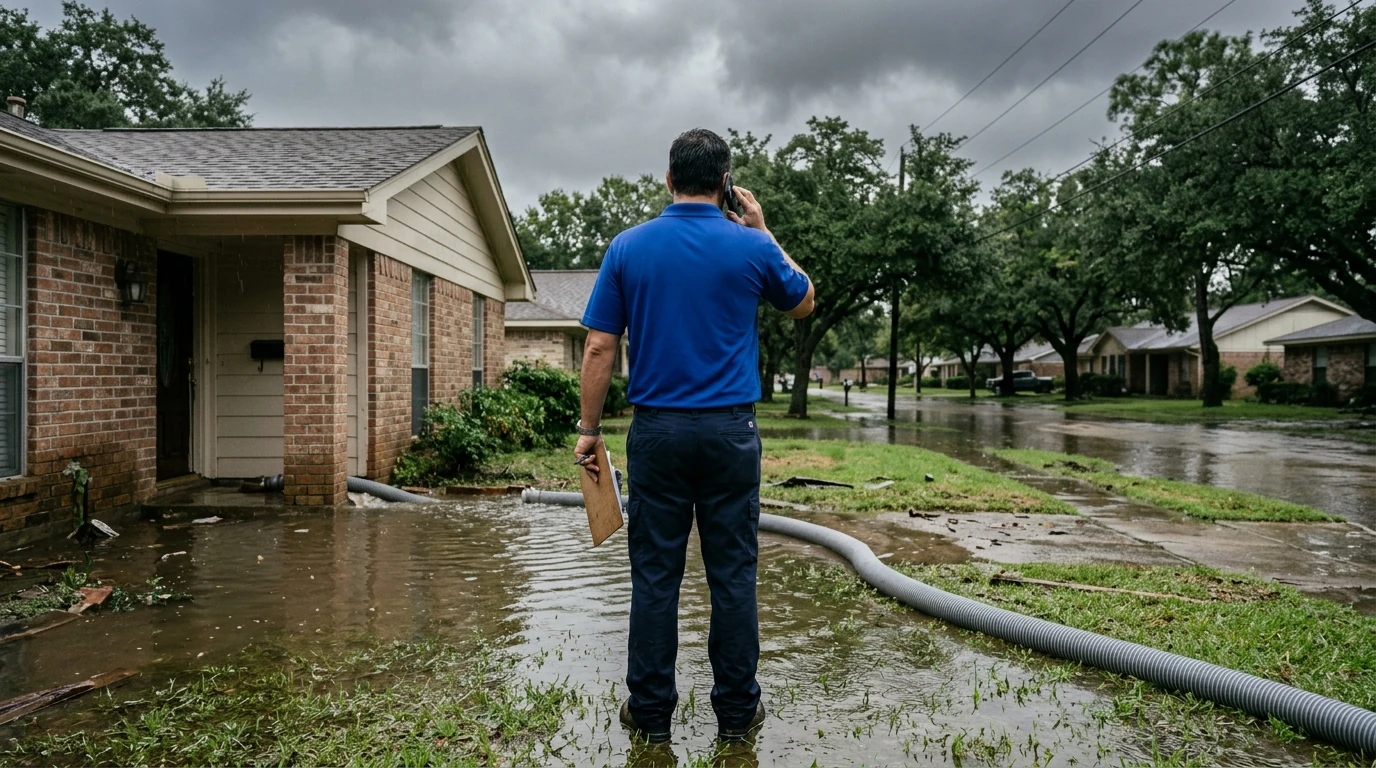
If water is coming through your front door right now from a Harris County bayou overflow, street flooding, or a tropical system pushing surge up the Ship Channel, here’s the order that actually protects you and your home. If anyone is trapped, hurt, or the water is rising with no safe exit, call 911 first. Once everyone’s out of immediate danger, call BIONIC Emergency Services at (713) 338-2424; the line runs 24/7 and the company carries a 4.9-star Google rating across 155 reviews from Houston-area homeowners who’ve been exactly where you are right now.
What do I do in the first 10 minutes, before anyone arrives?
Get everyone, including pets, to higher, dry ground and stay out of moving water. Floodwater in streets and yards can hide downed power lines, open manholes, and debris you can’t see, and six inches of moving water can knock an adult off their feet.
If you can reach your home’s main breaker panel without stepping in standing water, shut off power to the flooded area. Never wade through water to get to an electrical panel; if reaching it isn’t safe, leave it alone and let the utility or the restoration crew handle it once the area is checked. Don’t drive through flooded streets either; most flood deaths in Texas happen in vehicles.
If you can do it safely, take photos and short videos of the water line, the rooms affected, and any damaged belongings before you move anything. That documentation matters more than almost anything else once you’re filing a claim.
When do I call 911 instead of a restoration company first?
Call 911 before anything else if someone is trapped by rising water, if you smell gas, or if downed power lines are anywhere near standing water. Those are life-safety situations a restoration crew is not equipped to handle and shouldn’t be the first call.
Outside of those situations, dispatchers are managing a flood event across the whole county and can’t send someone to pump out your living room. For that, you need a restoration company, and for the financial side, your insurer.
Who do I call about insurance, and when?
Call your flood insurance carrier as soon as everyone is safe and the immediate hazard is handled, because in Texas, flood damage from rising water is almost never covered by a standard homeowners policy. It requires a separate flood policy, either through the National Flood Insurance Program or a private flood carrier, and that’s a different phone number and a different claim than your homeowners insurer.
This trips up a lot of Houston homeowners after a bayou overflow, because the instinct is to call the same insurer who covers the roof and the HVAC. If you’re not sure which policy applies, check your declarations page or call your agent; the Texas Department of Insurance also fields consumer questions after a storm. Start the extraction and drying process right away regardless of which claim applies; most policies, flood or homeowners, expect you to act promptly to limit further damage, and the photos you took in the first few minutes back that up.
What happens when you call a flood cleanup company?
A restoration company’s first call is triage: they’ll ask how deep the water is, how long it’s been sitting, and whether it came from a river, bayou, or street flooding versus a clean supply line, because that determines how the job gets scoped. Floodwater that enters from outside, whether it’s Buffalo Bayou overtopping its banks near the Heights or storm surge pushing in near Galveston Bay, is classified as Category 3 water under the IICRC S500 standard: grossly contaminated and treated differently than a clean pipe break.
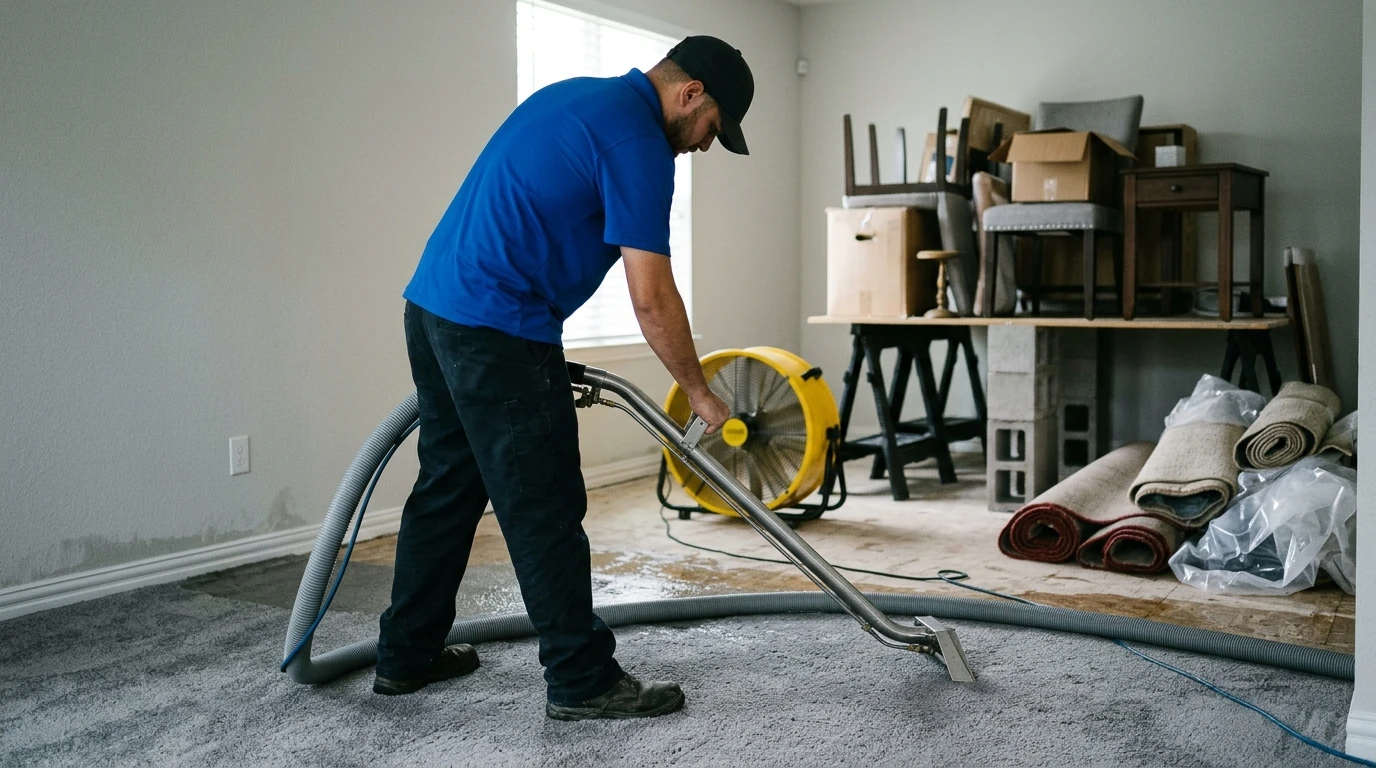
That classification isn’t a technicality. Category 3 water usually means porous materials like carpet pad, drywall, and baseboards get removed rather than dried in place, and crews work in protective gear rather than street clothes. On arrival, a crew sets up pumps and truck-mounted extractors to pull standing water, removes materials that can’t be safely dried, and places air movers and dehumidifiers to bring moisture levels down and control humidity before it causes secondary damage to framing and subfloor. BIONIC Emergency Services documents the whole process with moisture readings and photos, which becomes part of the record your insurer will ask for. The company offers a free evaluation to walk the property and explain what’s salvageable before any work starts, not a sales pitch, just an honest look at the scope.
If you’ve got flooring, furniture, or boxes that got wet but aren’t a total loss, ask about content pack-out and storage options too; getting belongings out of a wet structure and into a controlled space stops the damage from spreading while the drying work happens.
What should I do next if water is already inside?
Once the immediate safety steps are done and your claim is started, the next move is getting extraction and drying underway before the water sits any longer. Every hour floodwater stays in contact with drywall, subfloor, and framing adds to what has to be replaced instead of dried.
For homes in The Heights, Meyerland, or anywhere else that backs up to a Houston bayou, schedule a water damage evaluation as soon as it’s safe to get crews on site.
Flood response in Houston comes down to a short, specific list: safety first, the right insurance call second, and a crew that knows the difference between a clean pipe break and Category 3 bayou water third. Get those three calls in order and the rest of the process is far more manageable than it feels standing in ankle-deep water at 2 a.m.
About BIONIC Emergency Services
Founded in 2011 and based in Houston, the company has handled water and flood damage calls across neighborhoods from Meyerland to The Heights for over a decade. Technicians hold IICRC Water Restoration Technician (WRT) and Applied Structural Drying (ASD) certifications, and the crew runs a 24/7 emergency line for homeowners facing rising water, storm damage, sewage backups, fire damage, and smoke damage across the greater Houston area.