
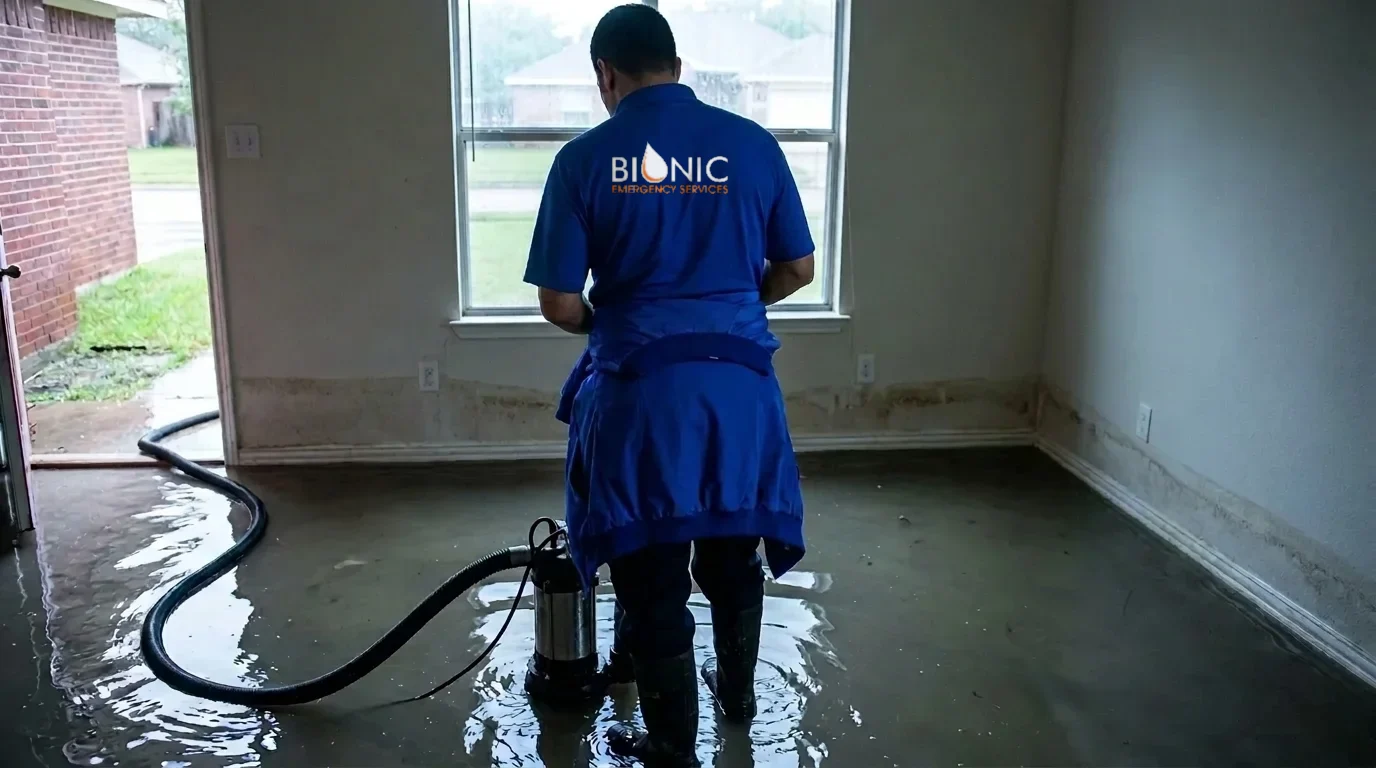
TL;DR: Flood damage restoration is the extraction, decontamination, and drying work needed after rising water, from a storm surge, an overflowing bayou, or sustained heavy rain, gets inside a structure. In Houston, that water is almost always Category 3 (contaminated) and gets handled differently than a clean-water pipe break. Standard homeowners insurance does not cover flood; that coverage comes from a separate NFIP or private flood policy. Crews extract the water, remove contaminated porous materials, disinfect, and dry the structure to the IICRC S500 standard before any rebuild starts.
If Buffalo Bayou or Brays Bayou backed up during the last heavy rain and water crept into a Meyerland or Heights home through the slab or a low window well, that’s a different problem than a burst washing machine hose. Water that enters a home from outside, ground-level rise, is almost always contaminated, and the insurance rules that apply to it are not the rules that apply to a plumbing leak. Here’s what the restoration process actually involves, and what a policy will and won’t pay for.
What’s the difference between water mitigation and water damage restoration?
Water mitigation is the emergency work done in the first 24 to 48 hours to stop damage from spreading: extracting standing water, removing saturated materials that can’t be saved, and setting equipment to begin drying the structure. Restoration is the fuller process, mitigation plus the cleaning, disinfecting, monitoring, and reconstruction needed to bring the property back to its pre-loss condition.
Most companies, including BIONIC, handle both phases under one scope so there’s no gap between stopping the damage and finishing the repair. A mitigation-only company that doesn’t also rebuild can leave a homeowner coordinating a second contractor mid-claim, which slows everything down.
Does homeowners insurance cover flood damage in Texas?
A standard Texas homeowners policy does not cover flood damage. Insurers define flood as water that rises from the ground or outside the structure, an overflowing bayou, storm surge, or heavy rain pooling against a foundation. That coverage comes from a separate policy, typically through the National Flood Insurance Program, according to the Texas Department of Insurance.
Sudden, accidental water damage from inside the house, a burst pipe, a failed water heater, an overflowing toilet, is usually a different coverage path under a standard homeowners policy. We’ve laid that distinction out in more detail in Does Homeowners Insurance Cover Water Damage?
If a home in Meyerland, Sugar Land, or anywhere along a Fort Bend waterway doesn’t carry a flood policy through the NFIP or a private flood carrier, the repair cost for bayou or surge flooding typically falls to the homeowner. That’s worth checking before hurricane season each year, not after the water is already on the floor.
What does Category 3 floodwater cleanup actually involve?
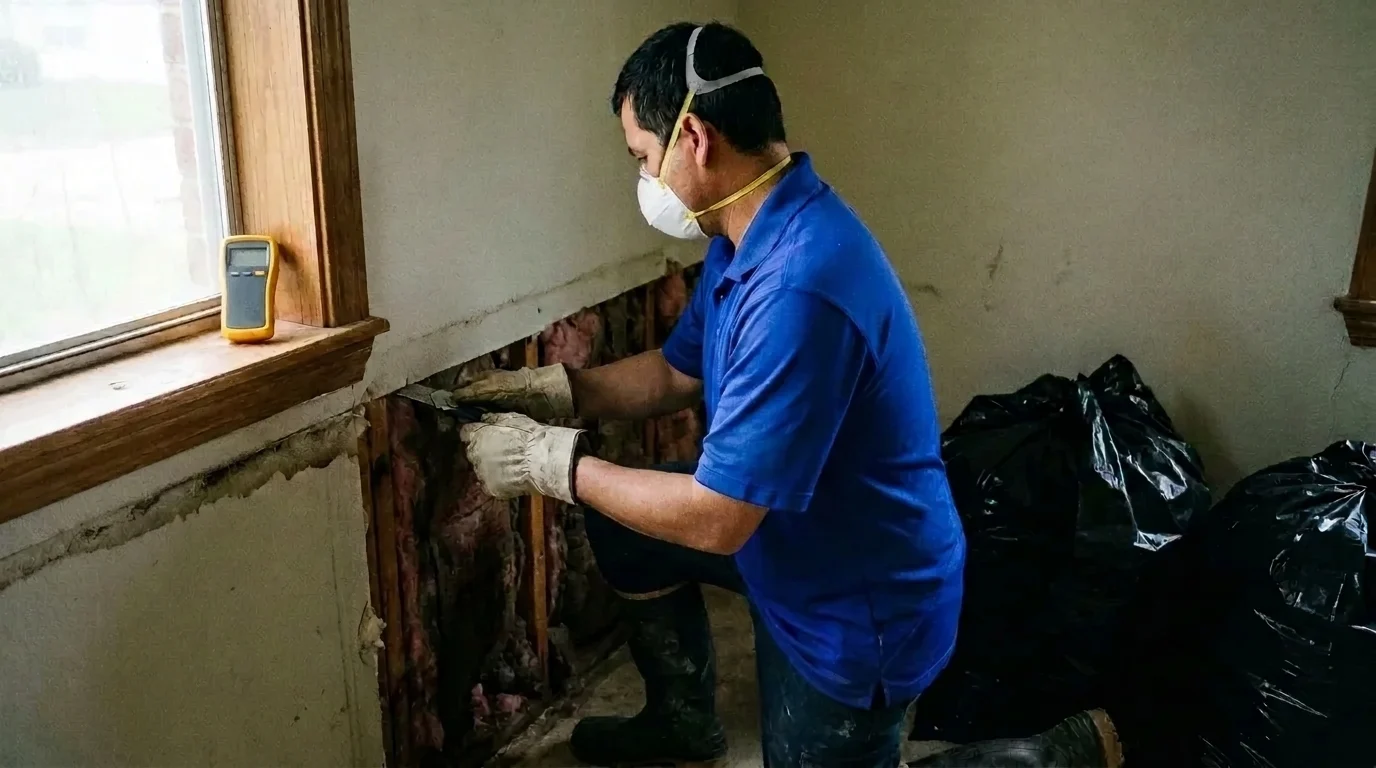
Category 3 water, also called black water, is contaminated with sewage, soil, chemicals, or other hazardous material and requires a different handling process than clean water under the IICRC S500 standard. Bayou and storm floodwater is treated as Category 3 by default because it has picked up runoff, soil, and often sewer backup on its way into the house.
The cleanup generally follows this order:
- Safety shutoff - power and gas isolated in affected areas before anyone enters standing water.
- Extraction - pumps and truck-mounted extractors remove standing and trapped water.
- Material removal - drywall, baseboards, insulation, and carpet that absorbed contaminated water are cut out and removed up to the flood line, since porous materials can’t be fully disinfected.
- Cleaning and disinfection - remaining structural surfaces are cleaned with EPA-registered antimicrobials.
- Structural drying - air movers and dehumidifiers run until wall cavities, subfloor, and framing reach a dry standard.
- Monitoring - moisture readings are logged daily until the structure is confirmed dry and safe to rebuild.
Anyone wading into standing floodwater at home should wear rubber boots and gloves at minimum; black water carries real infection risk, not just an odor problem.
How do you know when a house is fully dry after flooding?
A house is dry when moisture meter readings in the walls, subfloor, and framing match the dry standard for that material, not when the surface looks and feels dry to the touch. Visual dryness happens days before structural materials actually release their trapped moisture.
Technicians use penetrating and non-penetrating moisture meters to check behind walls and under flooring, logging readings daily and comparing them against an unaffected reference area in the same home. Drying times vary by how much material absorbed water and how long it sat before extraction started; our post on How Long Does Water Damage Restoration Actually Take? breaks down typical timelines. Closing up walls before readings stabilize is one of the most common causes of hidden rot and lingering odors after a flood.
What should you do first if your Houston home floods?
The first steps are safety, documentation, and getting water out, in that order, before worrying about the insurance claim itself. Walk through only once it’s safe (no standing water near outlets or panels), photograph every affected room and item, and avoid running HVAC systems that could spread contaminated moisture through ductwork.
Our storm damage insurance claim checklist and first 24 hours after water damage guides walk through documentation in more detail. Furniture, electronics, and salvageable belongings pulled from a flooded room often need offsite drying or storage while the structure itself is being worked on, which is where contents restoration and storage comes in alongside the structural work.
Flood damage from a bayou overflow is not the same claim, process, or coverage as a pipe leak, and treating it that way with an adjuster can cost real time. A water damage restoration scope that documents the Category 3 classification, the extraction, and the drying log from day one gives both a flood policy and a homeowners policy the paperwork they need, whichever one ends up paying.
About BIONIC Emergency Services
This article was written with the BIONIC Emergency Services team, led by Shane Dodson. BIONIC has served Houston, TX since 2011, with technicians holding IICRC WRT (Water Damage Restoration) and IICRC ASD (Applied Structural Drying) certifications. The company operates 24/7 and is insured, with a 4.9 rating across 154 Google reviews. BIONIC’s crews handle water damage restoration, storm damage restoration, sewage cleanup, and contents restoration and storage across Houston and surrounding communities from Meyerland to The Woodlands. Call BIONIC Emergency Services at (713) 338-2424 for a flood damage assessment, or review service details on the Houston service area page.