
Emergency Water Damage Restoration in Magnolia
Emergency water damage restoration in Magnolia, TX. IICRC-trained technicians, insurance billing accepted. Call (713) 338-2424.
Our IICRC-certified technicians are dispatched from our Houston, TX headquarters and are typically on-site in Magnolia within 60 minutes of your call.
Water damage emergency in Magnolia? Call now for emergency service. Between the slab foundations common to Montgomery County subdivisions and the clay-heavy soil that shifts under them, a water loss here rarely stays contained to one room, and the longer standing water sits against drywall and baseboards, the more it travels into framing and subfloor you can’t see from the hallway.
Why Magnolia Properties See Water Damage Issues
Magnolia sits in a part of Montgomery County that’s grown fast over the last two decades, which means the housing stock is a mix: older rural homes on well and septic systems alongside newer subdivisions built on slab foundations with municipal utility district (MUD) water and sewer service. Both patterns create their own water damage risk. The region’s expansive clay soil swells and contracts with rainfall, which stresses slab foundations and plumbing lines running beneath them, and a cracked slab line often shows up first as a damp patch of carpet or a musty smell near an interior wall rather than an obvious leak. Add in the heavy, fast-moving rain events that roll through this part of Texas, and roof and window intrusion during a storm can saturate attic insulation and ceiling drywall before anyone notices water intruding from above.
Our Water Damage Restoration Process in Magnolia
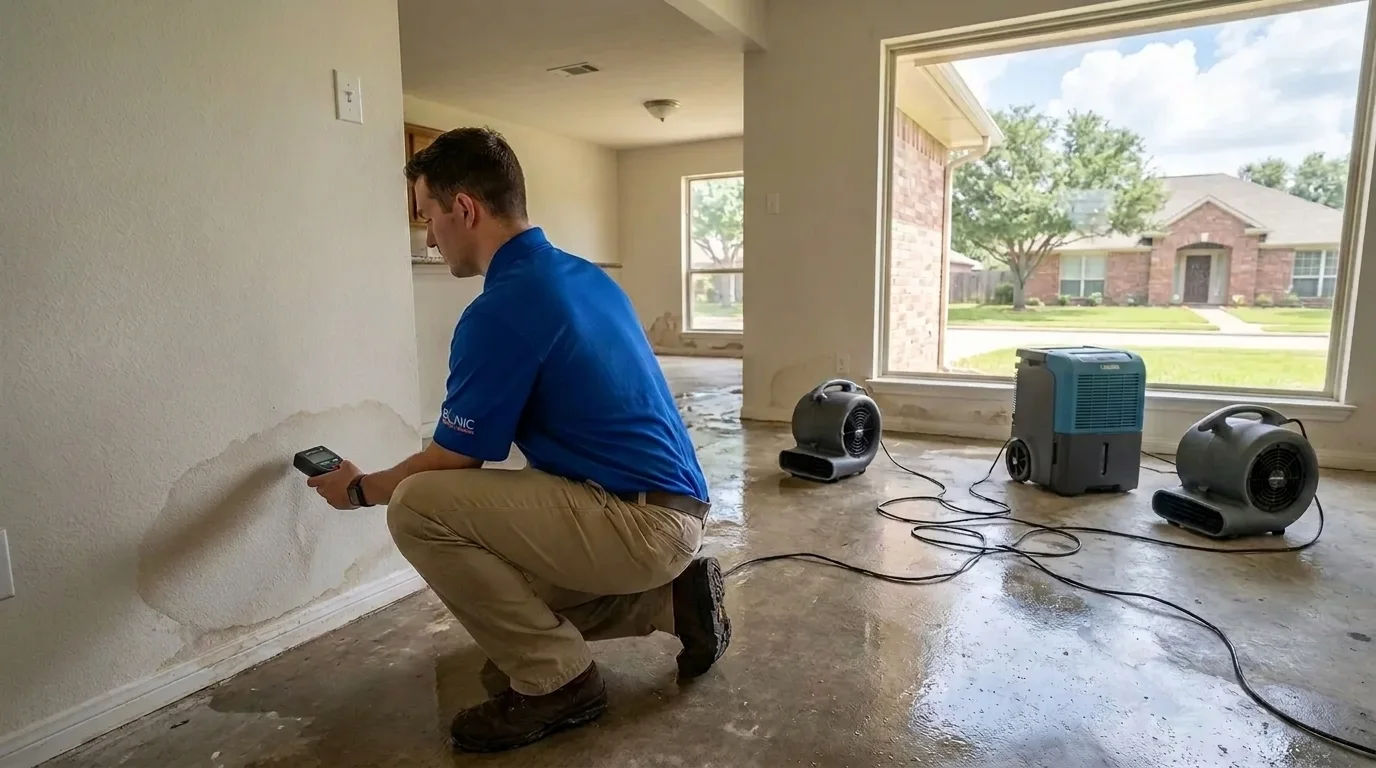
We start with extraction, pulling standing water off flooring and out of carpet pad before it migrates further into the structure. From there we use moisture meters to map how far water has traveled under slab-set tile, laminate, or engineered wood, since Magnolia’s foundation type means water often wicks sideways along the slab rather than pooling in one visible spot. Structural drying follows, with air movers and dehumidifiers set per IICRC S500 guidelines to pull moisture out of framing and subfloor at a controlled rate, and we track drying progress with daily moisture readings rather than guessing based on how a wall feels to the touch. If the source was a plumbing failure tied to shifting soil, we’ll also flag the slab issue so you can get a plumber out before the same leak repeats.
Reaching Magnolia from Houston
Our crews run out from Houston along FM 1488 and Highway 249, which are the main corridors connecting Magnolia to the rest of the Houston metro. That route also means we’re familiar with how spread out some Magnolia properties are, acreage lots and long driveways are common outside the tighter subdivisions near town, so when you call we ask for cross streets or a gate code up front to avoid losing time once a crew is in the area.
Magnolia Insurance & HOA Coordination
A lot of Magnolia’s newer construction sits inside HOA-governed subdivisions, which sometimes means notifying the association before equipment stays on a driveway or lawn overnight during drying. We document the loss with photos and moisture readings formatted for insurance adjusters, and we’re glad to walk an HOA board member through what the drying equipment is doing and how long it’s expected to stay, since “why is there a fan running in my neighbor’s garage” is a real question people ask.
Local note
A detail that matters more here than in tighter urban areas: a meaningful share of Magnolia properties outside the city’s MUD boundaries run on private well water and septic systems. When a water loss involves a septic backup or a well line failure, the contamination category of the water changes the cleanup protocol, grey or black water calls for different containment and disposal than a clean supply line break. We ask about well and septic status on the first call so the crew arrives with the right setup instead of reclassifying the job on-site.
If water is spreading through your Magnolia home right now, every hour it sits is an hour closer to warped flooring, swollen baseboards, and the start of microbial growth behind walls. Call BIONIC Emergency Services at (713) 338-2424 to get a crew started on extraction and drying before the damage climbs higher up the wall.
Serving Magnolia from our Houston headquarters — ★ 4.9 · 154 Google reviews
“Great experience they were attentive to detail and explained everything throughout the process of getting our house back to the way it was before the pipe busted” — Adam, August 2026Read our reviews on Google →
Water Damage Restoration in Magnolia: Service Coverage
Frequently Asked Questions
How fast can you arrive for water damage restoration in Magnolia?
Does Magnolia's clay soil affect how you handle a slab leak water loss?
How does a septic or well water source change the cleanup process?
Will my HOA have a say in drying equipment staged at my Magnolia home?
What's different about structural drying in slab-foundation homes versus older rural Magnolia properties?
How quickly can a crew reach a property off FM 1488 or Highway 249?
Will my homeowners insurance cover water damage restoration in Magnolia?
Water Damage Restoration response in Magnolia
Most Magnolia calls see a technician on-site within 60 minutes from our Houston headquarters.