TL;DR: In Houston, where most homes sit on a slab and sewage backs up into a tub, shower, or toilet rather than a basement, the best sewage cleanup company treats the water as Category 3 black water from the first phone call, works in full protective equipment, removes contaminated porous materials instead of just drying them, documents everything for your insurer, and can also handle your contents while the structure dries. Use that checklist on any company you’re considering, including BIONIC Emergency Services.
If water is backing up through your bathtub drain every time someone flushes the toilet down the hall, or your shower is draining slower and slower until it stops altogether, you’re not dealing with a simple clog. That’s a sewer line problem, and the water coming back up is contaminated. In a Houston slab home in Meyerland, the Heights, or Montrose, that backup usually shows up at the lowest fixture in the house, a tub, a shower pan, or a toilet, not a flooded basement like you’d see up north. What you do in the next few hours, and who you call, matters more than most homeowners realize.
What makes sewage cleanup different from a regular water leak?
Sewage backup is Category 3 black water under the IICRC S500 standard, meaning it’s grossly contaminated with bacteria, viruses, and waste, and it’s handled nothing like a clean supply-line leak.
A burst pipe is Category 1 water: it starts clean, and a lot of it can be dried in place. Sewage from a backed-up drain, a sewer line clog, or a toilet overflow beyond the trap is Category 3 from the start. That distinction drives everything that happens next, from the suits the crew wears to what gets torn out of your bathroom. If you want the fuller breakdown of why this isn’t a DIY job, we’ve written about the health risks of sewage backup in detail.
Does the company show up with the right protective gear and containment?
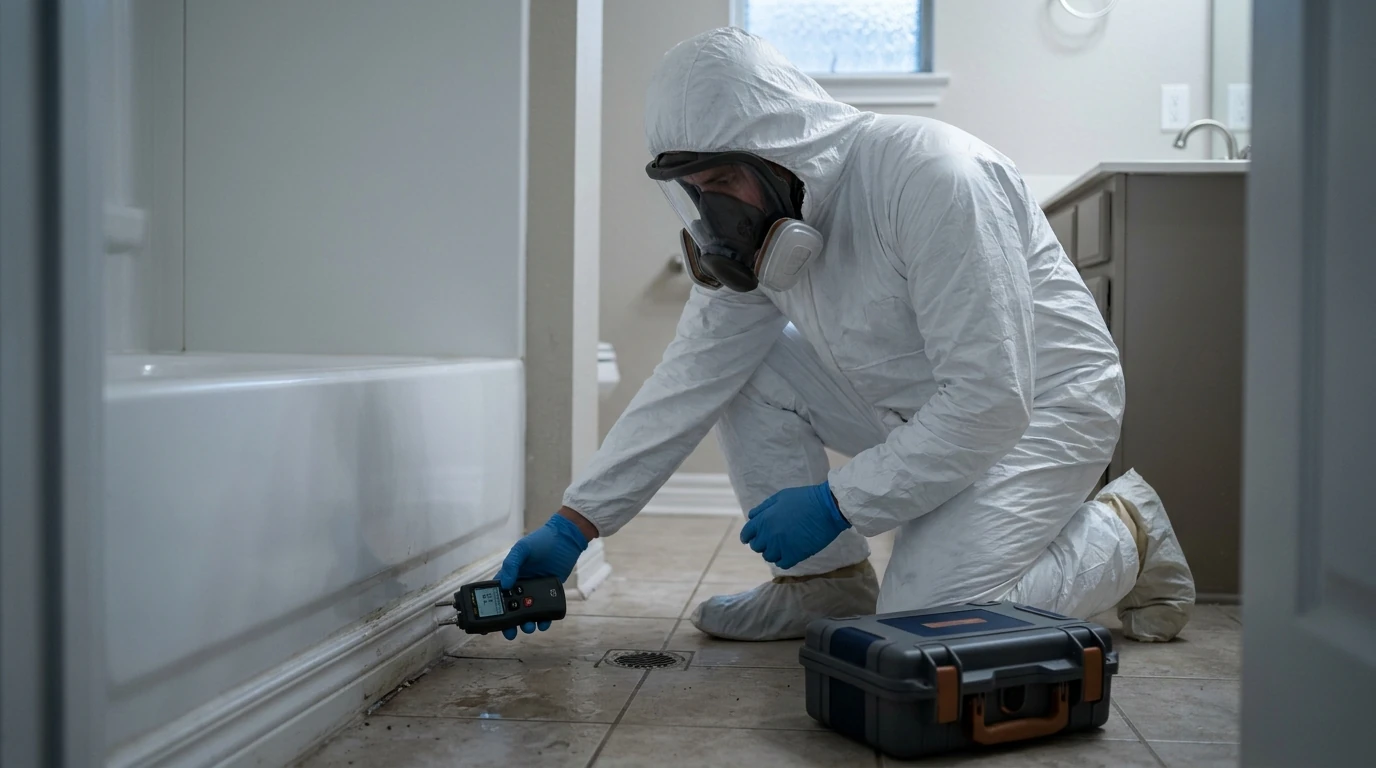
A crew trained for Category 3 water arrives in sealed protective suits, respirators, gloves, and boot covers, not a polo shirt and rubber gloves from under the sink.
Before you let anyone start work, look for:
- Full-body protective suits and disposable boot covers
- Respirators or N95-equivalent masks, not just paper dust masks
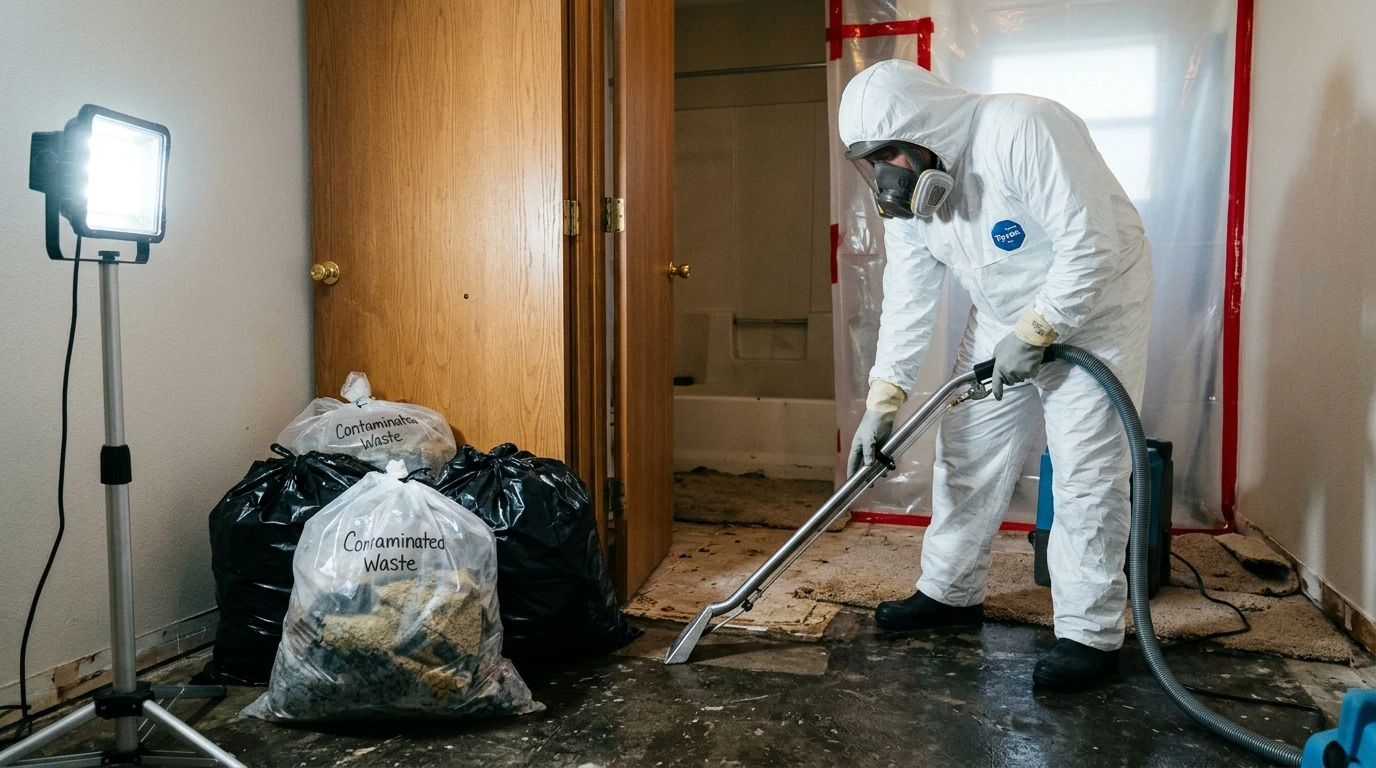
- Containment barriers separating the affected area from the rest of the home
- A clear plan for bagging and disposing of contaminated debris, not just hauling it to the curb
If a crew walks in without any of that, that’s your answer about whether they understand what Category 3 water actually requires.
Will they remove contaminated materials, or just dry them?
For Category 3 water, porous materials that absorbed contaminated water, drywall, carpet pad, baseboards, often have to come out, not dry in place like a clean-water loss.
This is where corners get cut. Drying a wet subfloor with air movers looks like progress, but if the carpet pad soaked up sewage, drying it doesn’t make it sanitary again. A company that understands the sewage cleanup process will tell you upfront what has to be removed and why, not just run fans and call it finished. Ask for this in writing before work starts, along with a written scope, never a verbal promise.
How do they document the job, and what does your insurance actually cover?
Ask for moisture readings, photos, and a written scope before and after the work, because that documentation is what your insurance adjuster will use to process the claim.
Here’s the part a lot of homeowners get wrong: a standard homeowners policy typically does not automatically cover sewer or drain backup. That coverage usually requires a separate water backup (sewer/sump) endorsement added to the policy. Check your declarations page for that endorsement before you assume you’re covered. The Texas Department of Insurance has consumer guidance on what standard policies do and don’t include after a loss. A company that photographs the contamination, logs moisture readings room by room, and hands you a detailed invoice is doing you a favor whether or not the claim ends up covered. If you haven’t already, our post on who to call for a sewage backup in Houston walks through the order of calls to make.
Can one company handle the cleanup, the drying, and your belongings?
Look for a company that can mitigate the structure and also pack out, clean, and store your affected belongings, rather than handing you off to a second vendor mid-job.
A sewage backup in a bathroom often reaches towels, bath mats, a hamper, sometimes a hallway runner. BIONIC Emergency Services handles water damage restoration and contents restoration and storage as part of the same job, so your belongings get assessed and either cleaned or documented as a loss without a separate company coming through your door. Fewer handoffs means fewer gaps in the paper trail your insurer will ask for.
BIONIC Emergency Services has operated in the Houston area since 2011, runs 24/7, and carries a 4.9 rating across 156 Google reviews. Its technicians hold IICRC WRT and ASD training. If you’re comparing options for a sewage backup right now, schedule a free evaluation and ask every company on your list the same questions above before you let a crew in.
Whoever you choose, get the scope in writing, confirm the PPE and removal plan before work starts, and keep your own photos of the damage from the moment you find it. That record protects you no matter who ends up doing the work.
About BIONIC Emergency Services
BIONIC Emergency Services has served Houston, TX since 2011, running 24/7 from its Northwest Freeway office. The team handles water damage restoration, sewage cleanup, contents restoration and storage, fire and smoke damage restoration, and storm damage restoration across the Houston metro, from Meyerland to The Woodlands. Technicians hold IICRC Water Damage Restoration Technician (WRT) and Applied Structural Drying (ASD) training, and the company is insured.
Need help now? Call BIONIC Emergency Services at (713) 338-2424.