TL;DR: The best storm damage restoration company in Houston answers the phone 24/7, sends technicians trained in water restoration and structural drying, documents every affected area for your insurer, and knows how flood-prone streets from Meyerland to the Heights actually behave once the rain starts. Before you sign anything, confirm the company handles both the emergency mitigation and the insurance paperwork, not just a tarp and a handshake.
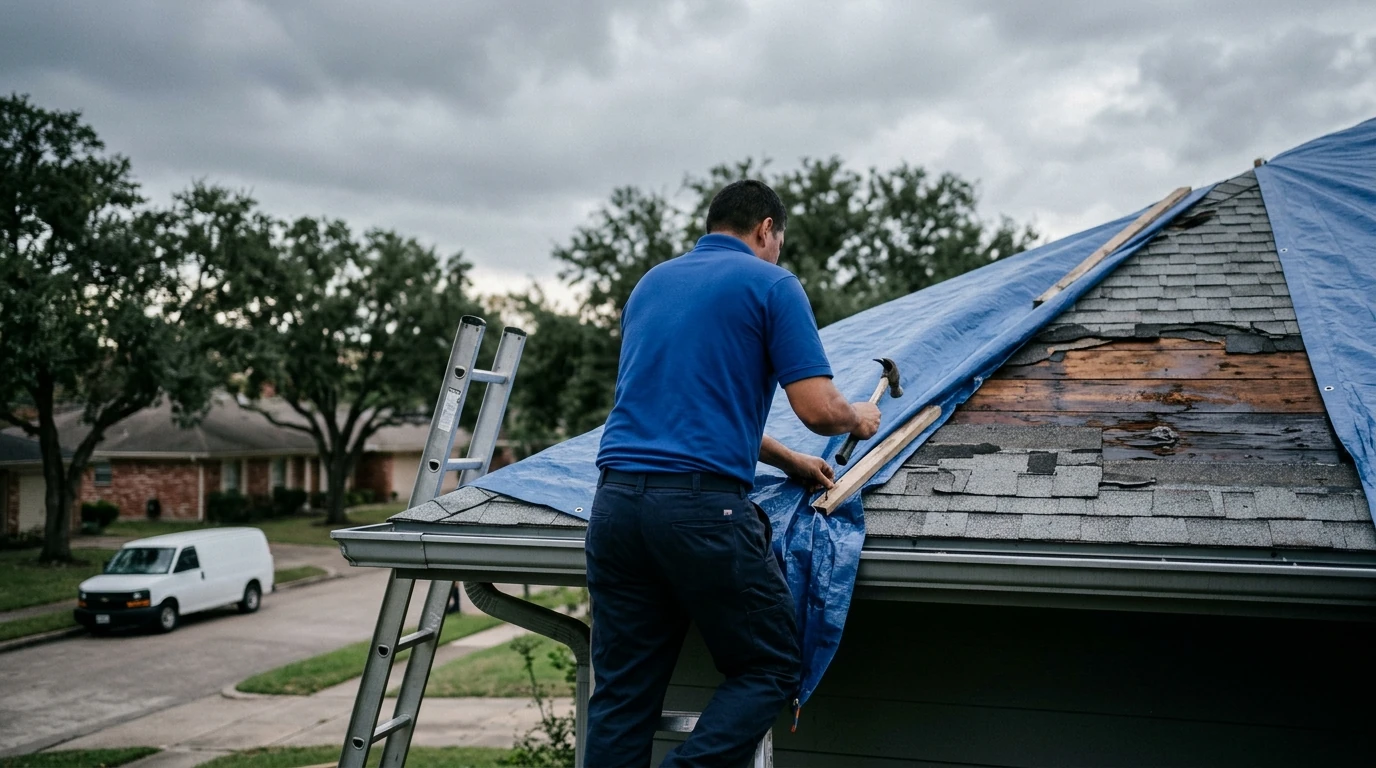
If straight-line winds just peeled shingles off a roof in Meyerland and rain is dripping through a bedroom ceiling, or a tropical storm pushed water past a window seal in the Heights, you don’t have time to interview five companies. You need a way to tell, fast, whether the crew showing up is going to protect your claim or just make the water stop for a day. This guide gives you the checklist to run through, using what a real local company should be able to show you.
What actually separates a good storm damage restoration company from a bad one in Houston?
Four things matter more than anything on a website: 24/7 availability, documentation quality, local knowledge of how Houston storms move water through a house, and whether mitigation and the insurance paperwork come from the same team.
Anyone can show up with a wet vac after a storm. What’s harder to fake is a company that logs moisture readings room by room, knows why a slab home in Quail Valley dries differently than a two-story in The Woodlands, and has already dealt with Harris County insurers enough times to know what they’ll ask for. Run any company you’re considering through the sections below before you let them start work.
Does the company actually answer the phone 24/7 during a hurricane?
That’s the first thing to confirm, because storms don’t wait for business hours, and your call shouldn’t end up in voicemail.
BIONIC Emergency Services operates on a 24/7 line, which matters most in the 48 hours after a named storm, when power is out across half the city and standing water is already soaking into drywall. If a company can’t confirm live phone coverage overnight and on weekends, ask directly how after-hours calls get handled before you need them to.
Will the crew document the damage well enough for your insurance claim?
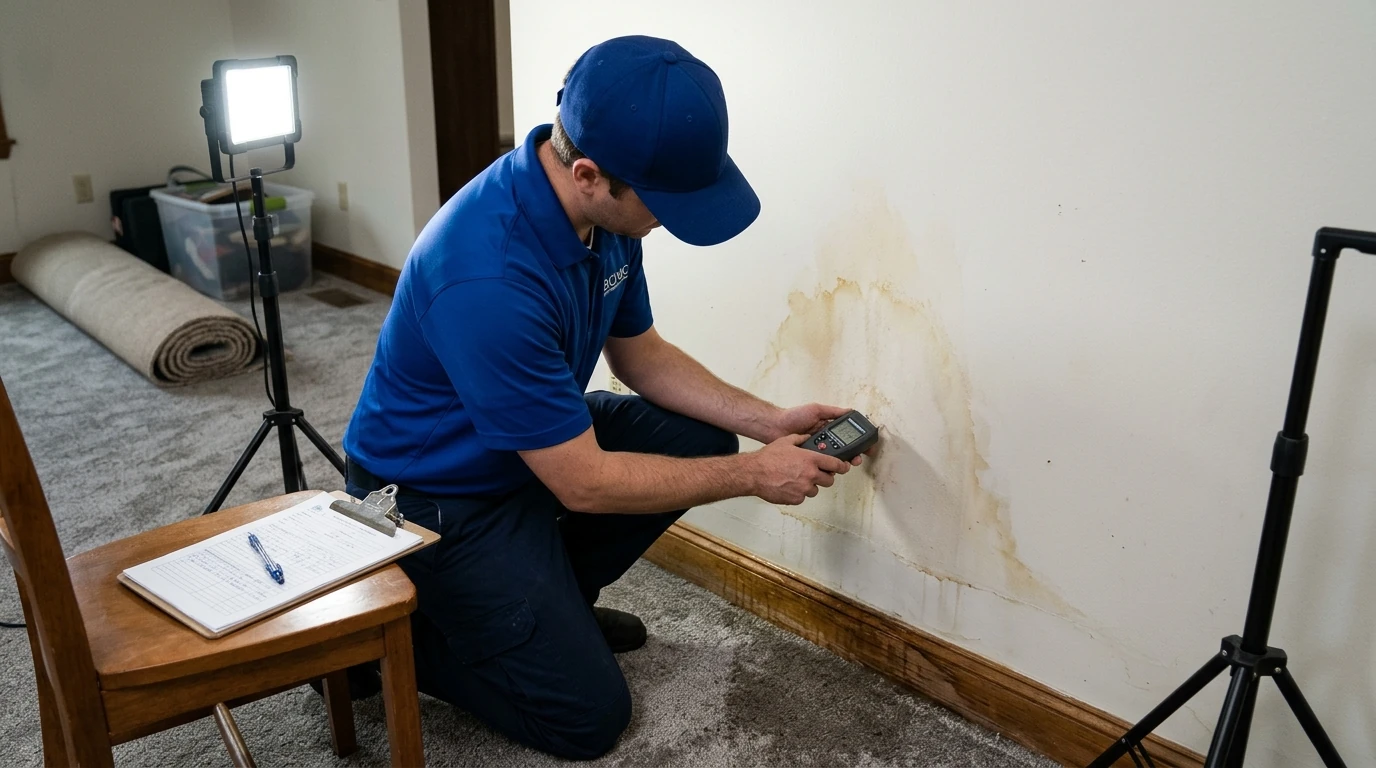
A company that’s actually prepared for this will photograph every affected room, log moisture readings over the drying period, and hand you a written scope before major work starts, not after.
Drying follows the ANSI/IICRC S500 standard, which spells out how water categories and drying classes get assessed and tracked. That paperwork is what your adjuster uses to approve the claim, so a crew that skips it is leaving you to argue your own case later. BIONIC’s technicians hold IICRC Water Damage Restoration (WRT) and Applied Structural Drying (ASD) certifications, and documentation is built into how the job gets scoped from the first walkthrough. Our storm damage restoration insurance claim checklist covers exactly what to collect before the adjuster calls.
It’s also worth knowing what your policy actually covers before the storm hits. Most homeowners policies pay for sudden wind and rain damage, like a tree limb cracking a window or wind-driven rain forcing its way through a damaged roof. They generally exclude flood water, meaning storm surge, overflowing bayous, or rising groundwater, which requires a separate flood policy through the National Flood Insurance Program or a private flood carrier. The Texas Department of Insurance has more on how that split typically plays out for Houston homeowners.
Is a local Houston crew better than a company that just drove in after the storm?
For most storm claims, yes: a local crew already knows which streets flood first and how long drying takes in Gulf Coast humidity, which shapes both the work and your timeline.
After a major storm, out-of-area “storm chaser” crews move through Houston in waves, sign contracts fast, and are often gone before the drying is finished or the final paperwork is filed. A company based here, with a real address and a history of jobs in Pasadena, Pearland, Sugar Land, and the neighborhoods around Buffalo Bayou, has a reason to still be answering the phone six months from now if something resurfaces. BIONIC has operated out of Houston since 2011, with service across Harris, Fort Bend, and Montgomery counties, which is a different commitment than a crew working off a storm-season contract.
What should you ask before you sign a work authorization?
Ask these four questions before any crew starts pulling wet materials: are you available 24/7, who logs the documentation for my insurer, will the same company be handling the drying from start to finish, and are you local to Houston or dispatched in for this storm.
A company with a straight answer to all four, backed by real technician certifications and a verifiable local address, is the one worth letting into your house. If the answers get vague on any of those, especially the documentation question, that’s your signal to keep calling.
If you’re facing storm damage right now, BIONIC Emergency Services can walk a property and start the documentation your claim needs. Call BIONIC Emergency Services at (713) 338-2424 or request an assessment through the contact page.
About BIONIC Emergency Services
BIONIC Emergency Services has served Houston, TX since 2011, with technicians certified in Water Damage Restoration (WRT) and Applied Structural Drying (ASD). The company is insured and operates a 24/7 line for storm, water, sewage, smoke, and fire damage response across Harris, Fort Bend, and Montgomery counties. BIONIC holds a 4.9 Google rating across 154 reviews from Houston-area customers. This post was prepared with the BIONIC Emergency Services team.
Video Transcript
When a Houston storm rips shingles off your roof and rain starts dripping through the ceiling, you need answers fast, not a company that goes straight to voicemail. The best storm damage restoration company in Houston answers the phone 24/7, even at 2am during a hurricane, when water keeps spreading fast. Good contractors photograph every room, log moisture readings room by room, and build a written scope before work even starts. That documentation is exactly what your insurance adjuster needs to review your claim. Skip it, and you’re left arguing your own case later. A local Houston crew already knows how streets from Meyerland to the Heights flood, and how long Gulf Coast humidity slows the drying. Watch out for storm chasers, crews that sign contracts fast and vanish before the drying’s finished or the paperwork’s filed. Your contractor’s technicians should hold real certifications in water restoration and structural drying, not just basic cleanup skills. Before you sign anything, ask four questions: are you available 24/7, who handles documentation, will one team handle the job from start to finish, and are you local? BIONIC Emergency Services has served Houston since 2011, with certified technicians working across Harris, Fort Bend, and Montgomery counties. Don’t wait for the next storm to find out who’s reliable. Call BIONIC Emergency Services at (713) 338-2424.