
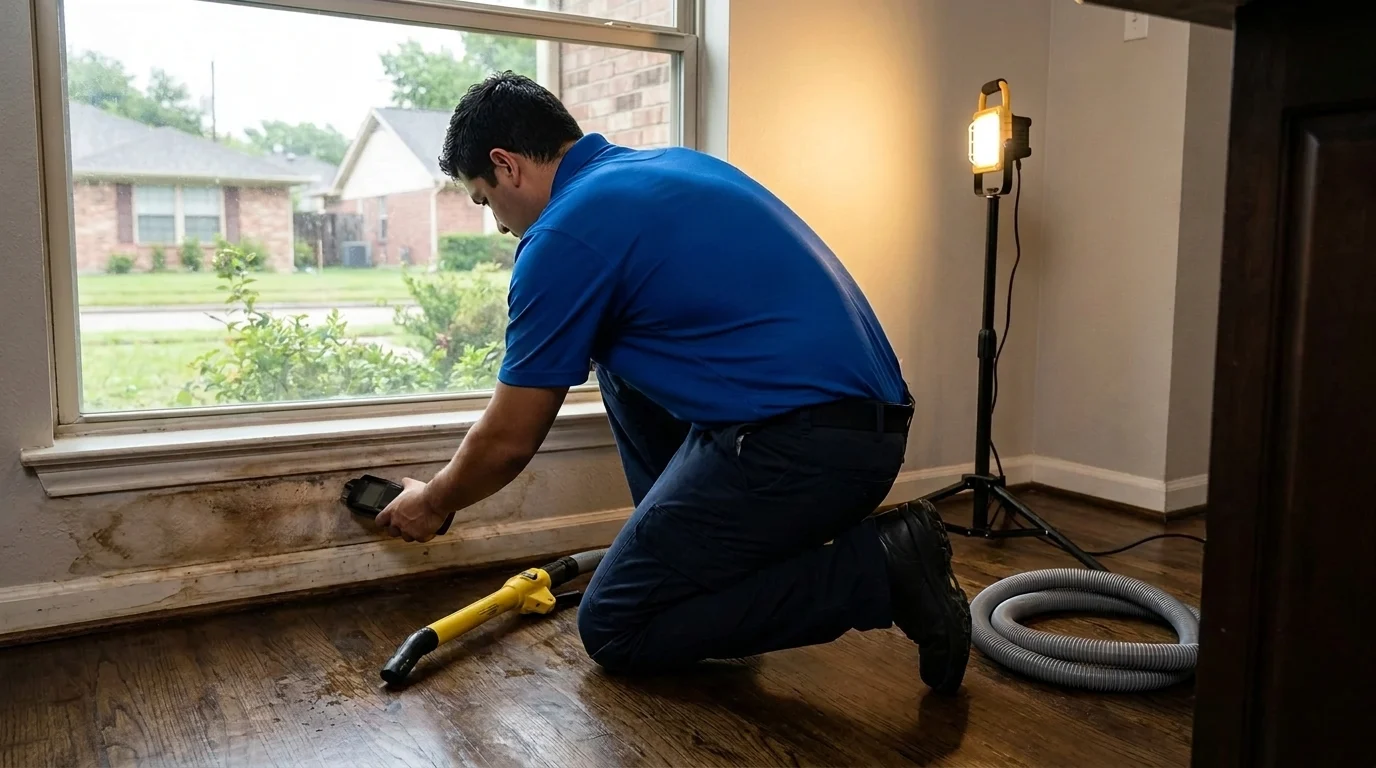
TL;DR: Emergency water damage restoration means stopping the water source, removing standing water, and starting structural drying within hours, not days, to prevent mold and material loss. In Houston’s humidity, exposed drywall and wet carpet can start growing mold in as little as 24 to 48 hours. The priority order is: safety, stop the source, document the damage, extract water, and start drying equipment running before the day is out.
If you just walked into a kitchen in Meyerland or a townhome near Montrose and found water spreading across the floor from a failed supply line or an overflowing washer, the next 30 minutes matter more than almost anything else in the whole claim. Houston’s clay-heavy soils and slab foundations mean plumbing failures happen fast and spread into walls and subfloor before most homeowners notice. This guide walks through what to do right now, what a restoration crew actually does when they arrive, and how long you realistically have before the situation gets worse.
What should I do in the first 30 minutes after water damage?
Shut off the water source first, then get people and pets away from standing water, especially near outlets or light fixtures. If the water is coming from a burst pipe or supply line, the main shutoff valve is usually near the water meter or where the line enters the house; a washing machine or dishwasher leak just needs that appliance’s valve closed.
Once the source is stopped, take photos and a short video of the damage before you move anything. Insurers want to see the water line on the walls, the affected flooring, and any furniture or contents in the path. If the water is anything beyond a clean supply line, meaning it touched a toilet, a sump pump, or came in from outside, treat it as contaminated (what the IICRC S500 standard classifies as Category 2 or 3 water) and avoid wading through it without rubber boots and gloves.
Do not run a household fan over sewage-contaminated water. It aerosolizes bacteria into the air you’re breathing. That situation calls for a sewage cleanup crew, not a mop.
What needs to be done immediately to prevent additional damage?
The immediate priorities are removing standing water, pulling up anything that’s wicking moisture, and getting air moving through the space. Every hour water sits against drywall, baseboard, or engineered flooring, the more material has to be removed instead of dried and saved.
In practice that looks like:
- Extract standing water with a wet-dry vac for small amounts, or a truck-mounted extractor for anything past a few inches
- Pull up wet carpet pad (it almost never dries clean and usually gets replaced anyway)
- Move furniture and rugs off wet flooring onto foil or wood blocks to stop wicking
- Open interior doors and run the AC to start moving air, even before professional equipment arrives
- Pull baseboards in affected rooms so air can reach the wall cavity, which holds moisture far longer than the floor does
This is also the window where a documented, written scope matters. A detailed moisture map, taken with a penetrating moisture meter against drywall and framing, becomes the record that supports an insurance claim later. Texas Department of Insurance guidance notes that sudden, accidental water damage is typically covered, while damage from a slow leak you ignored for weeks often is not, so documenting the timeline matters as much as documenting the damage.
How long does it take for mold to grow after water damage?
Mold can begin growing within 24 to 48 hours on wet drywall, insulation, and wood framing in a humid climate like Houston’s. That window is why restoration crews treat the first day as the real deadline, not a suggestion.
Temperature and humidity accelerate the clock. A closed-up house in August with the AC struggling against a wet interior is a faster mold environment than a cooler, drier climate would produce. Spores are already present in nearly every home’s air; they just need a wet surface and warmth to take hold. Once drywall paper or wood framing holds visible growth, drying alone no longer solves the problem, and remediation (removing and replacing the affected material) becomes necessary. Our guide on what to do in the first 24 hours after water damage covers the drying timeline in more detail if you want the fuller picture.
What happens when a water damage restoration crew arrives?
A restoration crew starts with a moisture assessment, then moves into extraction, then sets structural drying equipment before they leave the property for the day. The goal of that first visit is to stop the clock on further damage, not necessarily finish the job in one trip.
On arrival, a technician typically:
- Walks the property with a moisture meter and thermal imaging camera to map how far the water traveled, often further than it looks
- Extracts remaining standing water with truck-mounted or portable extraction equipment
- Removes materials that can’t be dried in place: soaked carpet pad, ruined baseboard, insulation that’s absorbed water
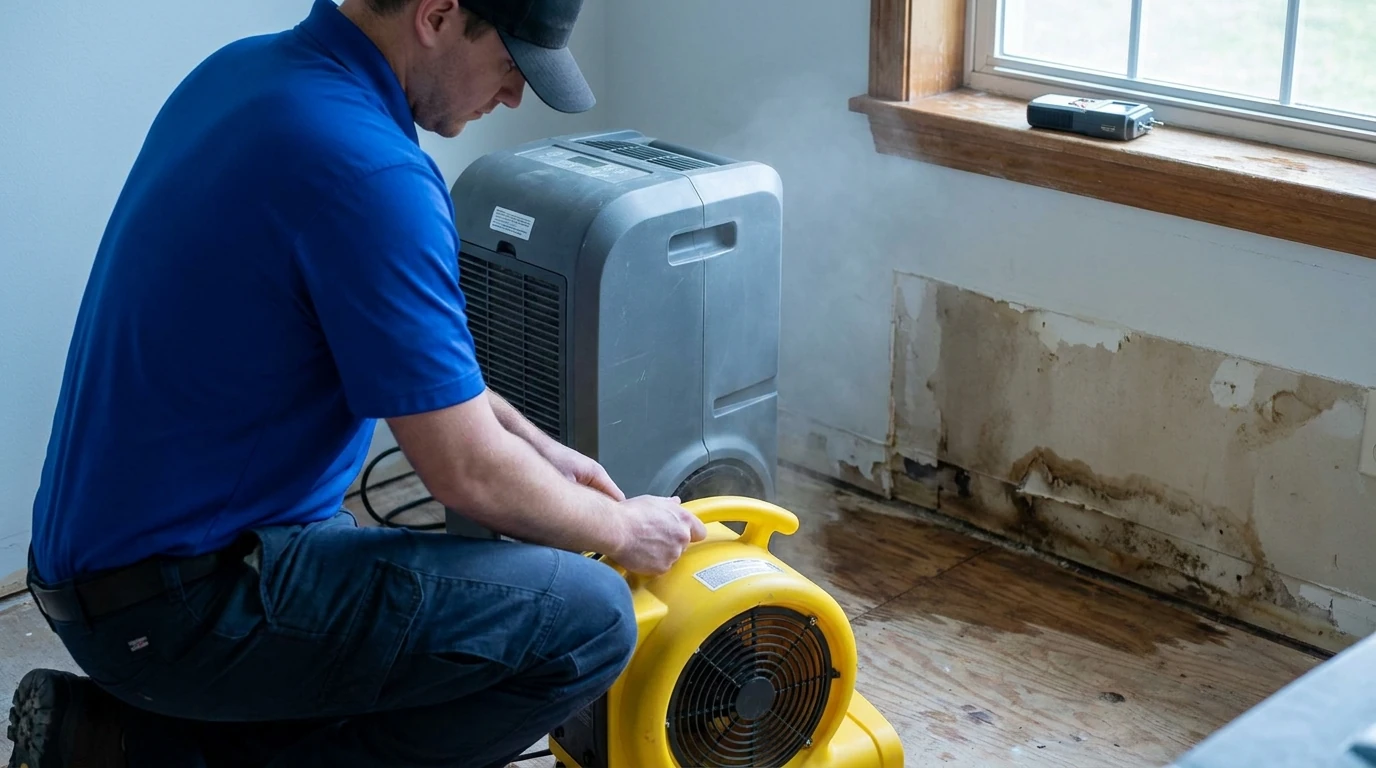
- Sets air movers and low-grain-refrigerant (LGR) dehumidifiers sized to the affected square footage, positioned to pull moisture out of walls and subfloor
- Returns daily to re-check moisture readings until the structure reads dry to the IICRC S500 standard, typically 3 to 5 days for a contained residential loss
That equipment stays running until the moisture readings in the wall cavities and subfloor match the dry, unaffected areas of the house, not just until the floor looks dry. A water cleanup visit in the Third Ward or near Buffalo Bayou Park follows the same process as anywhere else in Houston; the difference is how fast the local humidity works against you if drying starts late.
If you’re not sure whether what you’re looking at needs a professional crew or just a wet-vac and some fans, our burst pipe emergency checklist walks through that decision in more detail.
The fastest way to protect the structure and the claim is the same move either way: stop the source, document it, and get water damage restoration equipment running the same day the water hits the floor.
About BIONIC Emergency Services
BIONIC Emergency Services has served Houston, TX since 2011, holding a 4.9 average rating across 154 Google reviews. Technicians carry IICRC Water Damage Restoration Technician (WRT) and Applied Structural Drying (ASD) certifications. BIONIC handles water cleanup, water damage restoration, sewage cleanup, storm damage restoration, fire and smoke damage restoration, and contents restoration and storage across Houston and the surrounding areas, from Pasadena to The Woodlands.
Need help now? Call BIONIC Emergency Services at (713) 338-2424.