
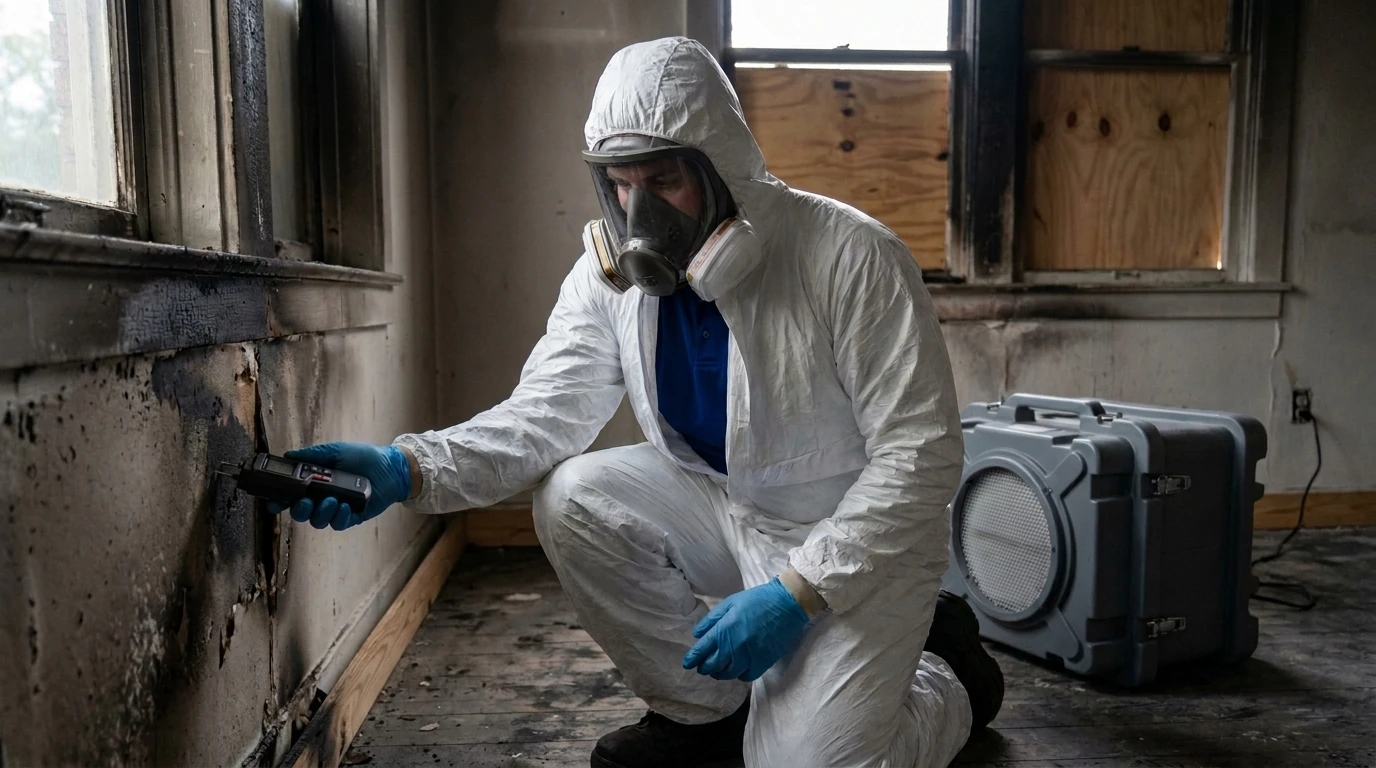
TL;DR: In Houston, fire damage restoration typically costs $3,000 to $50,000 or more. A single-room fire with contents cleaning runs on the lower end; a multi-room loss with smoke pushed through the HVAC system, firefighting water, and partial rebuild runs much higher. The biggest cost drivers are how far smoke and soot traveled, how much water the fire department used, and whether structural rebuild is needed. Most homeowners insurance policies cover fire damage, including smoke and soot cleanup, after the deductible.
If you’re standing in a house that still smells like smoke, trying to figure out what this is going to cost before the adjuster even calls you back, you’re not alone. Houston homes take fire damage differently than other markets: older Heights bungalows with original lath-and-plaster hold smoke odor longer, while newer builds in Katy or Sugar Land often see more HVAC-driven soot spread because the duct systems are larger and run longer. Either way, the price depends less on the size of your house and more on how far the smoke traveled and how much water got involved putting the fire out.
How much does fire damage restoration cost in Houston, TX?
Most Houston homeowners pay between $3,000 and $50,000 for fire damage restoration, with the full range running from under $1,000 for odor-only jobs to well over $150,000 for a whole-house rebuild. The number that matters for your specific job depends on four things: how many rooms smoke reached, whether firefighting water soaked the structure, how much of your contents need cleaning versus replacing, and whether framing or drywall has to be rebuilt.
Here’s how that typically breaks down by scenario:
| Scenario | Typical Cost Range |
|---|---|
| Smoke odor only, no visible soot or structural damage | $500 - $3,000 |
| Single room fire, contents cleaning, no structural rebuild | $3,000 - $8,000 |
| Multi-room fire, smoke spread through HVAC ducts | $8,000 - $20,000 |
| Structural damage with partial drywall/framing rebuild | $20,000 - $50,000+ |
| Whole-house fire, major reconstruction required | $50,000 - $150,000+ |
These are typical industry ranges for the Houston market, not a quote. Every loss is different, and a written scope of work after an on-site assessment is the only way to get an accurate number for your specific property.
What actually drives the price up or down?
Six factors move the number more than anything else: square footage affected, smoke and soot travel distance, firefighting water volume, contents scope, odor severity, and rebuild scope. Understanding each one helps you make sense of an estimate when it arrives.
Square footage and smoke travel. A kitchen grease fire that stays contained to one room is a very different job than the same fire with smoke pulled through a central HVAC system into every bedroom. Soot is acidic and etches into surfaces fast, so the longer it sits, the more it costs to remove from walls, ceilings, and fabric.
Firefighting water. Fire departments use a lot of water, and that water goes everywhere the fire didn’t. A structure fire almost always comes with a secondary water damage job underneath it, which means extraction, drying equipment, and monitoring on top of the soot cleanup. This is the line item homeowners most often don’t anticipate.
Contents cleaning versus pack-out. Smoke-damaged furniture, clothing, and electronics can sometimes be cleaned and deodorized off-site rather than replaced. A full pack-out (boxing and moving every item to a cleaning facility) adds labor and storage cost but often saves money compared to full replacement, especially for furniture and textiles.
Odor treatment method. Light smoke odor might clear with HEPA air scrubbing and sealant-based cleaning. Heavy odor penetration into wood framing or insulation sometimes requires thermal fogging or ozone treatment, which adds time and cost but is far cheaper than replacing structural wood.
Rebuild scope. If drywall, insulation, flooring, or framing burned or charred, that’s reconstruction, not restoration, and it’s priced separately: materials, labor, and code-required upgrades (smoke detectors, electrical work brought up to current code) all factor in.
For a full walk-through of how these pieces fit together on an actual job, see our fire damage restoration process guide.
Will insurance cover fire damage restoration costs?
Most standard homeowners insurance policies cover fire damage, including smoke and soot cleanup, structural repair, and often temporary living expenses, after your deductible. Fire is one of the named perils covered under a standard HO-3 policy in nearly every state, and Texas is no exception. According to the Insurance Information Institute, standard homeowners policies generally cover fire and smoke damage to the dwelling, other structures, and personal property.
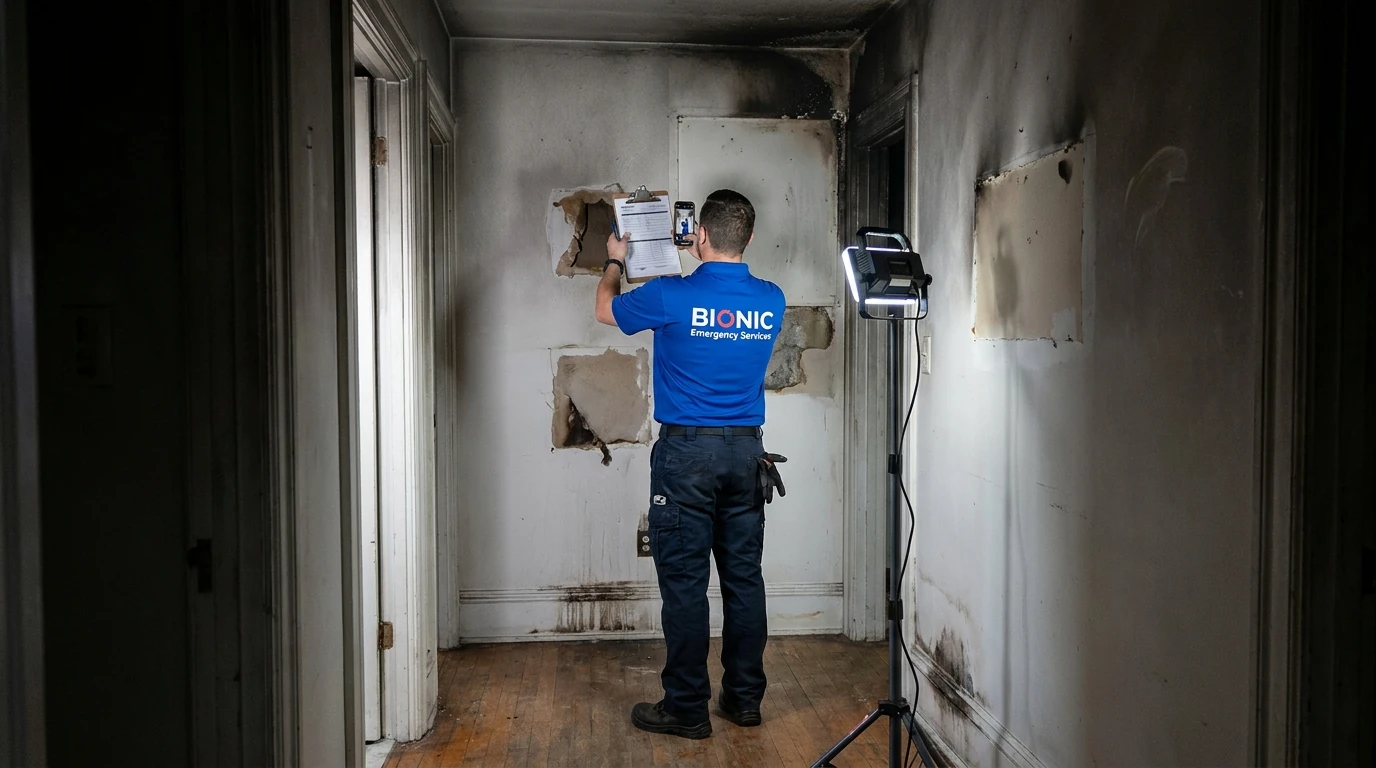
What insurance usually does NOT cover without a specific endorsement: damage caused by a fire you started intentionally or through gross negligence, and sometimes wear-related electrical fires if the wiring was already known to be faulty and unaddressed. Documentation is what protects your claim. Photograph everything before cleanup starts, keep the fire department incident report, and get a written scope of work itemizing labor, equipment, and materials before anyone begins work. Adjusters respond faster to a detailed scope than a verbal estimate, and a clear paper trail is the single biggest thing that speeds up claim approval.
What does the restoration process actually involve?
Fire damage restoration happens in a defined sequence: assessment, water extraction (if firefighting water is present), soot and debris removal, HVAC and duct cleaning, odor treatment, and finally reconstruction if needed. Skipping steps or doing them out of order is how homes end up with lingering odor months later.
- Assessment and documentation. A technician walks the property, photographs damage, and documents affected rooms, materials, and odor severity for the insurance file.
- Water extraction. If firefighting water soaked carpet, drywall, or subfloor, extraction and structural drying happen first, following ANSI/IICRC S500 drying protocols, before soot work begins on wet surfaces.
- Soot and debris removal. Charred materials are removed, and remaining surfaces are cleaned with dry chemical sponges or wet cleaning depending on soot type, following the ANSI/IICRC S700 standard for fire and smoke restoration.
- HVAC and duct cleaning. Ductwork is inspected and cleaned if smoke was pulled through the system, which it usually was if the HVAC ran during the fire.
- Odor treatment. HEPA air scrubbing, thermal fogging, or ozone treatment addresses odor trapped in porous materials.
- Reconstruction. Drywall, flooring, framing, and finishes are rebuilt to match the original space, with code upgrades applied where required.
Who should you call first after a fire in Houston?
Call a restoration company before you call a contractor or start cleaning yourself, because the first 24 to 48 hours determine whether soot etches permanently into surfaces and whether odor sets into porous materials. Once the fire department clears the structure as safe to re-enter, the clock is running on soot damage, not the clock on insurance paperwork.
BIONIC Emergency Services handles fire damage assessment, soot and debris cleanup, odor treatment, and the insurance documentation that supports your claim for homes across Houston, including Heights bungalows, Meyerland ranch homes, and newer builds out toward Katy and Sugar Land. Call BIONIC Emergency Services at (713) 338-2424 to schedule an on-site assessment and get a written scope of work before any work begins.
About BIONIC Emergency Services
BIONIC Emergency Services is a locally owned restoration company serving Houston, TX and the surrounding region since 2011. Its technicians hold IICRC Water Damage Restoration Technician (WRT) and Applied Structural Drying (ASD) certifications and follow IICRC standards for every loss type they handle, including fire damage restoration, smoke damage restoration, water cleanup, and storm damage restoration. The company is insured and operates 24/7 across Houston neighborhoods from the Heights to Meyerland and out to Pearland, Sugar Land, and The Woodlands.