
When a fire is out, the damage is only half visible. The flames may have only touched one room, but smoke, soot, and the water used to extinguish the fire travel through the entire structure, settling into drywall, insulation, ductwork, and anything porous. Understanding how professional fire damage restoration actually works, from the first walkthrough to the final odor check, helps you make better decisions in the first 48 hours, when the choices you make affect how much of your home or business can be saved.
What a Fire Actually Leaves Behind
Fire damage isn’t just the charred area. Heat warps framing even where it doesn’t burn through it. Smoke particles are acidic and corrosive, meaning metal fixtures, electronics, and appliances can continue to degrade for days after the fire if they’re not cleaned. Soot is also a mixed bag depending on what burned: synthetic materials (carpet, foam furniture, plastics) produce a thick, oily residue that smears when touched, while natural materials (wood, paper, cotton) leave a dry, powdery soot that’s easier to wipe but spreads easily through HVAC systems.
Then there’s the water. Firefighting efforts routinely soak floors, walls, and ceilings, and that moisture doesn’t evaporate on its own in a closed-up house. In Houston’s humidity, a structure that sat with wet drywall and standing water for even a day or two is already on the clock for secondary damage like rot, odor, and swelling.
Immediate Steps After the Fire Is Out
- Confirm it’s safe to re-enter. Wait for the fire department’s clearance. Structural damage isn’t always obvious from the outside.
- Contact your insurance company before touching anything. Report the loss and ask what documentation they require. Most carriers want photos of damage before cleanup starts.
- Photograph everything. Walk every room with your phone, including areas that look untouched. Smoke travels further than fire does.
- Shut off utilities if instructed. Fire departments often disconnect gas and electric as a precaution; don’t attempt to restore service yourself.
- Secure the property. Broken windows, a damaged roof, or a burned-through door left open invites weather, animals, and theft. Boarding up and tarping are usually the first physical steps a restoration crew takes.
- Arrange temporary housing if the home isn’t livable. Soot and smoke odor alone can make a house unsafe to sleep in even if the structure is sound.
What Not to Do
- Don’t wipe soot with a wet rag. Water activates the acidic compounds in soot and can set the stain permanently into paint, drywall, and fabric.
- Don’t run the HVAC system. If soot got into the ductwork, turning the system on recirculates it through every room, including ones the fire never reached.
- Don’t try to wash smoke-damaged clothing or upholstery with regular detergent. Standard washing often sets the odor instead of removing it; smoke damage requires specialized cleaning agents and sometimes ozone or thermal fogging treatment.
- Don’t throw away damaged items before your insurance adjuster documents them. Even items that look like a total loss may need to be itemized for the claim.
- Don’t assume a room is fine just because it wasn’t burned. Smoke odor and fine soot particulates settle in closets, inside cabinets, and in carpet padding far from the fire’s origin.
When to Call a Professional
A small, contained kitchen fire that stayed within a stovetop and didn’t trigger extensive smoke spread might be manageable with heavy cleaning and a fresh coat of paint. Most fires aren’t that simple. Call a restoration company when:
- Smoke odor is noticeable in rooms the fire didn’t reach.
- Water was used to extinguish the fire and any flooring, drywall, or insulation is visibly wet.
- Soot has settled on surfaces throughout the home, not just near the fire’s source.
- The fire involved synthetic materials (furniture, electronics, plastics), which produce more corrosive, harder-to-remove residue.
- You’re filing an insurance claim and need documented, professional assessment of the damage.
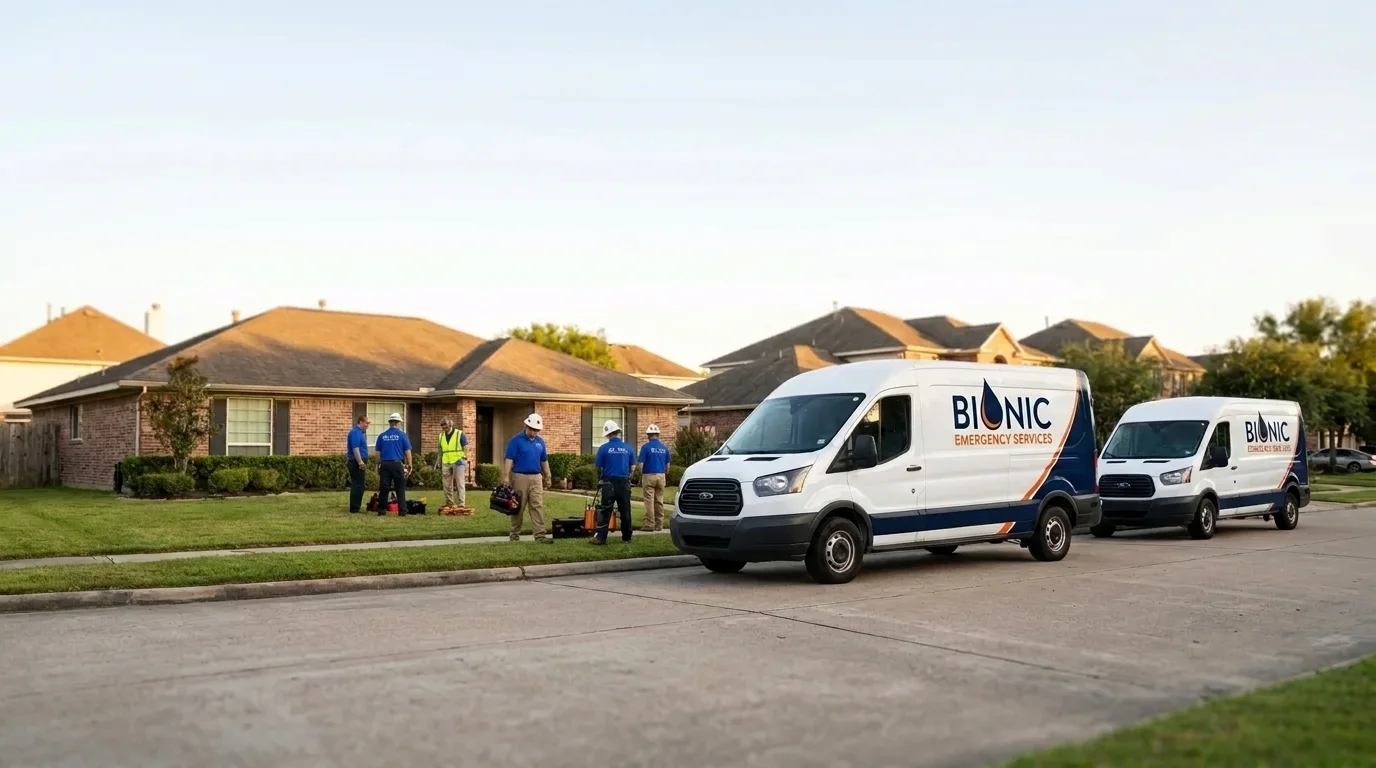
BIONIC Emergency Services handles fire damage restoration and smoke damage restoration for Houston homes and businesses, starting with an assessment of how far smoke and soot traveled before any cleaning begins.
The Restoration Process, Step by Step
Once a professional crew is on site, the work generally follows a sequence:
Assessment and documentation. Technicians walk the property to map out which materials are salvageable, which need replacement, and how far smoke traveled. This becomes part of the insurance documentation.
Water removal and drying, if applicable. Any water from firefighting efforts gets extracted first. Structures are dried following the IICRC S500 water damage standard before smoke and soot work begins, since cleaning soot off a wet surface just drives it deeper into the material.
Board-up and tarping. Broken windows, damaged roofing, or compromised walls are secured to stop weather and pests from causing secondary damage while work continues.
Soot and smoke residue removal. Technicians use different cleaning agents depending on the soot type, dry chemical sponges for powdery residue, specialized solvents for oily synthetic residue. HVAC systems and ductwork typically get cleaned separately to stop recirculation.
Odor neutralization. Smoke odor hides in porous materials, so surface cleaning alone often isn’t enough. Thermal fogging, ozone treatment, or hydroxyl generators are used to neutralize odor at the molecular level rather than masking it.
Content cleaning and restoration. Furniture, electronics, and personal items are cleaned off-site when possible, using methods matched to the material and the type of soot involved.
Reconstruction. Charred framing, burned drywall, and damaged flooring are rebuilt or replaced, bringing the structure back to its pre-loss condition.
Timelines vary widely depending on how much of the structure was affected. A contained fire with minor smoke spread might wrap up in a matter of days; a fire that compromised structural elements or required extensive content cleaning can take weeks.
If you’re standing in a house that still smells like smoke, or looking at soot on a wall you’re not sure how to clean safely, don’t wait for the smell to get worse or the water damage underneath to turn into a bigger problem. Call BIONIC Emergency Services at (713) 338-2424 for an assessment, and document everything with photos before you start cleaning on your own.