
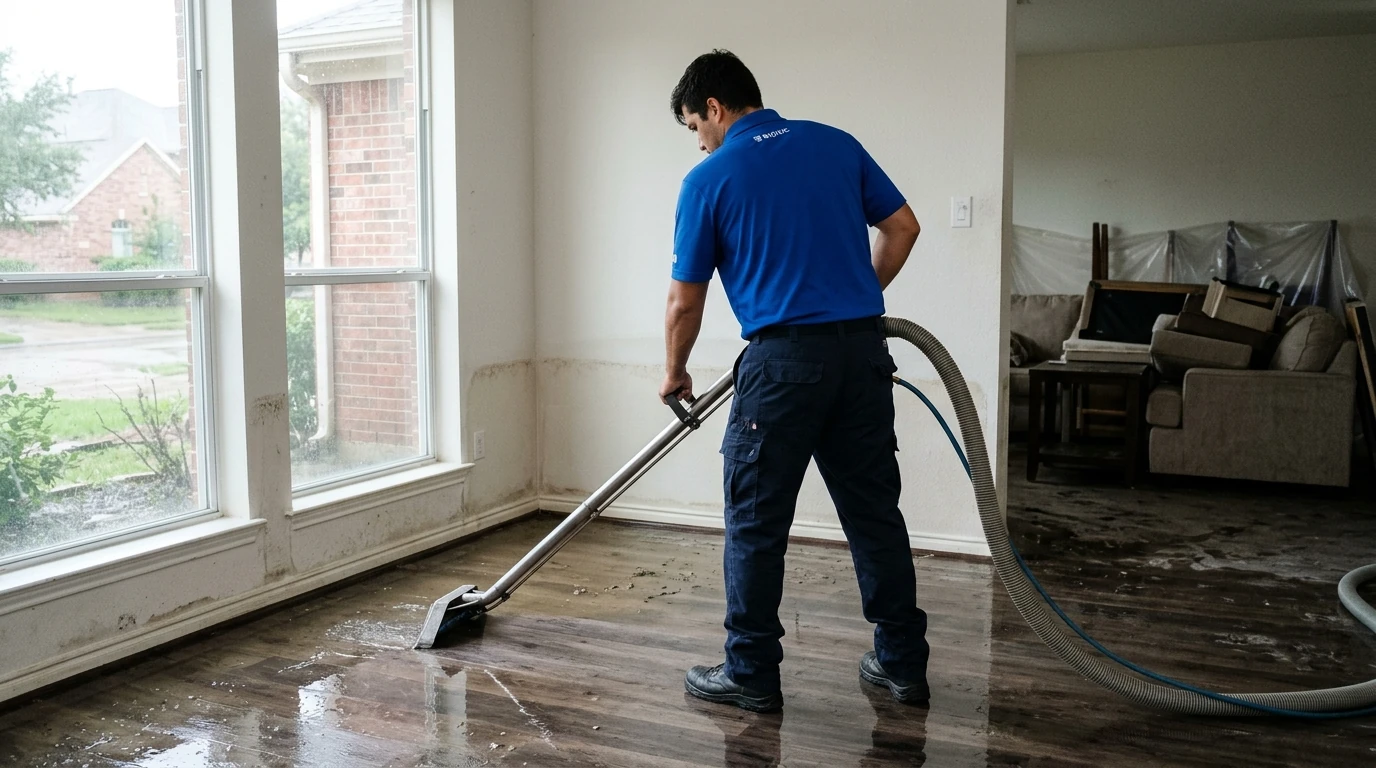
TL;DR: Flood cleanup in the Houston area typically costs $3 to $8 per square foot for extraction, drying and sanitizing, and $7 to $15 per square foot when a flood cut, drywall removal and insulation replacement are required. A single flooded room usually totals $1,500 to $4,000. A flooded first floor in a typical 1,500 square foot home can run $8,000 to $18,000 before contents and reconstruction. Standard homeowners insurance does not pay for flood damage; that requires a separate NFIP or private flood policy.
If water from Buffalo Bayou, a nearby drainage ditch, or a slow-draining street pushed into your Meyerland, Third Ward, or Heights-area home overnight, you’re probably looking at soaked carpet, a waterline creeping up the drywall, and an insurance call you haven’t made yet. Floodwater cleanup costs more than a typical pipe-break job because the water itself is contaminated. That one fact changes almost everything downstream: what gets removed instead of dried, how long sanitizing takes, and whether your flood policy pays for any of it. Here’s what actually drives the invoice.
How Much Does Flood Cleanup Cost in Houston?
Flood cleanup in the Houston area typically runs $3 to $8 per square foot for extraction, drying and sanitizing of a Category 3 loss, rising to $7 to $15 per square foot once a flood cut and material removal are added. A single flooded room usually totals $1,500 to $4,000. A flooded first floor on a typical 1,500 square foot slab home can land between $8,000 and $18,000 before contents handling or rebuild work.
The reason floodwater sits at the top of that range is classification, not drama. Rising water from a bayou overflow, storm surge, or surface water flowing in from outside is Category 3 water under the IICRC S500 standard, meaning it’s grossly contaminated. Category 3 jobs call for removing porous materials rather than drying them in place, which is the single biggest reason flood cleanup costs more per square foot than a clean supply-line break.
If you’re comparing numbers against our general water damage cost guide or our water mitigation pricing breakdown, flood losses sit at the higher end of both ranges, specifically because of the contamination factor below.
What Drives the Cost Per Square Foot?
Five factors move the number on a flood cleanup invoice: how high the water rose, what materials got wet, how long the water sat before cleanup started, the total square footage affected, and how much furniture and personal property needs handling separately.
How high the water rose sets the flood cut line (more on that below) and determines whether cabinetry, baseboards, and lower drywall get removed. What got wet matters just as much: carpet and pad are usually a total loss, laminate flooring almost always has to come up, but tile and sealed concrete can often be cleaned and dried in place.
Time is the other multiplier. Floodwater that sits for more than 24 to 48 hours starts breaking down drywall and wicking further up wall cavities, which pushes the flood cut higher and the removal cost with it. A fast response keeps the affected area, and the bill, smaller.
What Does a Flood Cut Actually Involve?
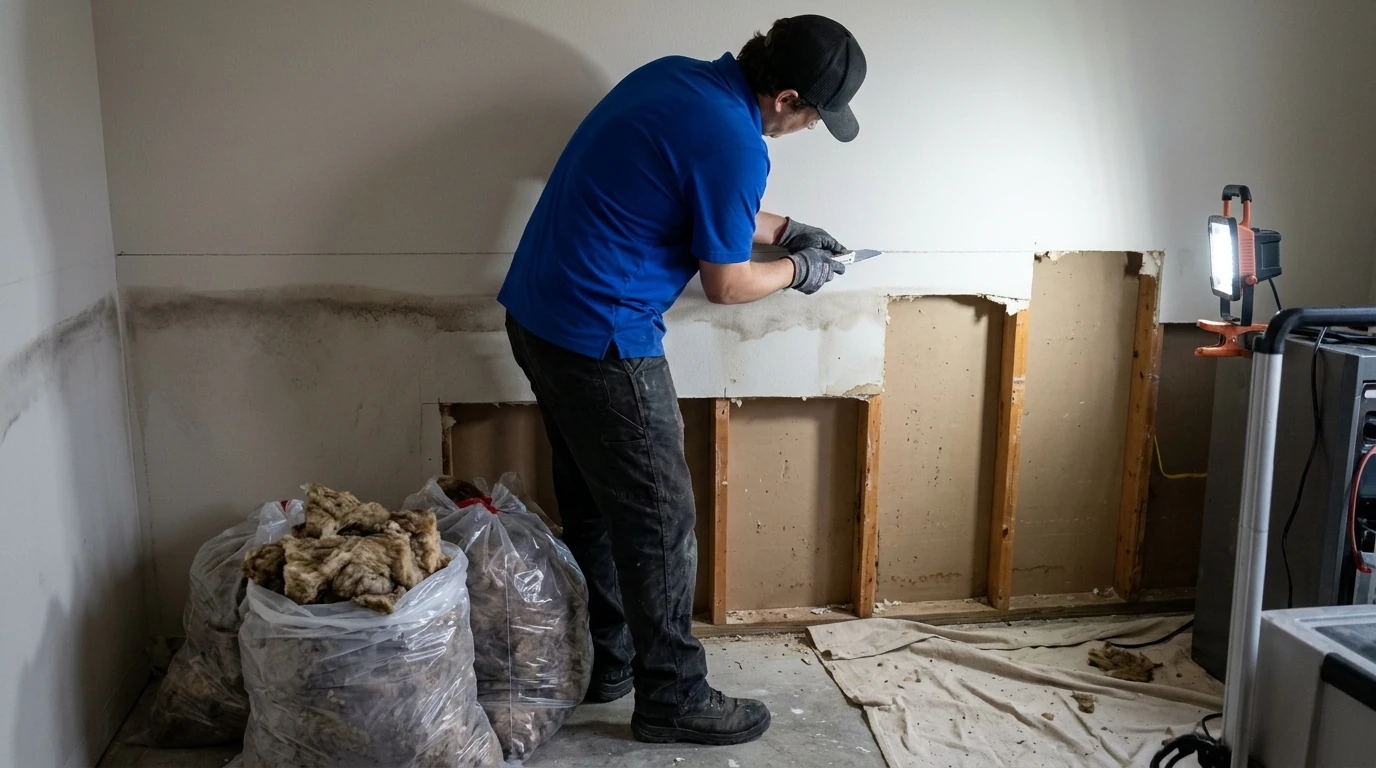
A flood cut is the removal of drywall and insulation starting at the floor and running at least 12 to 24 inches above the visible waterline, done because wet insulation traps contaminated water that can’t be dried in place and continues wicking moisture upward inside the wall.
Crews snap a level chalk line above the highest point the water reached, cut the drywall along it, and pull the wet insulation batts out in sealed bags. Baseboards and any cabinet toe-kicks below the line usually come out too. Expect $8 to $15 per linear foot of wall for the cut, removal, and bagging, with antimicrobial treatment of the remaining studs and subfloor typically adding $500 to $1,500 for a whole-home loss. Flooring removal and subfloor drying, when needed, runs another $3 to $7 per square foot.
This is also the point where an insurance adjuster usually wants photos of the cut line and the removed materials, so documenting before the drywall goes in the dumpster protects the claim.
Does Flood Insurance Pay for Cleanup, or Does Homeowners Insurance?
A standard homeowners policy excludes flood damage, meaning rising water from storm surge, an overflowing bayou, or surface water flowing in from outside the home. Only a separate flood policy, through the National Flood Insurance Program or a private flood carrier, pays for flood cleanup and the resulting rebuild.
If you carry an NFIP policy, you’ll want to start the claim as soon as you’re safely able, because the policy has its own documentation requirements separate from a standard homeowners claim. FEMA’s flood insurance program typically covers the structure and, if you purchased contents coverage, a portion of personal property, though both come with specific limits and exclusions worth reading in your declarations page.
Without an NFIP or private flood policy, homeowners insurance generally won’t step in for flood losses, and FEMA disaster assistance after a federally declared event is a grant program with its own caps, not a substitute for insurance. This is the single most common surprise Houston homeowners run into after a flood, and it’s worth confirming your coverage before, not after, the next storm season.
What Happens to Contents After a Flood, and Does That Cost Extra?
Contents pack-out is billed separately from structural drying: furniture, electronics, and documents get inventoried, removed from the flood zone, cleaned or assessed, and stored off-site while the structure dries and repairs.
For a flood loss, that typically means an itemized inventory for the insurance adjuster, specialty cleaning for anything submersible (some items are, most upholstered furniture and particleboard pieces aren’t), and a monthly storage fee, often $300 to $900 depending on volume, while the house is under containment. Our contents restoration and storage service handles that inventory and storage piece so it doesn’t sit on top of an already stressful claim.
What To Do Next
The single best way to get an accurate number for your specific loss is a written scope from a crew that documents the water line, the affected materials, and the square footage before any demolition starts, since every flood loss is different and a number on a blog post can’t account for your floor plan. For flood and water damage restoration in the Houston area, call BIONIC Emergency Services at (713) 338-2424 to schedule an assessment before you sign anything with your adjuster.
Getting that documentation started quickly also protects the claim itself: insurers expect homeowners to mitigate further damage promptly, and photos of the waterline, the flood cut, and the removed materials give your adjuster the documentation they need and help support your claim.
About BIONIC Emergency Services
BIONIC Emergency Services has served Houston, TX since 2011, with technicians holding IICRC Water Damage Restoration (WRT) and Applied Structural Drying (ASD) certifications. The company handles water damage restoration, water cleanup, flood damage restoration, contents restoration and storage, storm damage restoration, sewage cleanup, fire damage restoration, and smoke damage restoration across the Houston metro, from Meyerland and the Heights to Pasadena, Sugar Land, and The Woodlands.
Video Transcript
Floodwater crept into your Houston home overnight, and now you’re staring at soaked carpet and a waterline on the drywall. Flood cleanup here typically runs three to eight dollars per square foot for extraction and drying, more once materials must come out. Floodwater is contaminated, so it’s classified Category three, meaning porous materials get removed instead of dried in place. Five things move your price: how high water rose, what got wet, how long it sat, square footage, and your contents. Carpet and pad are almost always a total loss, but tile and sealed concrete can often be cleaned and dried. When water sits more than a day or two, your contractor may need a flood cut, removing drywall above the waterline. Crews cut along a level line, bag the wet insulation, and treat the studs so moisture can’t keep wicking upward. Here’s the surprise most homeowners face: standard homeowners insurance does not pay for flood damage from rising water. Only a separate NFIP or private flood policy covers flood cleanup, so documenting the flood cut line helps support your claim. Don’t wait for water to keep wicking into your walls. Call BIONIC Emergency Services at (713) 338-2424 to schedule an assessment.