
TL;DR: Water damage restoration in Texas typically costs $1,200 to $3,500 for a single room with clean water, and $5,000 to $10,000 or more for a multi-room loss involving sewage or several inches of standing water. The biggest factors are the water category (clean, gray, or black), how many square feet are affected, and how fast the water gets extracted. Most homeowners insurance policies cover sudden, accidental water damage but not gradual leaks, so documentation matters as much as the cleanup itself.
If a supply line let go behind the dishwasher last night or a slab leak has been creeping under the carpet in a Meyerland bungalow for weeks, the first question is almost always the same: what is this going to cost. The honest answer depends on how much water got in, how long it sat, and what it touched, but Texas homeowners can expect a real range, not a mystery invoice.
How Much Does Water Damage Restoration Cost in TX?
Most Texas homeowners pay between $1,200 and $7,500 for water damage restoration, with small, caught-early losses running lower and whole-home floods running well into five figures. The number scales with the water’s category, the square footage affected, and how many building materials (drywall, flooring, cabinetry) have to come out versus just dry in place.
Here is how that typically breaks down by scenario:
| Scenario | Typical Cost Range |
|---|---|
| Minor Class 1 loss, small area, caught fast | $500 - $1,500 |
| Single room, clean water (burst supply line, appliance leak) | $1,200 - $3,500 |
| Multi-room clean-to-gray water loss | $3,500 - $7,500 |
| Category 3 black water (sewage backup) | $5,000 - $10,000+ |
| Whole-home flood (several inches of standing water) | $10,000 - $30,000+ |
| Structural drying equipment, per day on a large loss | $300 - $500/day |
These are typical industry figures for the Texas market, not a quote. Every loss is different, and a written scope of work, done after an in-person inspection, is the only way to know what a specific job will actually cost.
What Drives the Price of Water Damage Restoration in Texas?
The water’s category and how long it sat are the two biggest cost drivers, followed by square footage and which materials got wet. Clean water from a supply line costs far less to remediate than gray or black water, because contaminated water (also called Category 2 or Category 3 water under the ANSI/IICRC S500 standard) often requires removing porous materials instead of just drying them.
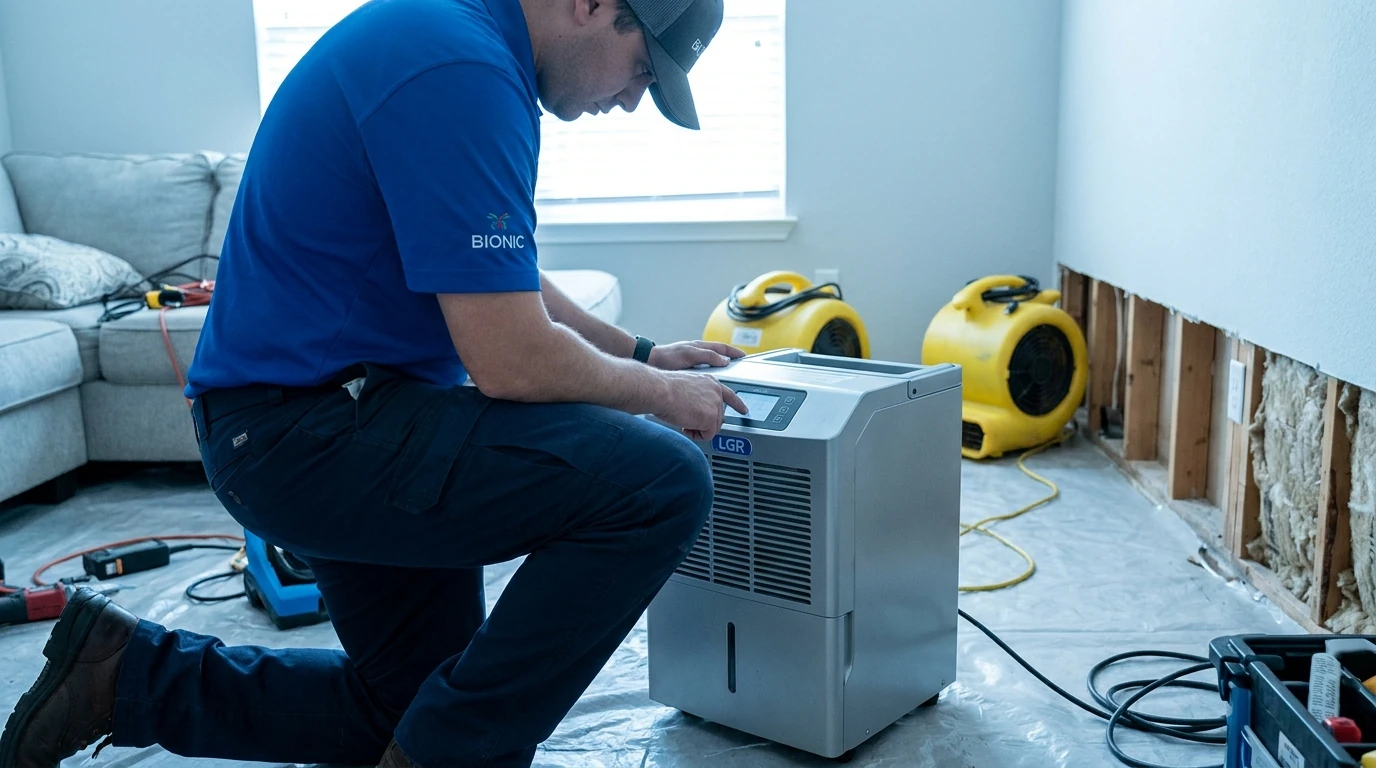
Square footage matters because drying equipment is priced and placed by the room. A single bathroom needs one or two air movers and a dehumidifier; a flooded 2,000-square-foot first floor needs a dozen or more units running for several days. Houston’s humidity doesn’t help: in a region where outdoor dew points regularly sit above 70 degrees for months at a time, structural drying often takes a day or two longer than it would in a drier climate, which adds to equipment-rental days.
Response time changes the bill too. Water sitting under laminate flooring or inside a wall cavity for 48-plus hours is far more likely to need drywall, insulation and flooring torn out and replaced on top of extraction, and that’s a separate cost most homeowners don’t budget for. Older Houston-area homes near The Heights and Montrose with original hardwood or plaster walls also tend to cost more to restore than newer slab-on-grade construction in Katy or Pearland, simply because the materials are harder to dry without damage.
Does Homeowners Insurance Cover Water Damage Restoration Costs in Texas?
Most Texas homeowners policies cover water damage that is sudden and accidental, like a burst pipe or a failed water heater, but exclude damage from a leak that was gradual or went unaddressed. The Texas Department of Insurance notes that coverage typically hinges on whether the loss was sudden versus a long-term maintenance issue, which is why adjusters ask so many questions about when the leak started.
Flood damage, meaning water that enters from outside the home (storm surge, a swollen bayou, street flooding), is a different animal entirely. Standard homeowners policies exclude it; coverage only exists if the homeowner carries a separate flood policy, often through the National Flood Insurance Program. That distinction trips up a lot of Houston homeowners after a heavy rain event, because the water inside the house looks the same regardless of where it came from, but the policy language treats it very differently.
Either way, documentation is what actually gets a claim paid at the right amount. Photos of the standing water, moisture readings before drying starts, and a detailed scope of work give an adjuster something concrete to approve instead of a vague estimate. For a broader rundown of what’s typically covered and what isn’t, see Does Homeowners Insurance Cover Water Damage? and the Insurance Information Institute’s plain-language guide to what standard homeowners insurance covers.
What Happens During a Water Damage Restoration Job?
A typical water damage restoration job runs through inspection, extraction, structural drying, monitoring, and cleanup, usually in that order over three to seven days depending on the loss size. Each phase has a job to do, and skipping one is usually what leads to a callback for hidden moisture six weeks later.
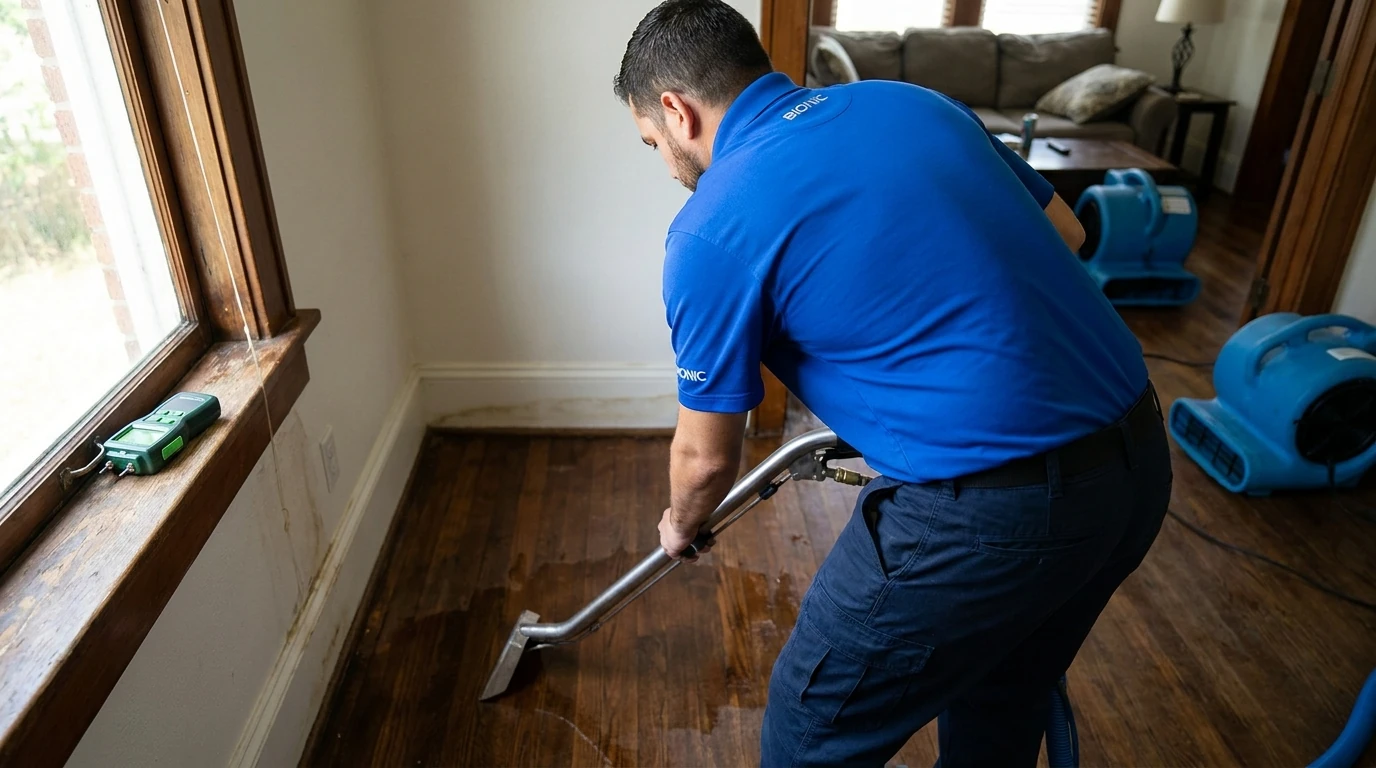
- Inspection and moisture mapping. Technicians use moisture meters and often thermal imaging to find where water traveled, including inside walls and under flooring, not just where it’s visible.
- Water extraction. Standing water comes out first, using truck-mounted or portable extraction equipment, because nothing else can dry properly while water is still pooling.
- Structural drying. Air movers and dehumidifiers get placed according to the IICRC S500 standard for professional water damage restoration, and run for several days with daily moisture checks.
- Monitoring and adjustment. Equipment gets repositioned and readings get logged until materials hit a safe, dry standard, not just a surface-dry feel.
- Cleaning and sanitizing. Affected surfaces get cleaned and treated, especially on any Category 2 or 3 loss, before the space is considered restored.
- Reconstruction, if needed. Drywall, baseboards, flooring, or cabinetry that couldn’t be saved gets replaced once drying is verified complete.
For a closer look at how the timeline stretches or compresses depending on the loss, see How Long Does Water Damage Restoration Actually Take?
Who Should You Call for Water Damage Restoration in Houston?
For a water loss anywhere from the Heights to Sugar Land, the company you call should be able to start the inspection the same day and document everything your insurer will ask for. BIONIC Emergency Services has handled water damage restoration across the Houston area since 2011, with technicians holding IICRC Water Damage Restoration (WRT) and Applied Structural Drying (ASD) training, and answers calls 24/7.
A fast, well-documented start matters more than almost anything else in the cost equation. Getting extraction and drying moving quickly, whether that’s near Buffalo Bayou Park or out past Pearland, is what keeps a $1,500 job from becoming a $7,500 one.
If water is actively spreading in your home right now, Call BIONIC Emergency Services at (713) 338-2424 for an inspection and a written scope before deciding on next steps.
About BIONIC Emergency Services
BIONIC Emergency Services is a Houston-based restoration company founded in 2011, serving the greater Houston metro including Pasadena, Pearland, Sugar Land, The Woodlands, and Baytown. Its technicians hold IICRC Water Damage Restoration (WRT) and Applied Structural Drying (ASD) training, the company carries a 4.9-star Google rating across 154 reviews, and crews are available 24/7 for water, fire, smoke, storm, and sewage emergencies.