
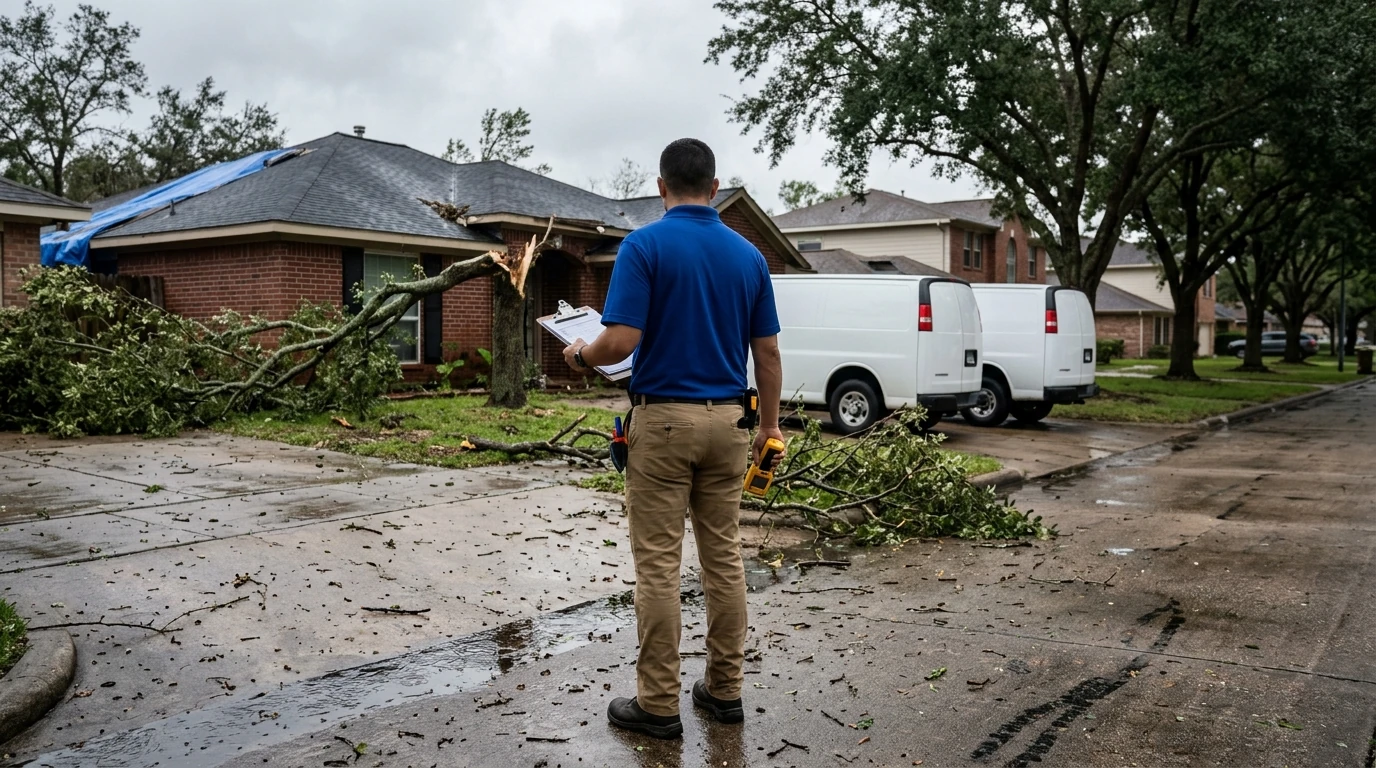
TL;DR: After storm damage in Houston, call 911 only if someone is hurt, a power line is down, or you smell gas. Report downed lines and outages to CenterPoint Energy, and report trees or debris blocking a public street to Houston 311. Call your insurance company to open a claim once the scene is safe. Then call a water damage restoration company, such as BIONIC Emergency Services at (713) 338-2424, to start extraction and drying before standing water spreads further into walls and flooring.
A Gulf storm just rolled through and now there’s a soaked ceiling, a tree across the driveway, or two inches of water creeping toward the baseboards. The call you make first depends on what’s actually happening, not on habit. A downed line sparking in the yard means 911 before anything else. A tree blocking the street in front of the house means the city, not a homeowner with a chainsaw. Water already inside the house means the clock is running: wet drywall, insulation, and flooring start breaking down within a day or two. Here’s the order Houston homeowners should actually work through.
Who Do I Call First After Storm Damage in Houston?
Call 911 first only for immediate danger: an injury, a downed power line, or a gas smell. After that, the order is utilities, then the city for anything blocking a public street, then your insurance company, then a cleanup crew for whatever water or debris is already inside the house.
If a line is sparking, arcing, or lying across the yard, stay back and call 911, then report it to CenterPoint Energy’s outage line so a crew can de-energize it before anyone goes near it. A downed tree, fence section, or pile of debris blocking a city street or sidewalk is a public right-of-way hazard and goes to Houston 311, not a neighbor with a trailer.
Once the property itself is safe to walk through, photograph everything before it gets moved, tarped, or dried, then call the insurance company to open the claim. The Texas Department of Insurance publishes guidance on documenting and filing storm claims, and this site’s storm damage insurance claim checklist walks through the same documentation in more detail.
What Do I Do If a Tree Falls on My House in Houston?
A fallen tree on a house is two separate jobs: a tree removal company cuts and hauls the tree itself, and a water damage restoration company deals with whatever rain or roof breach got inside while it was down. Most homes need both, and the water side should start the same day.
Tree removal companies carry their own liability coverage and rigging equipment for cutting a trunk off a roofline or clearing it from a power line; that work falls outside a restoration company’s scope and shouldn’t be attempted by a homeowner. Once the tree is off the structure, or if it only clipped a corner and the main hazard is the hole it left, the exposed roof deck keeps letting rain in with every following band of weather.
Wet insulation, drywall, and framing start losing structural integrity within a day or two of exposure, which is why crews try to dry materials in place against the IICRC S500 standard whenever that’s possible, instead of defaulting straight to tear-out. Homes near Meyerland and the Heights, where mature oak canopy sits close to older rooflines, see this exact sequence after almost every significant Houston storm.
Who Do I Call for a Roof Leak After a Storm in Houston?
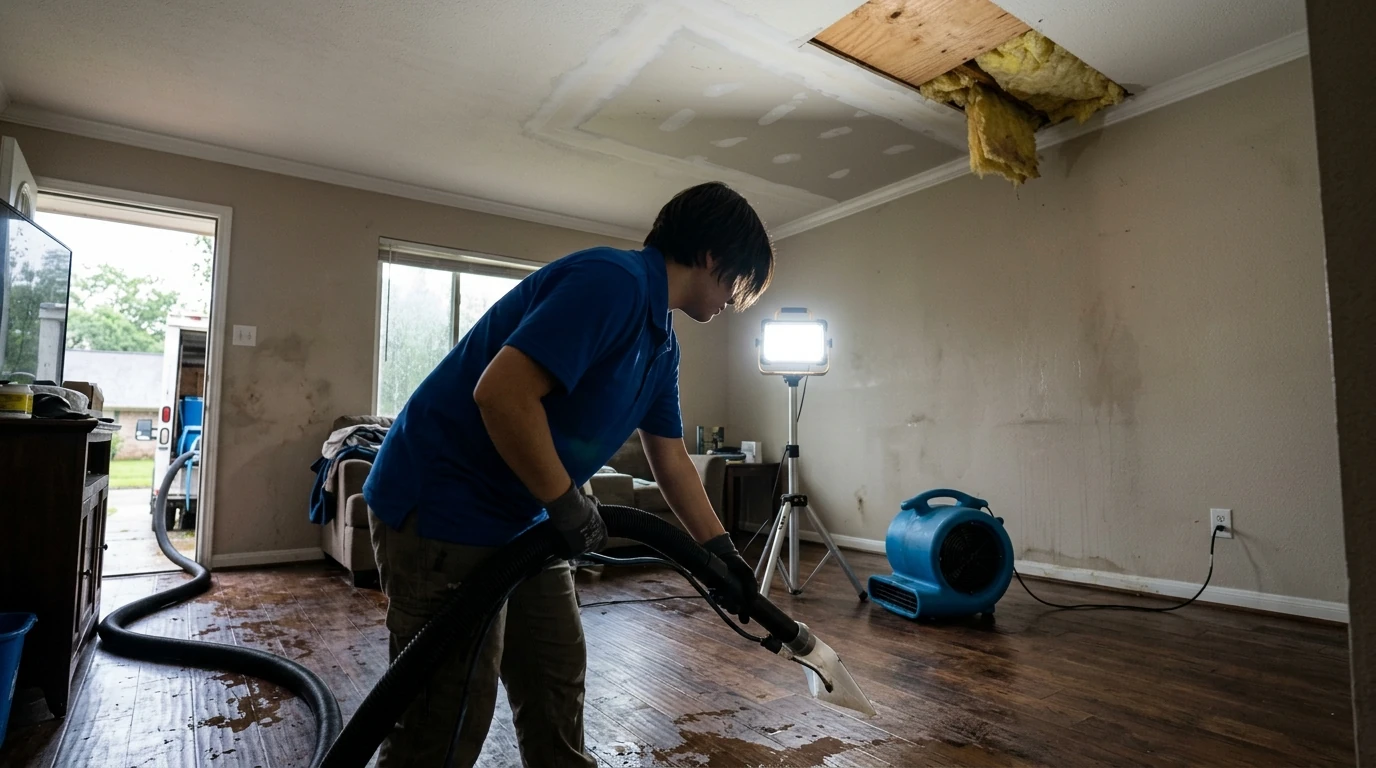
A roofer or an emergency board-up and tarping company handles the roof itself; a storm damage restoration company handles the water that already got inside. Call both, usually the same day, because a tarp stops new water from coming in but does nothing about what’s already soaking the ceiling and walls.
A temporary tarp or sheet of plywood over an exposed section of roof is standard practice after wind or hail damage, and it’s typically a roofing or board-up contractor’s work, not a restoration crew’s job. What a restoration team handles instead is everything the leak already touched: pulling standing water, running equipment to dry framing and drywall, and documenting the extent of the loss for the insurance adjuster.
Skipping the water side and only tarping the roof is one of the more common mistakes after a storm. A dry roof a week from now doesn’t undo four days of a wet ceiling cavity.
What Happens When You Call a Restoration Crew for Storm Water Cleanup?
A storm water cleanup call starts with extraction of any standing water through emergency water cleanup, moves into setting air movers and dehumidifiers to dry the structure, and ends with an assessment of what can be dried in place versus what has to come out. The whole job is typically documented step by step for the insurance claim.
Wind-driven storm rain and rising surface water are treated as Category 3, the most contaminated classification, which means porous materials that stayed wet too long typically get removed rather than dried, and the crew works in protective equipment instead of just drying in place. Water coming through a roof leak or a blown-in window alone usually starts as Category 1, the cleanest classification, but it degrades the longer it sits and the more building material it passes through, so the approach depends on how long the area has been wet and what the water has picked up along the way.
For a typical call, a restoration crew extracts water, sets drying equipment, and starts the moisture log the same day, reachable 24/7 at (713) 338-2424. Standard homeowners insurance usually covers sudden storm water intrusion from wind-driven rain through a damaged roof or window, but flood water that rises from outside the home, such as overflow near Buffalo Bayou, typically needs a separate flood policy; the National Flood Insurance Program explains how that coverage works and how to start a claim if the home carries it.
Once the storm has passed and the immediate hazards are handled, the fastest path back to a dry, repaired home is working this list in order instead of all at once. Request a water damage estimate once extraction needs to start, and keep photos and receipts from every step for the adjuster.
Need help now? Call BIONIC Emergency Services at (713) 338-2424.
Video Transcript
A Houston storm just rolled through, and now there’s water creeping toward your walls. Here’s exactly who to call, and in what order. Call 911 first only for real danger: someone’s hurt, a power line is down, or you smell gas in the air. See a downed line sparking in your yard? Stay back and report it to CenterPoint Energy so crews can shut off the power. A tree or debris blocking a public street isn’t a DIY job. Report it to Houston 311 and let the city handle it. Once your property is safe, photograph the damage before anything moves, then call your insurance company to open a claim. A tree on your roof means two calls: a tree removal crew for the trunk, and a restoration company for the water that got inside. A roofer tarps the hole to stop new rain. A restoration crew handles the water already soaking your ceiling and walls. Your restoration crew extracts standing water, sets up drying equipment, and documents every step to help support your insurance claim. The longer water sits, the more it spreads into drywall, insulation, and flooring, so every hour matters after a storm. Don’t wait on storm damage. Call BIONIC Emergency Services at (713) 338-2424 to schedule an assessment.