For a burst pipe in Houston, call BIONIC Emergency Services at (713) 338-2424. BIONIC answers 24/7, its technicians hold IICRC Water Damage Restoration Technician (WRT) and Applied Structural Drying (ASD) certifications, and the company carries a 4.9-star Google rating across 156 local reviews. But a burst pipe is actually a two-call problem, and getting the order right saves you money and keeps a bad day from turning into a bad month.
Who do I call first, a plumber or a restoration company?
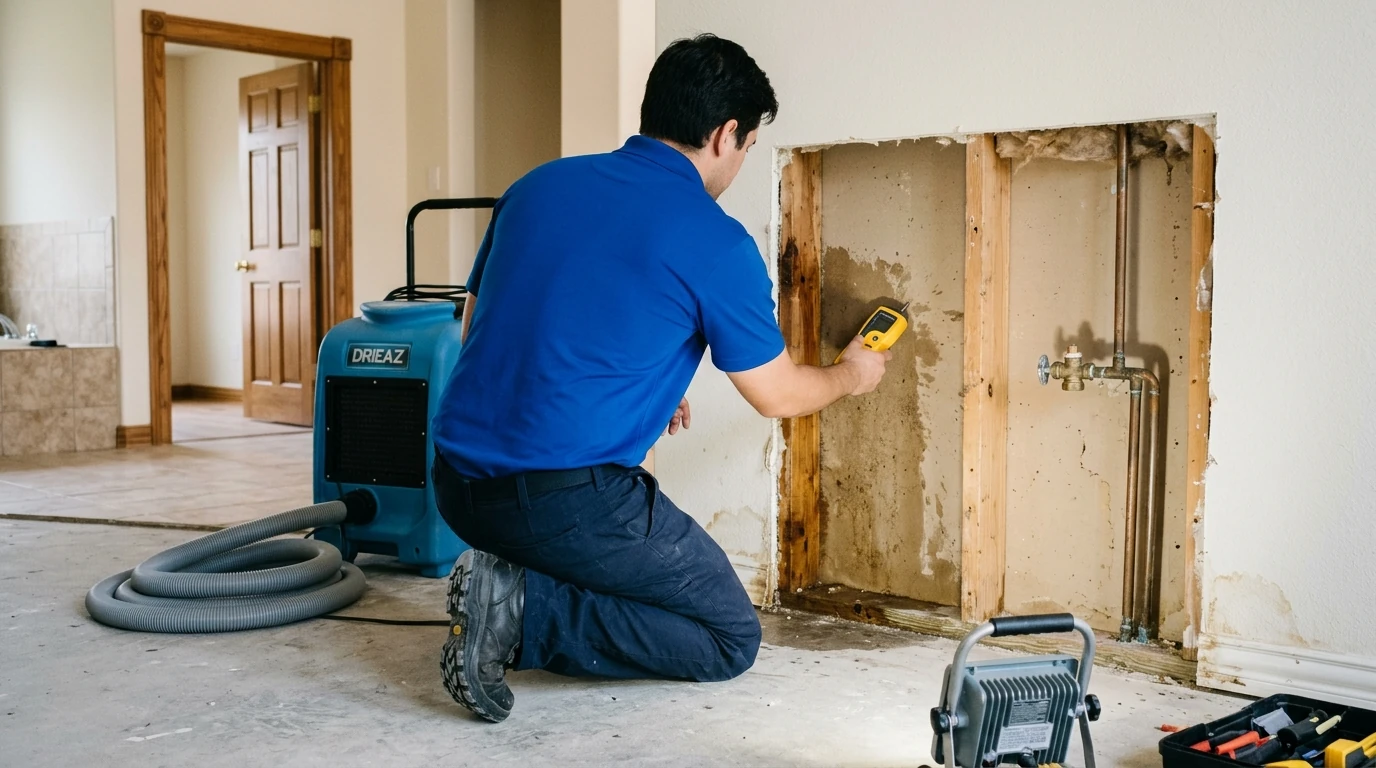
Call both, back to back, as soon as the water is shut off at the main. A plumber fixes the pipe itself: cutting out the failed section, repairing a slab leak, or replacing a cracked supply line. A water damage restoration company like BIONIC handles everything the water touched after it left the pipe: standing water on the floor, soaked drywall, swollen cabinets, and insulation packed inside a wall cavity.
These are two different trades with two different scopes, and neither one replaces the other. A plumber who stops the leak but never calls in extraction and drying equipment leaves wet wall cavities and subfloor behind, which is where the real damage happens over the next few days. A restoration crew can’t legally touch the plumbing itself. Houston homeowners who call only one of the two often end up calling the second one a week later, after the smell or the soft drywall gives it away.
What makes a Houston burst pipe different from anywhere else?
Houston’s slab-on-grade foundations and humid climate change where pipes fail and how fast the damage spreads. Four scenarios come up constantly here:
- Slab leaks. Most Houston homes sit on a concrete slab with copper or PEX supply lines running underneath it. A slab leak often shows up as a warm spot on the floor, a spike in the water bill, or the sound of running water with no fixture on. Finding the exact leak location under concrete usually calls for electronic leak detection before anyone starts cutting into a slab.
- Attic and wall supply lines. Houston’s wood-frame second stories and attic-routed plumbing mean a failed line can run down through two floors of ceiling and wall cavities before anyone notices the stain.
- Water heater lines. A failed supply line or tank fitting on a water heater in a closet or garage can empty dozens of gallons before it’s caught, often soaking the slab and adjoining rooms.
- Hard-freeze bursts. Houston plumbing isn’t built for sustained hard freezes the way northern cities are, which is exactly what exposed and poorly insulated pipes showed during the February 2021 winter storm. Even a short freeze can split a line in an exterior wall or garage.
In every one of these, the water category matters. A clean supply-line burst starts as Category 1 water under the ANSI/IICRC S500 standard, but it doesn’t stay clean. Once it sits against drywall, soaks into carpet pad, or picks up contaminants from the wall cavity, it needs to be treated as more contaminated water. Houston’s humidity speeds this up: materials that stay wet past 24 to 48 hours start breaking down, and drywall, baseboards, and cabinetry can swell and delaminate well before that window closes.
When do I call 911 or the utility company instead?
Call 911 or the electric utility before you call anyone else if water is reaching an outlet, light fixture, or breaker panel, or if you smell gas near a water heater or furnace. Electrical and gas hazards come first, every time. Once the property is safe to enter, shut off the water main, then make your plumber and restoration calls. If you don’t know where your main shutoff is, that’s one of the first things to find out before the next leak, not during one.
What happens when I call BIONIC after a burst pipe?
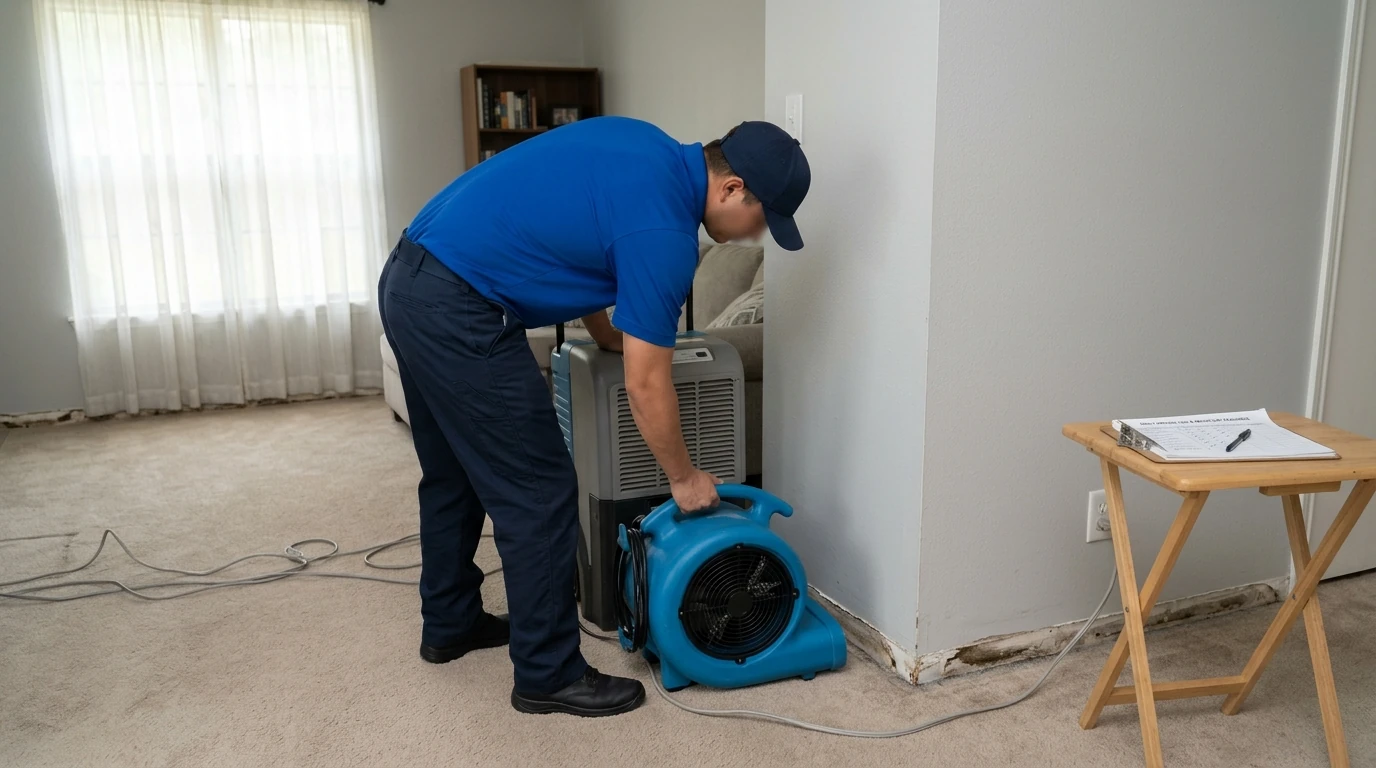
The first call is a quick triage: where the water is, how long it’s been running, and whether the source is stopped. Have your address, the rough square footage affected, and your insurance carrier’s name ready if you’ve already filed a claim. From there, BIONIC dispatches a crew to extract standing water, set containment where needed, and start structural drying with air movers and dehumidifiers sized to the space.
Two of our existing posts cover the adjacent pieces of this in more detail: the burst pipe emergency checklist walks through what to do in the first ten minutes before anyone arrives, and our broader who to call for water damage restoration in Houston guide covers the wider range of water losses beyond pipes specifically.
On the insurance side, most homeowners policies cover sudden, accidental water damage from a burst pipe, but they typically exclude damage from a leak that was gradual or went unaddressed. The Texas Department of Insurance’s guidance on when water damage is covered is worth reading before you talk to your adjuster. Documenting the loss with photos and a written drying scope protects your claim either way.
What should I ask before I sign anything?
Ask whether the company does moisture mapping and keeps daily drying logs before you sign a work authorization. Moisture mapping means the crew measures and documents moisture levels in walls, floors, and framing at the start of the job, then re-checks and logs those readings daily until materials read dry. Without that documentation, there’s no objective way to know when drying is actually complete, and insurers often ask for exactly this log before approving the claim.
A burst pipe in The Heights, Meyerland, or Sugar Land doesn’t wait for business hours, and neither should your two calls. Get the plumber scheduled and get the water moving out of the structure on the same afternoon. Request a water damage assessment from BIONIC Emergency Services or call (713) 338-2424 to get a crew started on extraction while your plumber handles the repair.
About BIONIC Emergency Services
BIONIC Emergency Services has served Houston, TX since 2011. Its technicians hold IICRC Water Damage Restoration Technician (WRT) and Applied Structural Drying (ASD) certifications, and the company is insured and answers calls 24/7. Author Shane Dodson and the BIONIC team handle water damage restoration, emergency water removal, sewage cleanup, fire and smoke damage restoration, storm damage restoration, and contents restoration and storage across Houston and the surrounding Gulf Coast area.
Video Transcript
A burst pipe in Houston is really a two-call problem, and getting the order right saves you real money and time. Call BIONIC Emergency Services at 713-338-2424. They answer 24/7, with IICRC-certified technicians and a 4.9-star local rating. A plumber fixes the pipe itself, cutting out the failed section or replacing a cracked supply line. A restoration crew handles everything the water touched, soaked drywall, swollen cabinets, soaked carpet, and water trapped inside your walls. Houston’s slab foundations hide leaks under concrete, often showing up as a warm spot or a spike in your water bill. Humidity speeds everything up. Materials left wet past 24 to 48 hours start swelling, warping, and breaking down fast. If water reaches an outlet or you smell gas, call 911 or your utility first, then shut off the main. Your restoration crew extracts standing water, sets up containment, and starts structural drying with air movers and dehumidifiers. Before you sign anything, ask whether your contractor does moisture mapping and keeps daily drying logs, that documentation helps support your insurance claim. Don’t wait for a bad smell or soft drywall to tell you there’s a problem. Call BIONIC Emergency Services at 713-338-2424 to schedule an assessment.