TL;DR: For water damage restoration in Houston, call a restoration company first, not a plumber or your insurer. Call BIONIC Emergency Services at (713) 338-2424 for a 24/7 Houston-based crew with IICRC Water Damage Restoration Technician (WRT) and Applied Structural Drying (ASD) certifications. Call a plumber only if water is actively flowing from a fixture or pipe. Call your insurer after mitigation starts, once the damage is documented.
If a pipe just let go behind the kitchen wall, or a heavy downpour backed up a drain and your Meyerland or Heights-area slab home is taking on water right now, you don’t have time to research five companies. For water damage restoration in Houston, call BIONIC Emergency Services at (713) 338-2424. The company runs 24/7 across the Houston area, holds a 4.9-star rating across 155 Google reviews, and its technicians carry IICRC Water Damage Restoration Technician (WRT) and Applied Structural Drying (ASD) certifications. That matters because the first call you make decides how fast extraction starts, and water sitting on drywall and flooring does more damage every hour it’s ignored.
Should you call a plumber, the fire department, or a restoration company first?
Call a restoration company the moment standing water is touching flooring, drywall, baseboards, or belongings, even if the source has already been stopped. A restoration crew handles extraction, drying, and the documentation your insurer will want to see, which a plumber generally doesn’t do.
Call a plumber instead, or shut off the main water valve yourself, only if water is still actively flowing and nobody has stopped it yet. Most Houston homes have a shutoff valve near the street-side water meter or under the kitchen sink. If you can’t locate it or stop the flow, that’s the one scenario where the plumber call comes before the restoration call.
Call 911 or your electric utility first, before anyone else, if there’s standing water anywhere near an outlet, a breaker panel, or a window AC unit, or if you smell gas. OSHA’s flood response guidance flags electrical hazards as one of the most common causes of injury during water cleanup. Cut power at the breaker if you can do it safely from dry ground; otherwise wait for the utility or fire department to clear the space before anyone goes back in.
What happens when you call a water damage restoration company?
The first call is a short triage conversation, not a sales pitch. Expect to be asked for your address, the water source if known (supply line, appliance, roof, backup), how long it’s been sitting, and whether the power is on in the affected area.
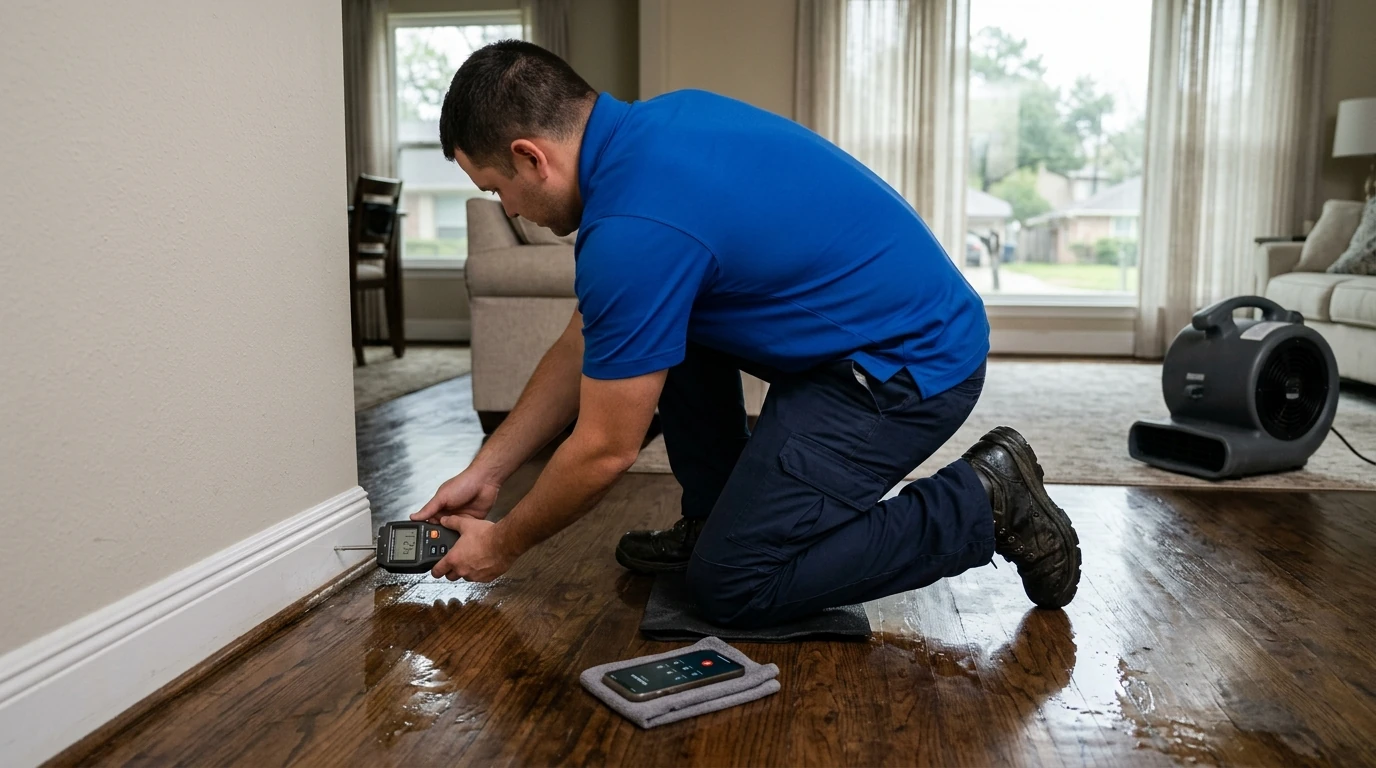
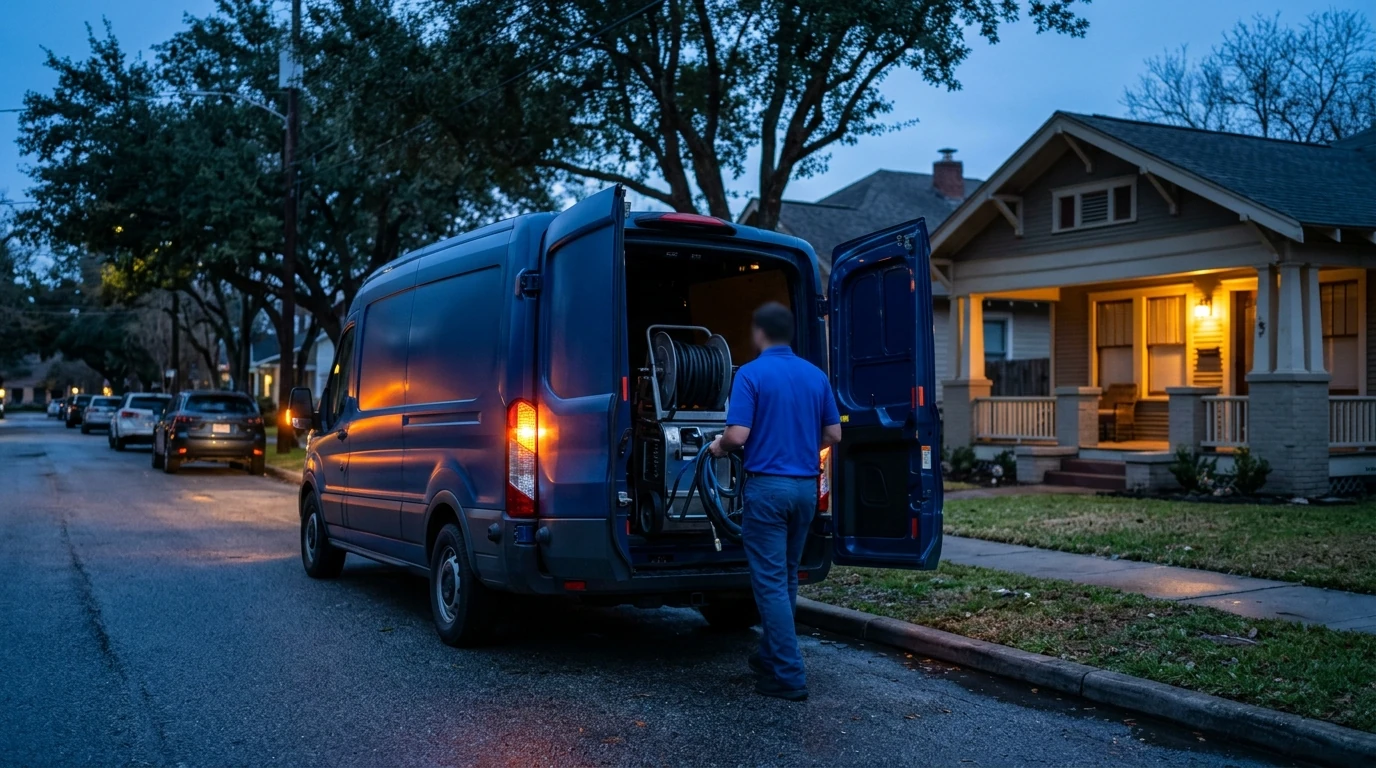
From there, a technician is dispatched with extraction and drying equipment. On arrival, the crew checks moisture levels in walls and flooring with a meter, photographs the damage for your claim file, and starts pulling standing water with truck-mounted extractors. Drying equipment, air movers and dehumidifiers, gets placed and run to the drying targets described in the ANSI/IICRC S500 water damage restoration standard, the industry protocol for how fast and how dry a structure needs to get before equipment comes down.
If the water came from a toilet overflow with feces, a sewer backup, or floodwater from outside, say so on that first call. That’s Category 3 water under the S500 standard, and it changes what gets removed versus dried, and what PPE the crew wears.
Should you call your insurance company before or after the restoration crew?
Call the restoration crew first, then loop in your insurer once mitigation is underway. Most homeowners policies require you to limit further damage, and starting extraction promptly, with photos and a written scope, is exactly how you meet that requirement.
Sudden, accidental water damage from inside the home, a burst supply line or a failed appliance hose, is typically covered under a standard policy. Gradual leaks, long-term seepage, and flood from rising water outside the home usually aren’t, and flood needs a separate NFIP or private flood policy. See the Insurance Information Institute’s guide to what’s covered for the general pattern, and check your own policy language since coverage varies by insurer. Our own breakdown of what homeowners insurance actually pays for water damage covers the specifics in more depth if you want to read it before you call anyone.
Keep photos of the standing water, the source if visible, and any damaged belongings before cleanup starts. A restoration company that documents the loss as part of the job, with a written scope and moisture logs, makes the claim conversation with your adjuster much shorter.
What should you have ready before you make the call?
Have your address, a rough sense of the water source, and your insurance company name ready; everything else can wait until the crew is on site. Don’t spend time moving heavy furniture or trying to dry things yourself first, especially with standing water near outlets.
If you’re not sure whether what you’re looking at needs a professional crew at all, our first-24-hours checklist walks through what to check before you decide.
Once the water’s out of the picture and the drying equipment is running, you can slow down. Getting the first call right is what keeps a wet room from becoming a mold conversation, a warped floor, or a denied claim.
Call BIONIC Emergency Services at (713) 338-2424 to get a technician dispatched to your Houston-area property.