TL;DR: The best commercial water damage restoration company in Houston carries IICRC-trained technicians, owns commercial-grade drying equipment, documents the loss with daily moisture logs an adjuster can audit, and keeps mitigation and reconstruction under one contract so a flooded office, retail space, or warehouse reopens faster. BIONIC Emergency Services, based in northwest Houston, has handled commercial water losses across the city since 2011 and meets each of these checkpoints.
If a supply line let go overnight in your Midtown office building, or a backup flooded the ground-floor retail space along the EaDo corridor, you’re not shopping for the same contractor a homeowner would call. A commercial loss usually means multiple tenants, a lease that specifies restoration timelines, and an insurance adjuster who wants a documented scope before authorizing anything past the first day of mitigation. Here’s what actually separates a contractor built for that job from one that just happens to also take commercial calls.
What Should a Commercial Water Damage Contractor in Houston Be Able to Prove?
A commercial-ready contractor can show four things before a technician ever opens a drywall panel: trained and certified technicians, true around-the-clock response, active licensing and insurance, and a history of jobs bigger than a single bathroom or bedroom.
BIONIC’s technicians hold IICRC Water Damage Restoration (WRT) and Applied Structural Drying (ASD) certifications, which means they’ve trained specifically on how water moves through different building materials and how to dry a structure according to the drying science in the ANSI/IICRC S500 standard. BIONIC has been responding to Houston-area water losses since 2011, is insured, and answers calls 24/7, which matters when a line breaks at 2 a.m. in a building with a restaurant on the ground floor and residential units above it.
Ask any contractor you’re considering for proof of technician certifications, proof of insurance, and a sample of a commercial scope they’ve written. If they can’t produce a sample scope, they haven’t done many of these jobs.
What Makes Commercial-Grade Drying Different From a Residential Job?
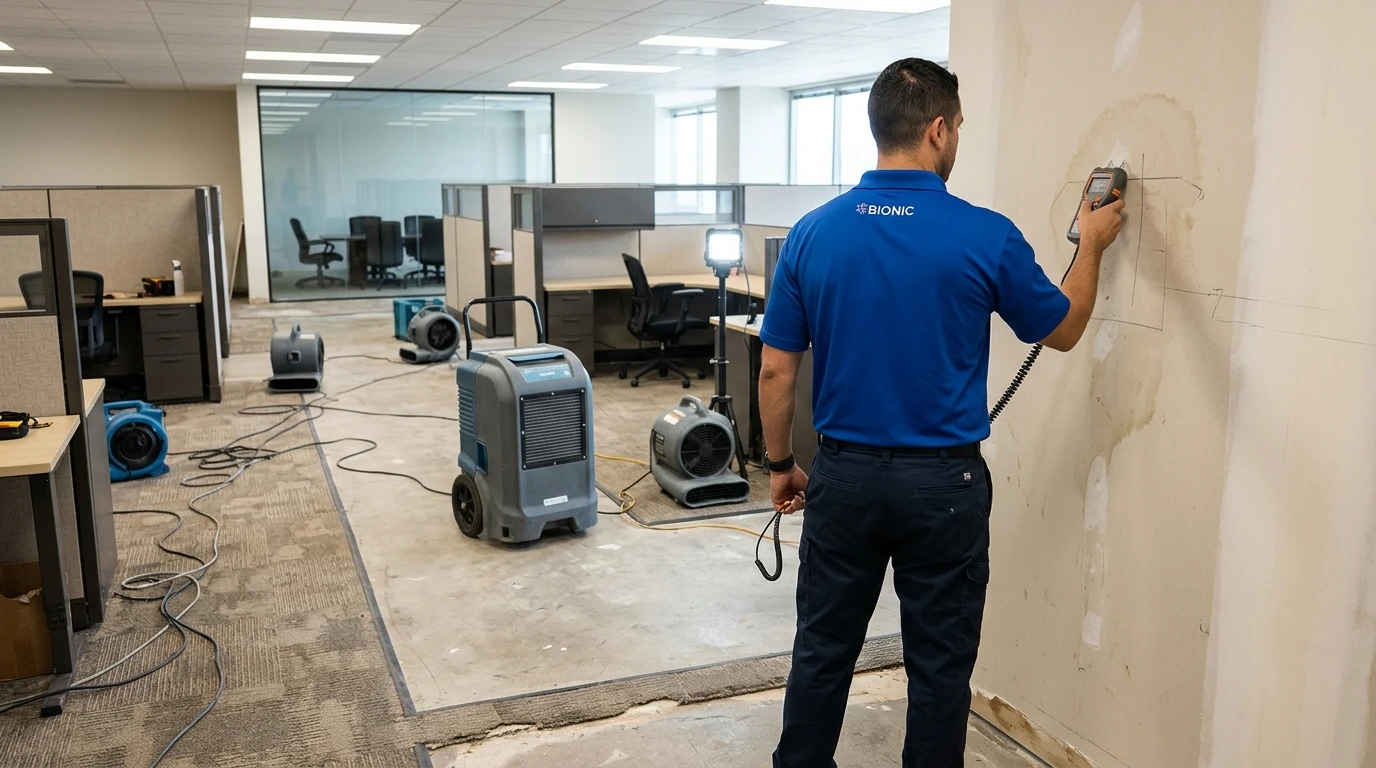
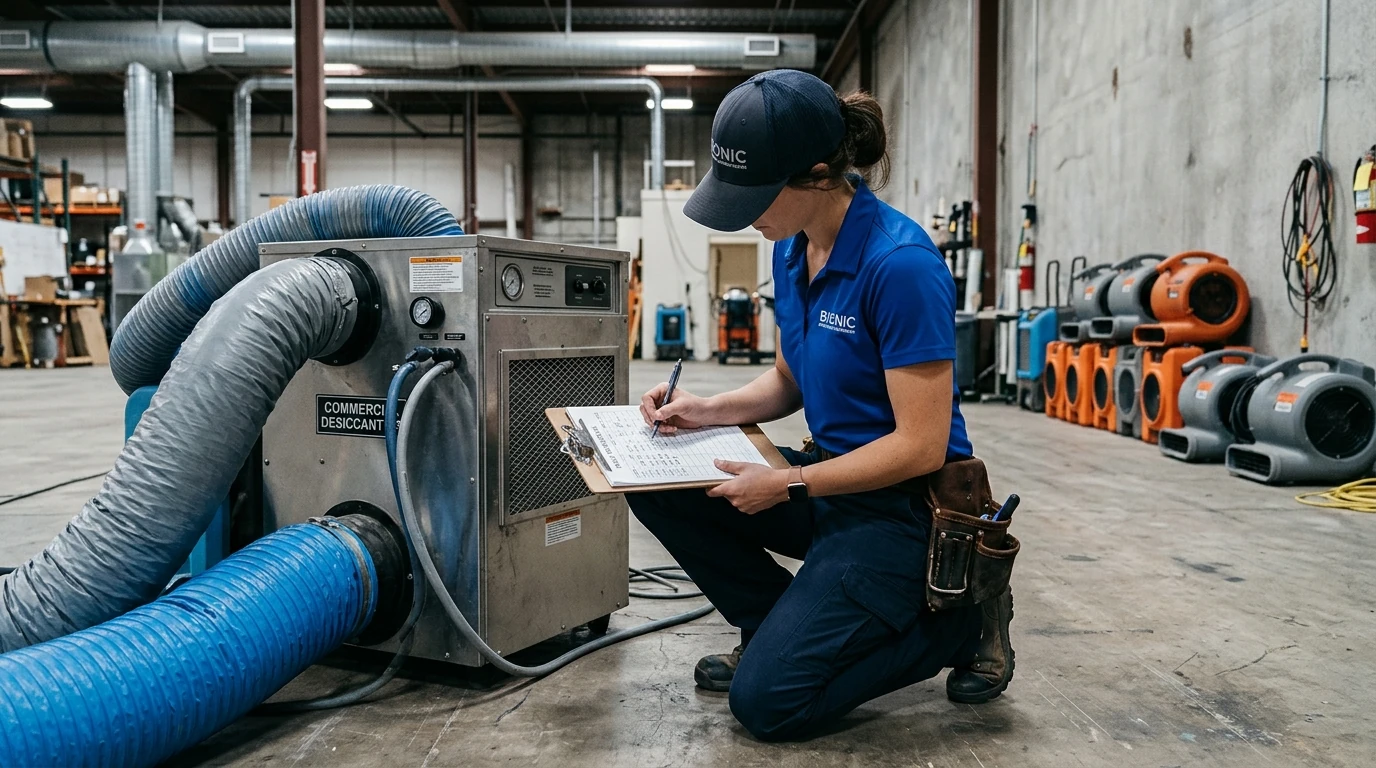
Commercial drying is a different scale of math than a residential bedroom, not just a bigger version of the same job. A 15,000 square foot office suite or a multi-floor retail building needs more air movers per square foot, larger low-grain-refrigerant or desiccant dehumidifiers, and daily psychrometric readings logged across every affected zone, not just one or two rooms.
That daily log matters for a reason beyond drying science. Commercial adjusters and property managers both want to see moisture readings trending down day over day, with dates and locations attached, because that log is what justifies how many drying days actually got billed. A contractor who shows up, sets a few air movers, and checks back in a week without documentation is not running a commercial-grade drying plan.
For buildings with multiple floors, mixed occupancy, or a loss that started on an upper level and traveled down through ceilings and electrical, the project needs a large loss response structure, not a standard residential crew size. BIONIC’s large loss response team scales staffing and equipment to match the square footage and number of affected floors rather than running a one-size crew on a multi-tenant loss.
How Should a Contractor Handle the Insurance Adjuster on a Commercial Claim?
A commercial contractor worth hiring treats the adjuster as a partner in the file, not an obstacle, and documents the loss the same way whether or not an adjuster has shown up yet. That means photos and moisture readings from the first visit, a written scope before major work begins, and a single point of contact who can answer the adjuster’s questions without the property manager relaying messages back and forth.
Commercial policies and coverage questions can get complicated fast, especially when business interruption, tenant improvements, or a shared building system is involved. The Texas Department of Insurance is the state resource for understanding how a commercial property policy is supposed to respond to a covered loss, and it’s worth a property manager’s time to understand the basics before a claim gets filed, not after.
BIONIC’s team documents every commercial job with daily logs and photos specifically so that record exists whether the loss is a small, uncomplicated repair or a disputed claim headed for appraisal.
Why Does Mitigation Plus Reconstruction Under One Contract Matter for a Business?
Keeping mitigation and reconstruction under one contractor means one point of accountability from the moment water is extracted to the day tenants move back in, instead of re-bidding the rebuild to a second contractor after drying is done. For a business trying to reopen, that single handoff point usually means fewer delays and fewer gaps in communication.
A warehouse, office, or restaurant that sits half-dried for two weeks while the property manager interviews rebuild contractors is losing revenue the whole time. BIONIC’s commercial restoration and reconstruction teams work from the same scope, so drywall, flooring, and finish work can start as soon as moisture readings clear instead of waiting on a new bid cycle. Our post on protecting business continuity after a commercial water loss goes deeper into how that timeline actually plays out for a tenant-occupied building.
If you’re comparing this against a residential job, the checklist looks different: see our guides to finding the best restoration company in Houston and the best water damage restoration companies in Houston for the homeowner side of that comparison.
If a pipe break, roof leak, or sewer backup has hit an office, retail space, restaurant, or multifamily building anywhere from downtown Houston through the Texas Medical Center area, request a free evaluation from BIONIC at (713) 338-2424 and get a documented scope started before the clock runs on your lease timeline.
About BIONIC Emergency Services
This guide was prepared with the BIONIC Emergency Services team. Founded in 2011 and based in northwest Houston, BIONIC is insured, answers calls 24/7, and its technicians hold IICRC Water Damage Restoration (WRT) and Applied Structural Drying (ASD) certifications. The company handles water damage, storm damage, fire and smoke damage, sewage cleanup, and contents restoration for homes and businesses across the Houston metro, including Pasadena, Pearland, Sugar Land, The Woodlands, and Baytown.