
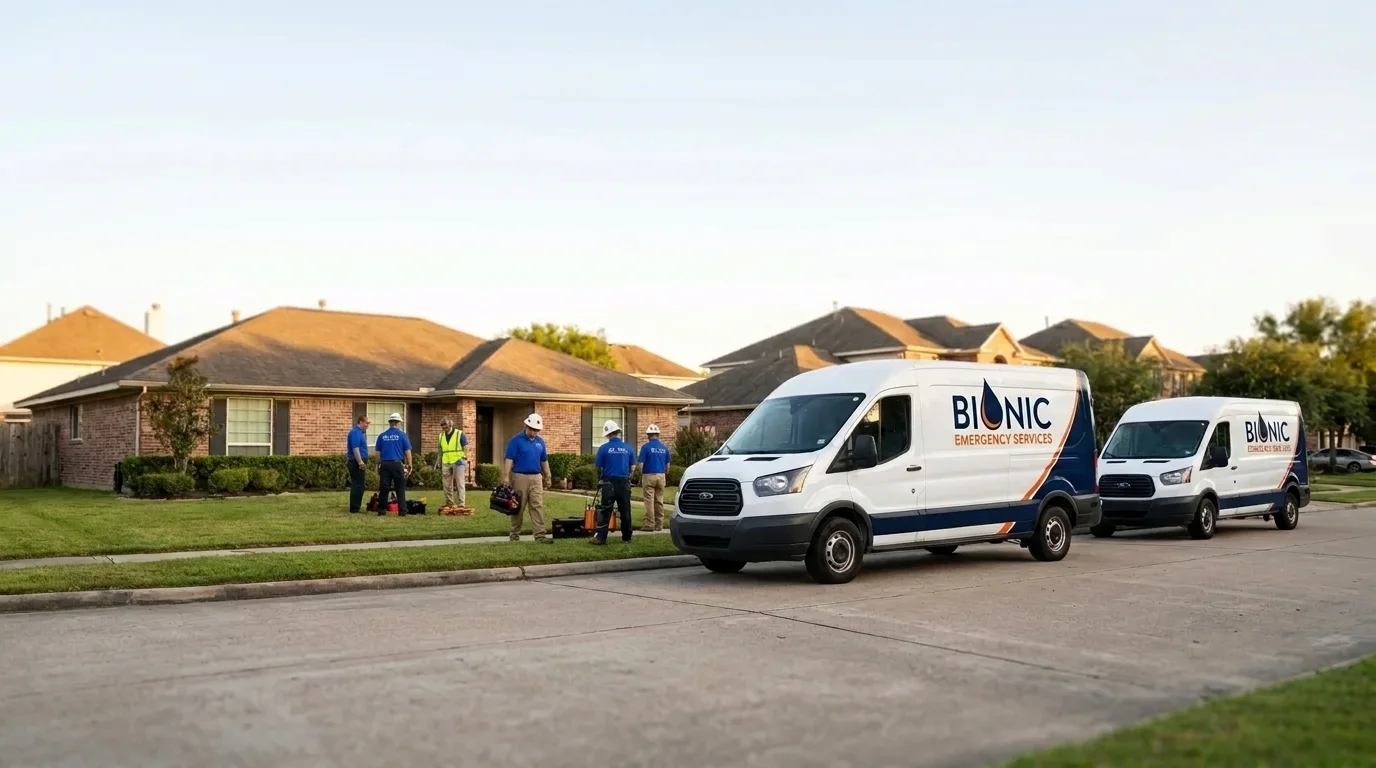
If you’re searching for how to choose a restoration company, you’re probably staring at water on the floor, a scorched wall, or a musty smell that won’t go away, and you need an answer faster than a sales pitch. The short version: verify the company documents everything for your insurance claim, ask what drying or cleaning standard they follow, get the scope of work in writing before signing anything, and never let anyone pressure you into an on-the-spot contract. A legitimate restoration company explains the process, not just the price.
Houston homeowners deal with a specific set of risks that make this decision higher stakes than it looks. Clay-heavy soil shifts foundations and stresses old plumbing. Humid summers slow natural drying in damp drywall. Older housing stock around neighborhoods like the Heights or Oak Forest often hides galvanized or cast iron pipes that fail without warning. When a loss happens, you’re not just picking a contractor, you’re picking who controls your timeline, your insurance paperwork, and whether the repair actually holds.
Why the Wrong Choice Costs More Than Money
A rushed hire after a burst pipe or a kitchen fire can lock you into a company that dries the surface but not the structure, patches smoke damage without addressing the odor source, or files paperwork that your adjuster rejects. Water damage restoration done wrong means lingering moisture problems show up in week three. Fire damage restoration done wrong means the smell comes back every time it rains. These aren’t hypothetical annoyances, they’re the reason insurance claims get reopened and homeowners end up paying twice.
Questions to Ask Before You Sign Anything
Ask these before a crew touches your property, not after:
- What drying or cleaning standard do you follow, and can you explain it in plain language? (A credible answer references the IICRC S500 standard for water damage, not just “industry best practices.”)
- Will you provide moisture readings or documentation I can show my insurance adjuster?
- Is the estimate itemized, and does it separate emergency mitigation from repair and reconstruction?
- Who is actually on-site, your crew or a subcontractor you’re dispatching?
- What happens if hidden damage is found once walls or flooring come up?
If a company dodges these questions or rushes you to sign a blank authorization form, that’s a signal to slow down.
What NOT to Do While You’re Deciding
Don’t wait to address active water or fire damage while you shop around for three days of quotes. Standing water and smoke residue both get worse by the hour, not the week. Instead:
- Shut off the water or power source if it’s safe to do so.
- Take photos and video of the damage before anything is moved or cleaned.
- Call your insurance company to open a claim and ask what documentation they require.
- Get one company on-site quickly for mitigation (stopping the damage from spreading) even if you’re still comparing options for the full repair.
What you shouldn’t do: sign a contract you haven’t read because someone showed up with a van and a clipboard. Don’t let anyone pressure you to use “their preferred insurance adjuster.” Don’t assume the cheapest bid is the better deal, mitigation that’s rushed or incomplete almost always costs more in round two.
When to Call a Professional vs. Handle It Yourself
Small, contained issues, a dripping sink cabinet you caught immediately, a single damp spot from a window leak, can sometimes be dried out with fans and a dehumidifier if you act within a few hours. Call a professional when:
- Water has touched drywall, insulation, or subflooring for more than a few hours.
- There’s any standing water near electrical outlets or panels.
- Smoke or fire damage has affected more than one room or any structural material.
- You notice a musty smell but can’t find the source, which often means moisture is inside a wall cavity or under flooring.
- Your insurance adjuster requires professional documentation to process the claim.
In these cases, the cost of a DIY attempt that goes wrong, from drywall replacement to a denied claim, almost always exceeds the cost of calling someone qualified the first time.
What the Recovery Process Actually Looks Like
A legitimate restoration job follows a sequence, not a single visit. First comes assessment and documentation: moisture mapping for water losses, or soot and odor testing for fire damage. Next is mitigation, extracting water and removing unsalvageable materials. Then drying and monitoring, which for water losses can take several days of daily moisture checks, not a one-and-done fan setup. Only after materials read dry does reconstruction begin, replacing drywall, flooring, or cabinetry. A company that skips straight from “we’re here” to “it’s fixed” without that middle documentation step is one you should question.
If you’re in the middle of a water or fire situation in the Houston area right now and want a straight answer about what you’re looking at, BIONIC Emergency Services can walk the property, explain the scope in plain terms, and document what your insurance company will need. Call (713) 338-2424 before you sign anything with anyone else.