
If you’ve called around for water or fire damage help, you’ve probably seen the letters IICRC on a website or business card and wondered what they actually mean. The Institute of Inspection, Cleaning and Restoration Certification (IICRC) is the industry body that sets the technical standards for water damage, fire damage, and structural drying work in North America. A technician who holds an IICRC certification, such as Water Damage Restoration Technician (WRT) or Applied Structural Drying (ASD), has gone through training on how materials absorb and release moisture, how drying equipment is supposed to be placed and monitored, and how a job should be documented. It’s not a marketing badge. It’s a baseline for whether the person in your house actually knows what they’re doing.
What the Certification Covers
The IICRC doesn’t certify companies in the way people often assume. It certifies individual technicians who complete coursework and pass an exam in a specific discipline. WRT covers the fundamentals of water intrusion: how water moves through different building materials, the difference between surface moisture and moisture trapped deep in a wall cavity, and the categories and classes used to describe how contaminated or how severe a water loss is. ASD goes further into the science of drying: psychrometrics, airflow, and how to use moisture meters and thermal imaging to confirm a structure is actually dry, not just dry to the touch.
This matters because water damage is deceptive. Drywall can feel dry on the surface while the insulation behind it is still saturated. A hardwood floor can look fine for days before it starts cupping because moisture worked its way into the subfloor. A technician trained to IICRC standards knows to check those hidden areas with instruments instead of guessing, and knows how long materials in a Houston home, often built with slab foundations and humid summer air working against the drying process, actually take to reach a safe moisture level.
Why It Matters When You’re Hiring Someone
Anyone can buy a few fans and call themselves a restoration company. What separates a trained technician from someone with a truck and a shop vac is the ability to read the damage correctly the first time. If a crew pulls equipment too early because the carpet feels dry, or skips checking the wall cavity behind a burst pipe, the result is often the same: materials that stay damp long enough to start breaking down, warping, or developing odor problems weeks later. That turns a contained repair into a bigger reconstruction job.
For fire damage specifically, the standards work a little differently. Smoke residue behaves differently depending on what burned, how hot the fire got, and what surfaces it settled on. A technician trained in structural drying and water mitigation standards also understands how water used to fight a fire, or water from sprinkler suppression, interacts with soot and charred materials. That combination is part of why fire and water damage response often overlap on the same job.
What to Ask Before You Hire Anyone
You don’t need to become an expert in restoration standards to protect yourself. A few direct questions tell you most of what you need to know:
- Do the technicians who will actually be in my home hold IICRC certification, and in what discipline?
- How will you confirm the structure is dry before you stop treatment, not just that it looks dry?
- Will you document moisture readings and equipment placement for insurance purposes?
- What’s included in the scope of work, and what happens if you find additional damage once materials are opened up?
A contractor who answers these plainly, and who can explain their drying plan in specific terms rather than general reassurance, is a good sign. One who gets vague or defensive about documentation is worth a second opinion.
What Happens When Drying Is Done Wrong
The risk of skipping proper standards isn’t abstract. Materials that stay wet longer than they should start to warp, delaminate, or smell. Baseboards swell and separate from the wall. Subfloor can weaken enough that it flexes underfoot. None of that shows up on day one, which is exactly the problem: a rushed or undertrained job can look successful at first and then create a second, more expensive round of repairs a month or two later.
Insurance carriers also pay attention to documentation. Moisture logs, photos, and equipment placement records aren’t paperwork for its own sake. They’re the evidence that drying was done to a defensible standard, which matters if a claim gets questioned or if damage resurfaces and you need to show the original work was handled correctly.
When to Bring in a Professional
Small, contained situations, a spilled appliance line you caught immediately, a minor roof leak during a short rain, are sometimes manageable with a wet vac and some fans if you act within the first few hours. Once water has been sitting for more than a day, has reached flooring or wall cavities, or involves a sewage backup, category 2 or 3 water, or any fire event, it’s time to bring in someone trained to assess the scope correctly. The same goes for any situation involving an insurance claim: documentation from the start protects you more than documentation added after the fact.
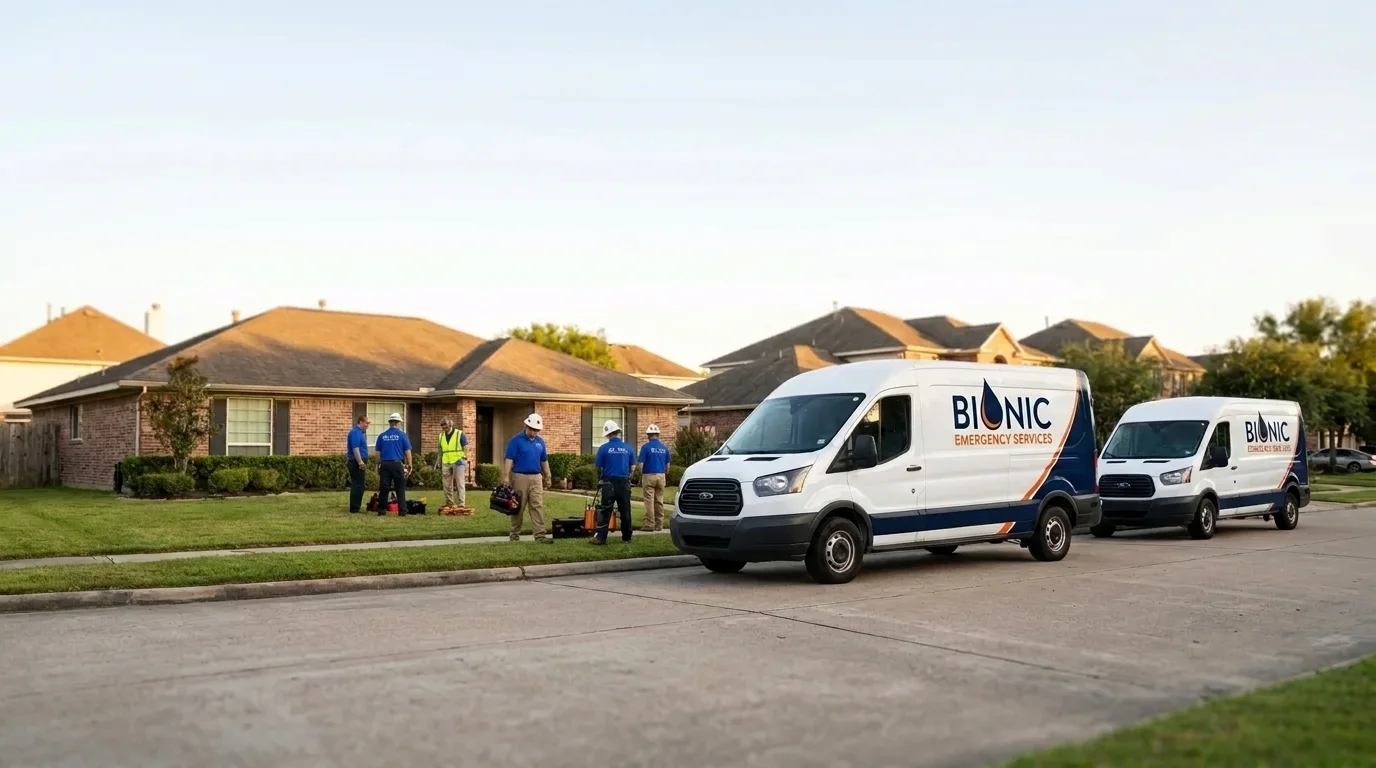
BIONIC Emergency Services’s technicians hold IICRC WRT and ASD certifications and work on water damage restoration and fire damage restoration throughout the Houston area. If you’re trying to figure out whether what you’re looking at is a do-it-yourself fix or something that needs a trained eye, a phone call costs you nothing and can save you from guessing wrong. Call (713) 338-2424 to talk through what you’re seeing before it gets worse.