
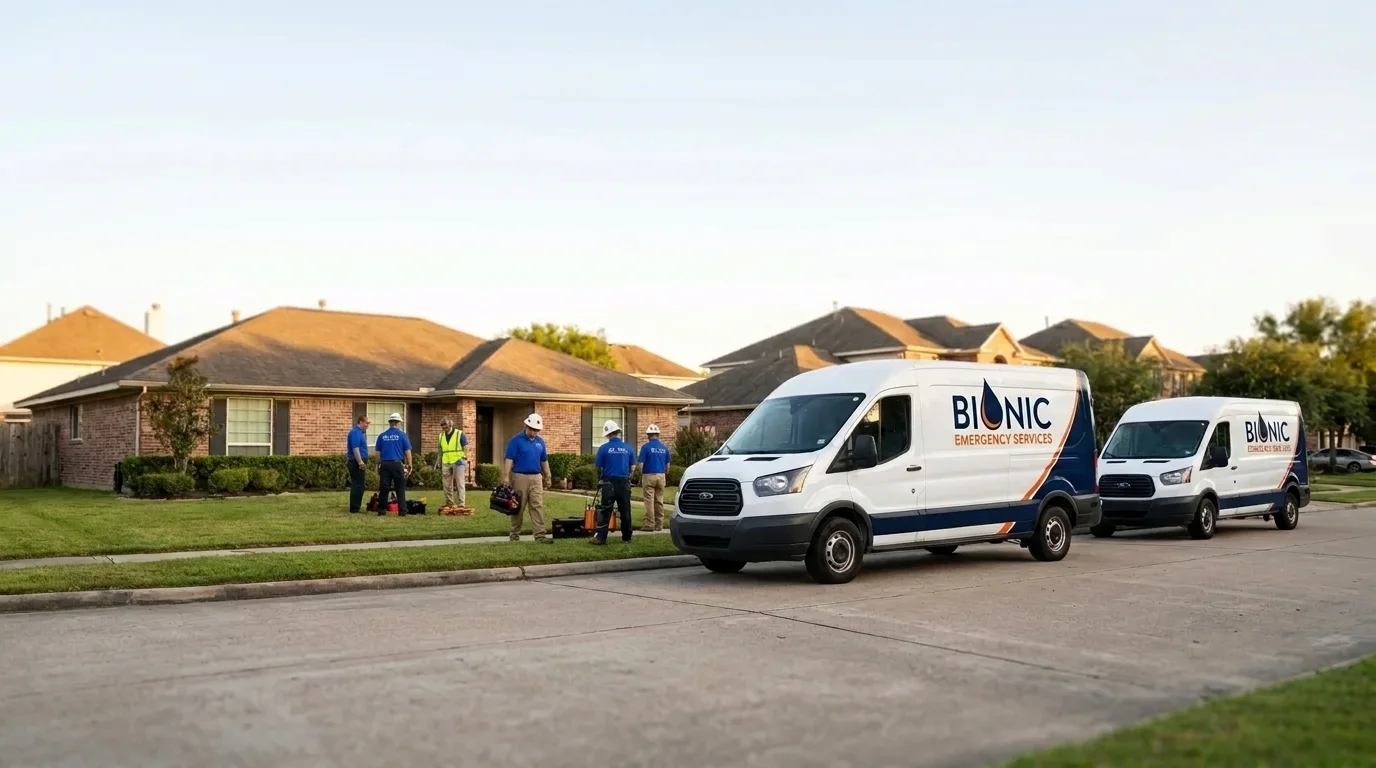
Smoke odor removal works because professionals treat it as a chemistry problem, not a cleaning problem. Smoke particles are microscopic and acidic, and they bond to porous surfaces, drywall, insulation, fabric, even wood framing, within hours of a fire. Febreze and open windows mask the smell temporarily because they don’t touch what’s actually causing it: residue embedded below the surface. Professional odor removal uses thermal fogging, ozone or hydroxyl treatment, and targeted cleaning of HVAC ductwork to reach the particles that DIY methods never touch. That’s the whole difference: DIY treats the air in the room. Professionals treat the materials holding the smell.
Why Smoke Odor Clings Longer Than You’d Expect
Smoke behaves differently depending on what burned and how hot the fire got. A grease fire in the kitchen produces thick, oily residue that coats cabinets and countertops in a sticky film. A smoldering fire, the kind that burns slow inside a wall cavity or attic, produces a drier, more acidic soot that travels further on air currents and settles into carpet fibers, drapes, and HVAC filters. In Houston’s humidity, that residue doesn’t just sit on the surface. Moisture in the air reactivates the odor compounds, which is why a house can smell fine in January and start smelling like smoke again in July.
Homes built before the 1980s, common in neighborhoods like the Heights, Montrose, and Oak Forest, often have plaster walls, original wood trim, and older duct systems that are more porous than modern materials. Smoke gets into the wall cavities through outlet boxes and gaps around window and door casings, which is why odor can persist even after visible soot has been wiped away.
What Actually Works: The Professional Process
Restoration crews approach smoke odor removal in a sequence, not a single treatment:
- Source removal first. Charred materials, burned insulation, and anything with embedded soot gets removed. You cannot deodorize what should have been discarded.
- Dry cleaning soot from hard surfaces using chemical sponges before any liquid cleaner touches the area. Wiping soot with a wet rag first smears it deeper into the material, which is one of the most common DIY mistakes.
- Sealing and cleaning HVAC ductwork. If the system ran during or after the fire, soot is distributed through every vent in the house. Skipping this step means the smell returns the moment the AC kicks on.
- Thermal fogging or ozone/hydroxyl treatment to neutralize odor molecules that have penetrated porous materials, following the framework outlined in the IICRC S700 standard for fire and smoke restoration.
- Sealing and repainting affected drywall with an odor-blocking primer where residue has soaked past the surface.
This is the process behind what we do on every smoke damage restoration call: find where the smoke actually traveled, not just where it’s visible.
What Not to Do (and Why It Backfires)
- Don’t paint over smoke-damaged drywall without sealing it first. Odor compounds will bleed through standard paint within weeks.
- Don’t run the HVAC system before the ducts are inspected. You’ll redistribute soot into rooms that were otherwise untouched.
- Don’t rely on scented sprays, candles, or plug-ins. They combine with smoke odor rather than replacing it, which often makes the smell worse and harder to treat later.
- Don’t wash smoke-damaged fabric in a standard home washing machine without pretreatment. Regular detergent can set the odor into the fibers instead of lifting it out.
- Don’t assume a small, contained fire means the odor is contained too. Smoke travels through HVAC returns, attic space, and wall cavities far beyond where the flames reached.
When to Call a Professional
A small, isolated smell, a candle that smoked up a kitchen, a minor stovetop flare-up, is often manageable with thorough cleaning and ventilation. Call a professional when:
- The fire involved synthetic materials (upholstery, carpet, plastics), which produce odor compounds that are harder to neutralize with surface cleaning alone.
- The smell is present in rooms that weren’t near the fire, which usually means it traveled through the HVAC system.
- You’ve cleaned visible soot but the odor returns, especially in humid weather, which points to residue trapped in porous materials.
- The fire department was involved, which typically means water from suppression efforts is now mixing with smoke residue, a combination that calls for coordinated fire damage restoration rather than odor treatment alone.
If you’re in that situation, BIONIC Emergency Services can walk through the property with you and tell you honestly whether it’s a cleaning job or a restoration job. That assessment is worth more than guessing and spending money on treatments that won’t hold.
The Longer Recovery Timeline
Odor removal isn’t a one-visit fix in most real fire situations. Expect source removal and dry cleaning on day one, HVAC inspection and cleaning soon after, and odor neutralization treatments that may need to run for 24 to 72 hours depending on the severity and the materials involved. Painted and sealed surfaces are usually the last step, done only after the odor has actually tested clear, not just smelled clear in the moment. Rushing this sequence, painting before sealing, or skipping duct cleaning to save time, is the single biggest reason smoke odor returns months later.
If you’re dealing with lingering smoke odor after a fire, a call to BIONIC Emergency Services at (713) 338-2424 gets you a straight answer on what’s actually happening in your walls and ductwork, and what it will take to get rid of it for good.