
TL;DR: Storm damage restoration in the Houston area typically costs $1,500 to $4,000 for a single wet room with no rebuild, $4,000 to $18,000 when wind-driven water hits multiple rooms or needs structural drying plus a partial rebuild, and $15,000 to $35,000 or more for whole-home water intrusion. Large-loss hurricane damage can run past $100,000. The real number depends on how contaminated the water is, how many square feet are affected, how many days of drying equipment you need, and how much drywall, flooring, or roofing has to come out. A written scope from a crew that actually inspects the damage is the only number worth budgeting around.
If a thunderstorm just pushed rain under a few shingles in The Heights, or a tropical system drove water past a window seal near Buffalo Bayou Park, you’re probably standing in front of a wet ceiling trying to figure out what this is going to cost before you even dial your insurance company. The honest answer is that storm damage restoration pricing swings wider than a standard pipe leak because storms bring wind, water, and sometimes contamination all at once. Here’s what actually moves the number in Houston.
How much does storm damage restoration cost in Houston?
Most Houston-area storm jobs fall somewhere between $1,500 for a minor, contained leak and $35,000 or more for a multi-room event with structural drying and rebuild. Here’s how that typically breaks down by scenario.
| Scenario | Typical Cost Range |
|---|---|
| Single room, roof leak, Category 1-2 water, no rebuild needed | $1,500 - $4,000 |
| Multiple rooms, wind-driven rain intrusion, Category 3 water, contents affected | $4,000 - $9,000 |
| Moderate wind or hail damage with structural drying and partial rebuild (drywall, flooring) | $8,000 - $18,000 |
| Whole-home water intrusion, structural drying, contents pack-out | $15,000 - $35,000 |
| Large-loss, hurricane-level damage with extensive rebuild | $35,000 - $100,000+ |
These are typical industry ranges, not a quote. A job that looks like a single-room leak on day one can turn into a $9,000 job once a crew pulls back wet insulation and finds the water traveled into a second room. That’s why a real inspection, not a phone estimate, is step one.
For context on how these numbers compare to non-storm water losses, our water damage restoration cost guide and water mitigation cost breakdown cover the drying-only side of the equation in more detail.
What drives the price up or down?
Five factors decide where a storm job lands on that table: water category, square footage, drying days, contents, and rebuild scope.
Water category. A straightforward rain leak through a roof usually starts as Category 1 (clean) water under the IICRC S500 standard, but it degrades fast once it sits against drywall and insulation. Wind-driven rain during a named storm or hurricane, and any surface water that floods in from outside, is treated as Category 3 (black water) from the start. Category 3 jobs cost more because more material gets removed instead of dried in place, and the crew works in full PPE with antimicrobial treatment on affected surfaces.
Square footage affected. A single bedroom costs less to dry and rebuild than a living room, hallway, and adjoining bedroom that all took water from the same roof failure.
Drying days. Air movers and dehumidifiers run on a daily rental and power cost. A Category 1 loss in a well-ventilated room might dry in 3 days. A Category 3 loss in a humid Houston summer with saturated framing can run 5 to 7 days or longer.
Contents. Furniture, flooring, and belongings that can be cleaned and dried cost less than items that need replacement. A pack-out and inventory for insurance adds cost but protects the claim.
Rebuild scope. Drywall, insulation, baseboards, flooring, paint, and roof repair are priced separately from the drying and extraction work, and they’re usually the biggest line item on a large loss.
Does homeowners insurance cover storm damage in Houston?
Most standard homeowners policies cover wind and hail damage as a sudden, accidental peril, including wind-driven rain that gets in through storm-caused roof or siding damage. What those same policies almost never cover is flood: rising or standing water, storm surge, or overflow from a bayou or creek. That requires a separate flood policy through the National Flood Insurance Program or a private flood insurer.
This split matters a lot in Houston, where neighborhoods like Meyerland sit close to bayou drainage and have flooded independently of wind events in past storms. If your home took on water because a storm ripped off shingles and rain came through the hole, that’s typically a wind claim. If water rose up from outside and came in at the foundation, that’s a flood claim, and without a flood policy, it’s an out-of-pocket repair.
Two things protect a claim either way: documenting the damage with photos before cleanup starts, and beginning mitigation promptly, since most policies hold the homeowner to a duty to mitigate further loss. The Texas Department of Insurance publishes guidance on filing after a storm, and our storm damage insurance claim checklist walks through what to document before you call your adjuster.
What happens during a storm damage restoration job?
A storm job moves through five phases, and understanding them is most of what explains the price.
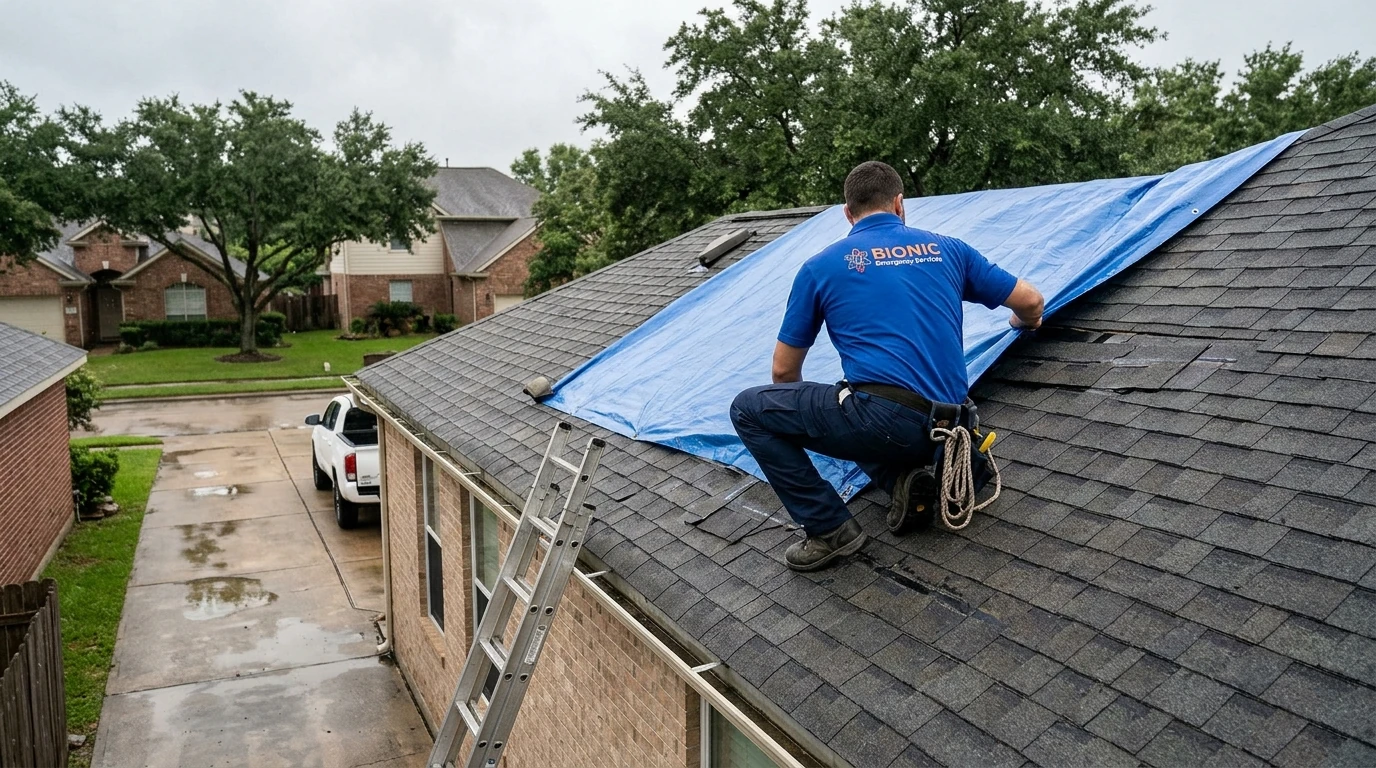
- Emergency tarping and extraction. The crew stops ongoing intrusion first (tarping a roof, boarding a broken window) and extracts standing water.
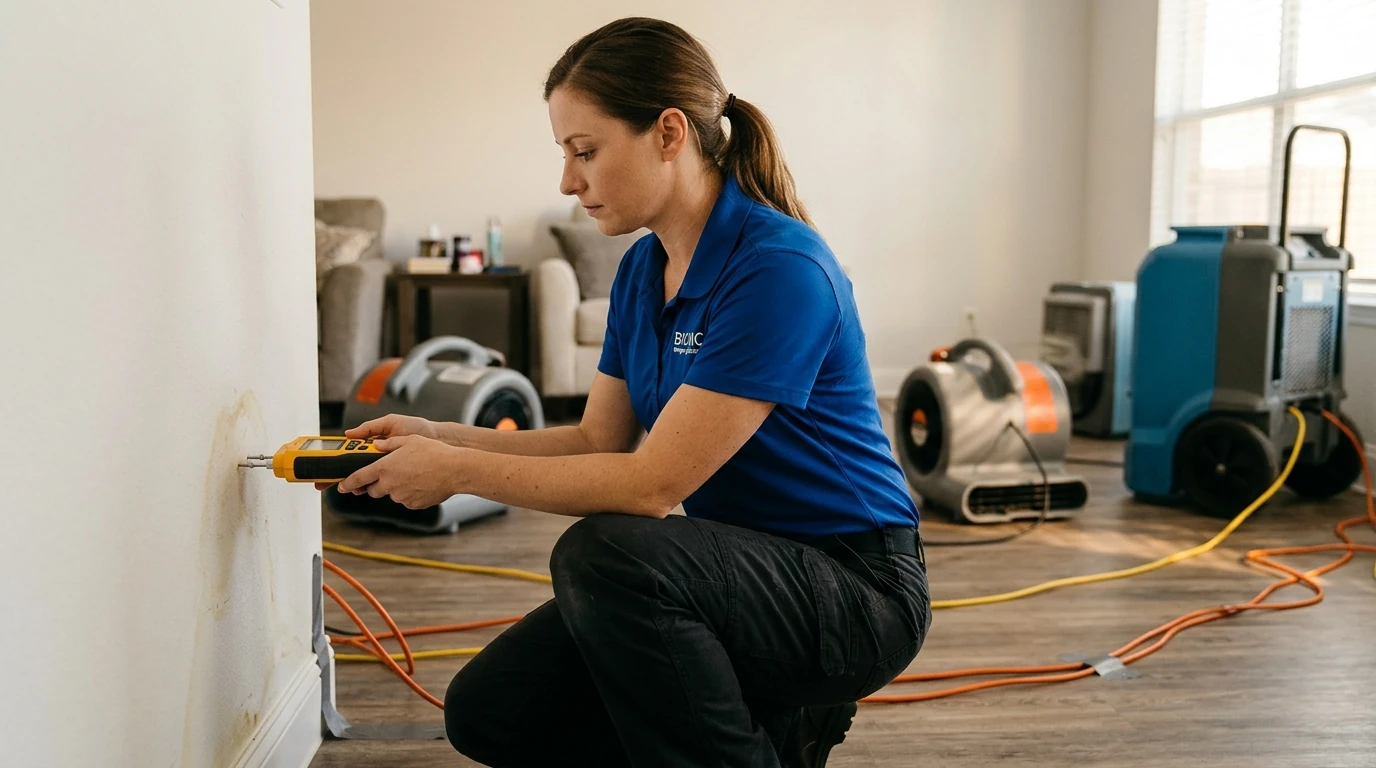
- Inspection and classification. The technician determines the water category and class, maps the affected square footage, and documents everything with photos and moisture readings for the insurance file.
- Structural drying. Air movers and dehumidifiers run for several days, with moisture levels checked daily until materials read dry.
- Contents evaluation. Furniture and belongings are sorted into restore, clean, or replace, with a pack-out for anything that needs to leave the house.
- Rebuild. Drywall, flooring, trim, paint, and any roof repair bring the space back to pre-loss condition.
A single-room Category 1 loss might only need phases 1 through 3. A hurricane-level loss touches all five, which is where the cost gap between $4,000 and $35,000 comes from.
If a storm already did its damage and you’re trying to figure out the next call, start with a written scope rather than a verbal guess. Request a storm damage estimate from BIONIC Emergency Services and get an itemized breakdown before anything gets torn out, so the number matches what your insurer sees too.
About BIONIC Emergency Services
BIONIC Emergency Services has served Houston and the surrounding Gulf Coast since 2011, with technicians holding IICRC Water Damage Restoration Technician (WRT) and Applied Structural Drying (ASD) certifications. The company is insured and runs a 24/7 emergency line for storm, water, fire, smoke, sewage, and contents restoration calls across Houston, Pasadena, Pearland, Sugar Land, The Woodlands, Baytown, and surrounding communities. This guide was put together with input from the BIONIC team, including owner Shane Dodson, based on the storm jobs the crew runs across Harris, Fort Bend, and Montgomery counties each storm season.
Need help now? Call BIONIC Emergency Services at (713) 338-2424.
Video Transcript
A storm just tore through Houston, and water’s dripping through your ceiling. How much is this actually going to cost to fix? Storm damage restoration in Houston typically runs $1,500 for a small leak, up to $35,000 or more for multi-room flooding and rebuild. The price depends on water category. Clean rainwater costs less to dry than contaminated storm water that soaked through walls and insulation. Bigger affected areas and more drying days both add cost. A single bedroom dries faster and cheaper than a whole flooded hallway. Damaged furniture, flooring, and belongings raise the price too. And when drywall, insulation, or roofing need replacing, that’s usually the biggest expense. Most homeowners policies cover wind and hail damage, but flooding from rising water usually needs a separate flood policy to be covered. Before cleanup starts, take photos of every damaged room. Documentation helps support your insurance claim no matter which way it’s filed. A real restoration job starts with emergency tarping and water extraction to stop further damage before drying equipment ever gets set up. Every storm is different, so the only number worth planning around comes from a contractor who actually inspects your home in person. Don’t guess at the cost of storm damage. Call BIONIC Emergency Services at (713) 338-2424 to schedule an assessment.