
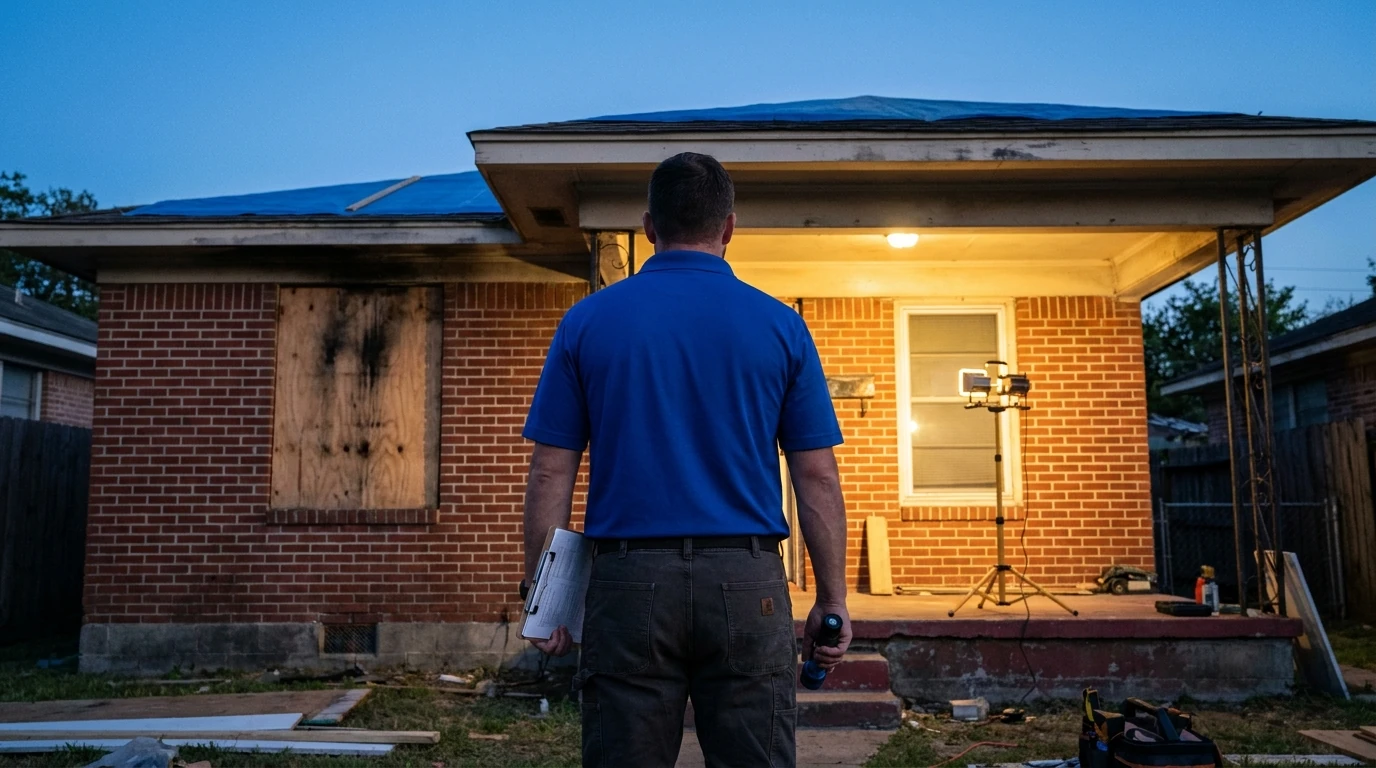
TL;DR: After a house fire in Houston, call 911 first if the fire is still active or anyone is hurt. Once Houston Fire Department clears the property for re-entry, your next call goes to a restoration company that can board up openings and remove the water left behind from firefighting. Notify your insurer as soon as you can, ideally the same day a restoration crew starts mitigation. That order protects the structure and keeps the claim moving.
If Houston Fire Department crews just pulled away from your home in Montrose, the Heights, or out toward Meyerland, you’re probably standing on the lawn trying to figure out what happens next. The fire itself may be out, but the damage keeps spreading: soot drifting through the HVAC system, charred framing, and standing water in the hallway from the hose lines. Who you call, and in what order, affects how much of the structure and its contents can actually be saved.
Who should I call first after a house fire in Houston?
Call 911 first if the fire is still burning, anyone is injured, or Houston Fire Department hasn’t yet declared the property safe to enter. Do not go back inside on your own judgment alone, even if the flames look out.
Once HFD or the fire marshal gives the all-clear, your next call should go to a restoration company, not your insurance company. A company such as BIONIC Emergency Services can get on-site, secure broken windows or a damaged roofline with plywood or tarps, and start pulling out the water left by the hoses before it soaks further into drywall and subfloor. Reach a crew at (713) 338-2424.
After mitigation is underway, call your insurer to open the claim. Starting the claim after the property is secured, rather than before, means you have photos of the active damage and a documented start date for the mitigation work, which insurers generally want to see.
When is it a fire department job versus a restoration company job?
Houston Fire Department handles anything involving active flame, smoke still showing, or a structure that hasn’t been declared safe; a restoration company takes over once HFD releases the scene. The line between the two is the official all-clear.
Before that release, do not attempt to shut off utilities, move debris, or walk through smoke-filled rooms yourself. The U.S. Fire Administration notes that homes can look intact from the outside while framing and roof structures are actually weakened by heat, so waiting for clearance matters even when the fire looks fully out.
Once the property is released, the restoration company’s job starts: boarding openings so weather and looters can’t get in, pumping or extracting standing water, and running an initial assessment of soot and smoke spread through the HVAC system and attic space.
What happens when you call a restoration company after a fire?
The first call is mostly information: the address, whether the fire department has cleared the home for entry, and whether there’s standing water from the firefighting effort. Have your policy number ready if you’ve already been in touch with your agent.
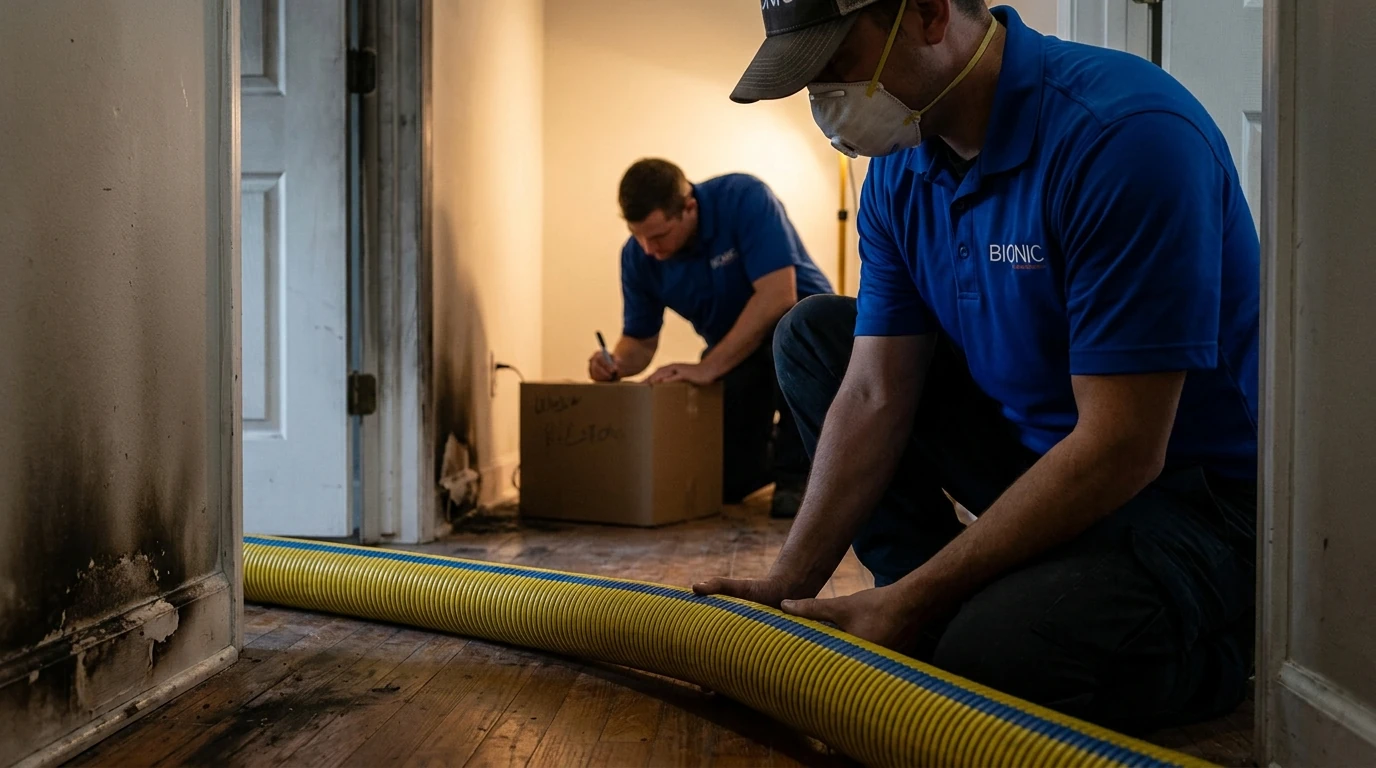
On arrival, the crew typically does three things in sequence. First, they secure the building, boarding windows, doors, or roof openings so the structure is weathertight. Second, they extract water left from the hoses; firefighting water usually carries ash and debris, so it’s handled more like contaminated water than a clean leak, which means wet carpet pad and drywall near the fire source are often removed rather than dried in place. Third, they document the loss with photos before anything is moved, which becomes part of the insurance file.
From there, smoke and soot cleanup and a contents inventory follow, often with items packed out to a secure facility for cleaning while reconstruction happens on-site. The full sequence, including drying timelines and what gets cleaned versus replaced, is covered in our fire damage restoration process guide.
When should I call my insurance company?
Notify your insurer as soon as you can. Calling the same day a restoration crew starts mitigation is fine. The adjuster will want to see that mitigation started promptly, since most policies require the homeowner to prevent further damage once a loss occurs.
Keep every receipt tied to the loss, from board-up materials to temporary lodging if the home is uninhabitable, and take your own photos before any debris is cleared. The Insurance Information Institute notes that documentation gathered in the first days after a loss is often what determines how smoothly a claim settles, so don’t wait until the adjuster visit to start building that record.
If you’re unsure whether something is covered, a Texas agent or the state’s consumer line can walk through your specific policy language before you sign off on repairs.
Getting the order right, fire department first, restoration second, insurer third, is what keeps a bad day from turning into a bigger loss. Call BIONIC Emergency Services at (713) 338-2424 once your property has been cleared for re-entry to get board-up and water extraction started the same day.
About the Houston Restoration Team
This Houston-based restoration company has worked fire, smoke, and water losses across the metro, from the Heights to Sugar Land, since 2011. Technicians hold IICRC Water Damage Restoration (WRT) and Applied Structural Drying (ASD) certifications, and the company is insured. Houston homeowners have left a 4.9-star average across more than 150 Google reviews for work on fire, smoke, and water damage calls throughout the area.